
Plastic manufacturing for telecommunications equipment is usually driven by enclosure reliability, outdoor exposure, heat management and consistent assembly fit. Buyers need more than a general plastics supplier when the part will sit near electronics, weather, dust and long service cycles.
When telecom housings are exposed to sunlight, rain, or washdown chemicals, the first support pages to review are UV stabilized nylon, nylon moisture absorption, and the Tabel met chemische compatibiliteit van nylon. Those factors often matter as much as the base resin choice itself.
The right manufacturing route depends on whether the part is an indoor electronics housing, an outdoor enclosure, a cable-management component or a structural bracket. Material choice and sealing strategy should therefore be reviewed together, not in isolation.
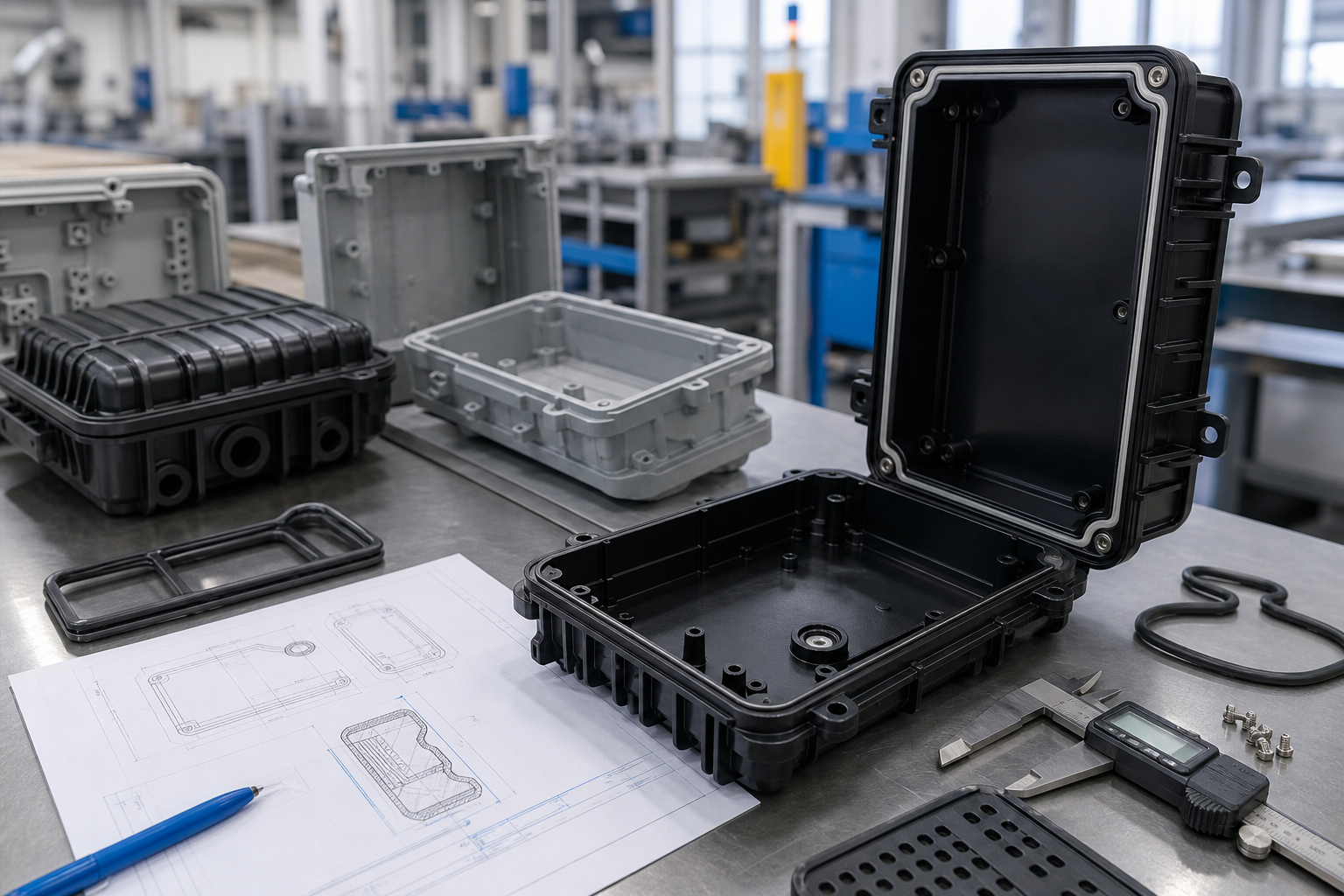
In één oogopslag
| Vereiste | Wat moet je doornemen? | Waarom het belangrijk is |
|---|---|---|
| Outdoor exposure | UV, heat, rain and dust | Long-life housings fail early when weathering is ignored |
| Heat management | Continuous service temperature and internal heat buildup | Electronics enclosures need more than cosmetic plastic selection |
| Dimensional fit | Cover, seal, latch and fastener interfaces | Small drift can affect ingress protection and assembly yield |
| Electrical context | Insulation, flame and static behavior | Functional requirements differ by equipment class |
| Supplier route | Molding, machining or printed prototype strategy | Development stage changes the best process choice |
What Matters Most in Telecommunications Equipment Plastics
Outdoor housings and support parts often need UV stability, heat resistance and dimensional reliability over time. Indoor telecom parts may care more about flame behavior, cable routing precision and consistent enclosure assembly.
Common mistakes include choosing resin based on indoor samples for outdoor use, underestimating sun-load temperature or ignoring how gasket compression and latch tolerance interact after molding.
Supplier and Material Checks Before Tooling
- Define indoor vs outdoor use clearly: weather exposure changes material strategy fast.
- Map the real heat environment: electronics hotspots matter more than room temperature.
- Review sealing features with molding tolerance together: enclosure fit cannot be checked as an afterthought.
- Confirm UV and flame requirement with evidence: do not add cost without a real need, but do not skip it where required.
- Choose the right development route: prototype, CNC and molding each serve different project stages.
Common Telecom Plastic Part Risks
| Risico | Oorzaak | Praktische oplossing |
|---|---|---|
| Outdoor cracking or color fade | UV stability underestimated | Review weathering package and service exposure before material approval |
| Seal failure | Housing tolerance and gasket design do not match | Link enclosure fit review to molding tolerance targets |
| Heat distortion | Internal temperature load not modeled realistically | Use a higher-heat resin and review wall/support design |
| Late supplier changes | Process route chosen before product stage was stable | Use prototyping and DFM checkpoints before full tooling commitment |
Telecommunications Equipment Parts vs General Electronics Housings
Telecommunications equipment often sees longer outdoor service, larger enclosure sizes and more environmental exposure than small consumer electronics. That makes supplier discipline and environmental material review more important than a standard indoor housing project.
Waarom kiezen voor nylon?
Nylon Plastic helps buyers align environment, material and manufacturing route before they freeze the enclosure design. That reduces the risk of choosing a housing material that looks acceptable in the lab but fails in real field conditions.
Telecommunications Housing RFQ Checks
| Risico | Part and supplier check |
|---|---|
| Outdoor exposure | UV grade, color stability, weathering evidence and sealing interface |
| Heat management | Continuous temperature, hot spots, vents, flame rating and dimensional drift |
| Ingress protection | Gasket land, weld line location, fastener torque and leak-test method |
| Production control | Material lot, cavity traceability, inspection plan and change notification |
Send the supplier enclosure drawings, environmental profile, regulatory requirements, annual volume, cosmetic zones and validation plan before tooling is released.
Gerelateerde lezen
- Electronics Molding
- UV-stabilisator voor nylon
- Spuitgieten van polycarbonaat
- Op maat gemaakte kunststof onderdelen
- Plastic Parts Supplier
Veelgestelde vragen
Vergelijken nylon vs polycarbonate comparison including strength, heat, cost and application recommendations.
Welke kunststoffen worden gebruikt voor telecommunicatieapparatuur?
Veelgebruikte materialen zijn onder meer PC, PC-ABS, PBT, nylon en andere technische kunststoffen, afhankelijk van de blootstelling aan buitenomstandigheden, hitte en elektrische vereisten.
Waarom is een UV-keuring belangrijk voor telecombehuizingen?
Veel telecommunicatieonderdelen staan lange tijd in de open lucht, waardoor de UV-bestendigheid een directe invloed kan hebben op de sterkte, het uiterlijk en de levensduur.
Wordt kunststof voor telecommunicatieapparatuur voornamelijk via spuitgieten vervaardigd?
Voor de productie is dat vaak het geval, maar bij prototypes kan men, afhankelijk van de ontwerpfase, beginnen met CNC-bewerking of 3D-printen.
Wat moet ik een leverancier vragen voordat ik met de gereedschapsbouw begin?
Vraag naar aanbevelingen voor materialen, de omgang met blootstelling aan de buitenlucht, tolerantiecontrole, beoordeling van de afdichting van behuizingen en de beste aanpak van prototype tot productie.
Wat moet ik opsturen voor een beoordeling van een kunststof onderdeel voor de telecomsector?
Send the enclosure drawing, use environment, heat load, sealing requirement and annual volume plan.
Send the housing or bracket drawing if you want help narrowing the right material and manufacturing route.

