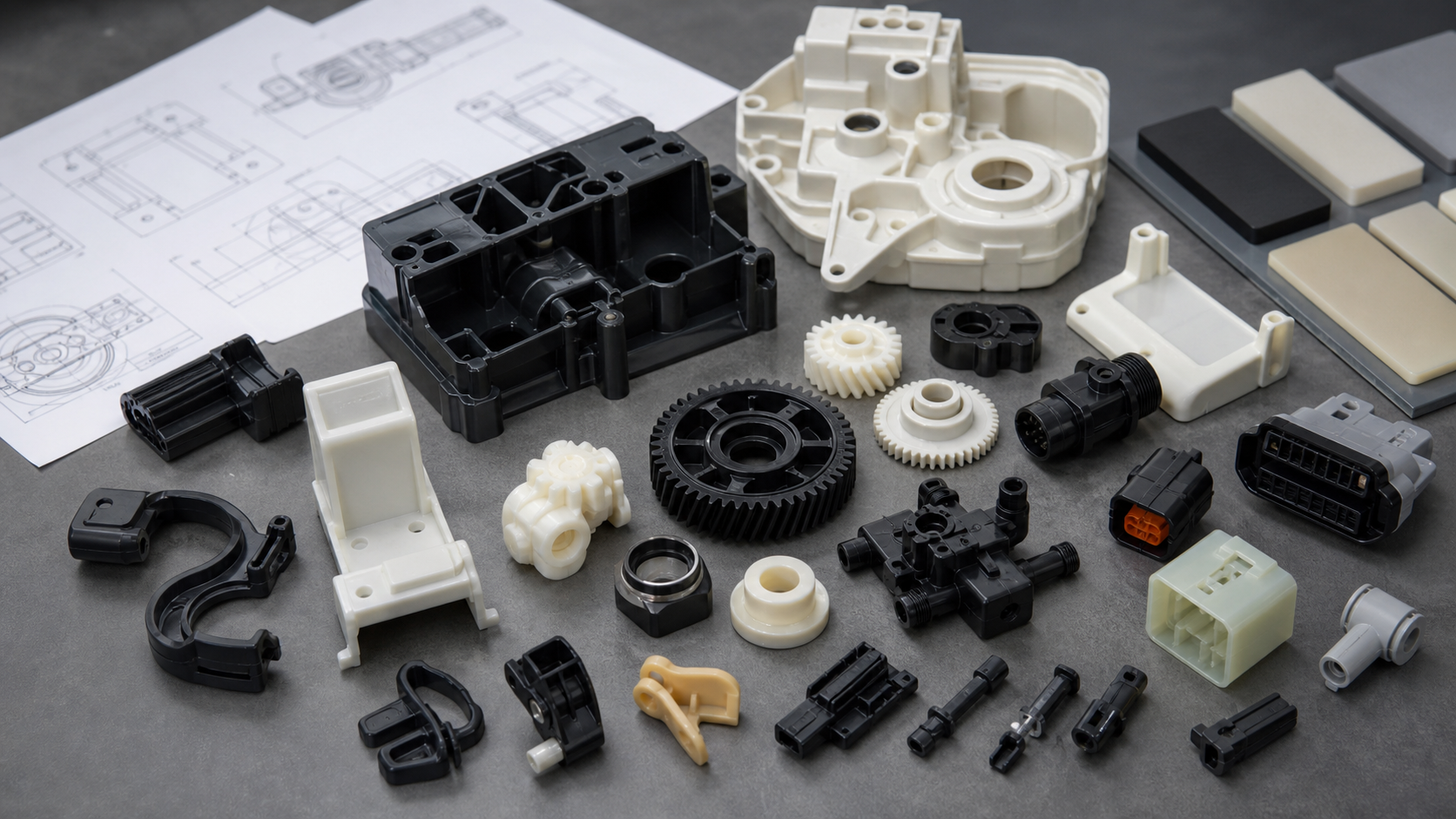
Bij het ontwerpen van op maat gemaakte kunststofonderdelen moet de functie voorop staan: belasting, temperatuur, blootstelling aan chemicaliën, montagemethode, toleranties en productievolume bepalen welke kunststofsoort en productiemethode het meest geschikt zijn.
Veel inkopers beginnen met de naam van het materiaal, maar het is beter om eerst de functie van het onderdeel te bepalen. Een connector, tandwiel, behuizing, klem, bus en beugel kunnen allemaal kunststofonderdelen zijn, maar vereisen toch verschillende kunststofsoorten, wanddiktes, gereedschapskeuzes en inspectiemethoden.
Productieprocessen voor op maat gemaakte kunststofonderdelen
De juiste werkwijze hangt af van de ontwikkelingsfase van het ontwerp, de hoeveelheid, de mechanische eisen en of het gedrag van het gegoten materiaal moet worden getest.
| Route | Optimale toepassing | Opmerking voor de koper |
|---|---|---|
| Spuitgieten | Componenten voor serieproductie | Het meest geschikt voor stabiele ontwerpen en schaalbare volumes |
| CNC-bewerking van kunststof | Functionele onderdelen in kleine oplagen | Voorkomt gereedschapskosten en maakt nauwkeurige afmetingen mogelijk |
| 3D printen | Vroege prototypes en ontwerpiteraties | Handig voordat je definitief kiest voor de gereedschappen |
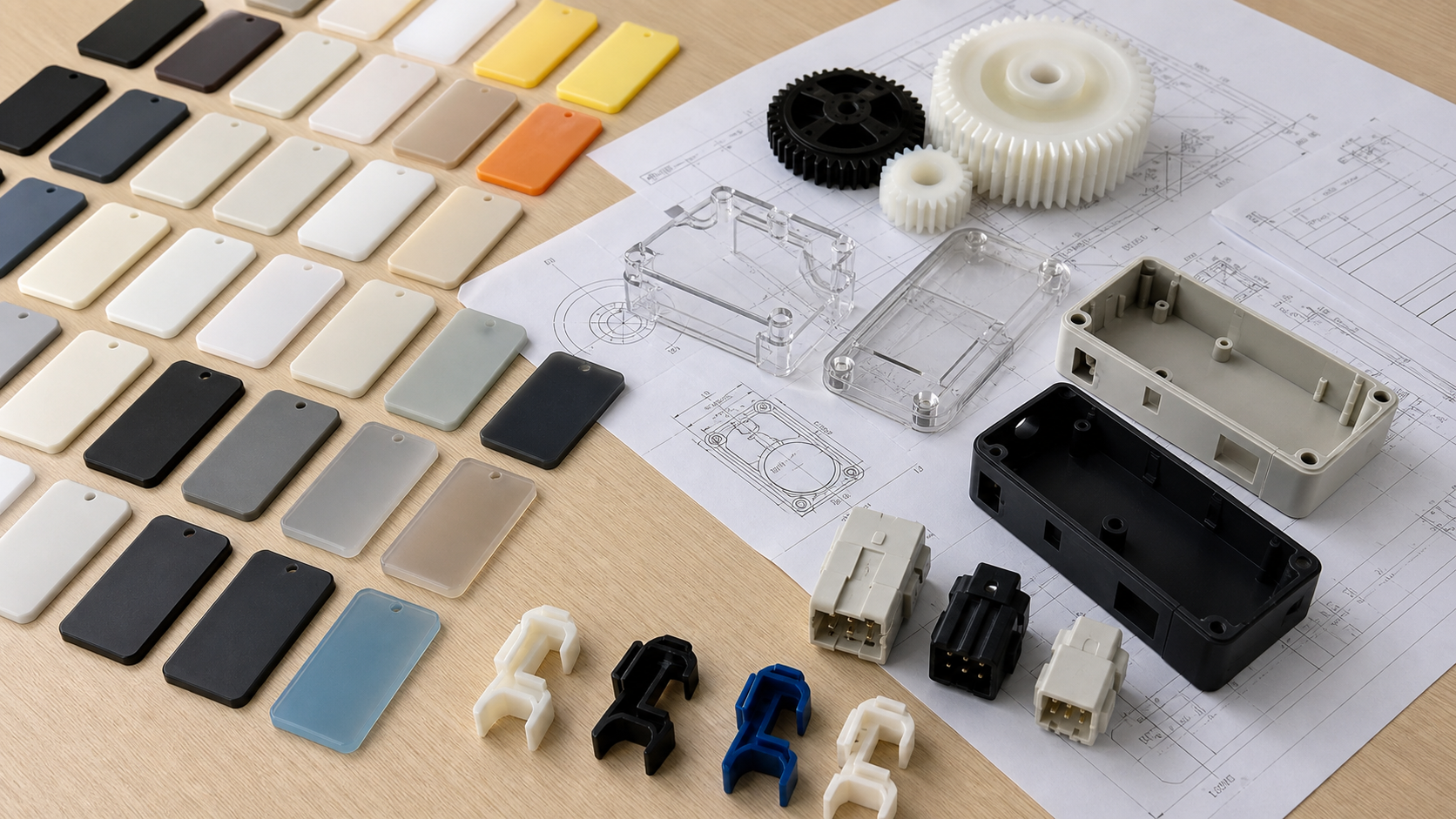
Veelgebruikte materialen voor functionele componenten
Technische kunststoffen moeten worden gekozen op basis van zowel hun prestaties als hun verwerkbaarheid.
| Materiaal | Het meest geschikt voor | Toelichting bij de selectie |
|---|---|---|
| PA6 / PA66 / GF-nylon | Belaste beugels, tandwielen en constructieonderdelen | Controleer de vochtopname en de oriëntatie van de glasvezels |
| PC / PC-ABS | Slagvaste behuizingen | Handig voor stevige afdekkingen en behuizingen |
| PBT / POM | Elektrische en schuifonderdelen | Geschikt voor precisietoepassingen of toepassingen met connectoren |
| PP / TPE | Lichtgewicht, flexibele of zacht aanvoelende onderdelen | Beoordeel de hechting, stijfheid en chemische vereisten |
Controles op het ontwerp van componenten
Bij een goed ontwerp van kunststof onderdelen wordt een evenwicht gevonden tussen sterkte, spuitgietbaarheid, montagespeling en kosten.
- Bepaal de toepassingsomgeving voordat u de hars kiest.
- Maak een onderscheid tussen kritische afmetingen en algemene toleranties.
- Controleer de montageonderdelen, zoals klemmen, schroeven, inzetstukken en scharnieren.
- Ga na of het onderdeel eerst moet worden bewerkt en pas daarna moet worden gegoten.
- Leg de eisen met betrekking tot de oppervlakteafwerking en kleur in een vroeg stadium vast.
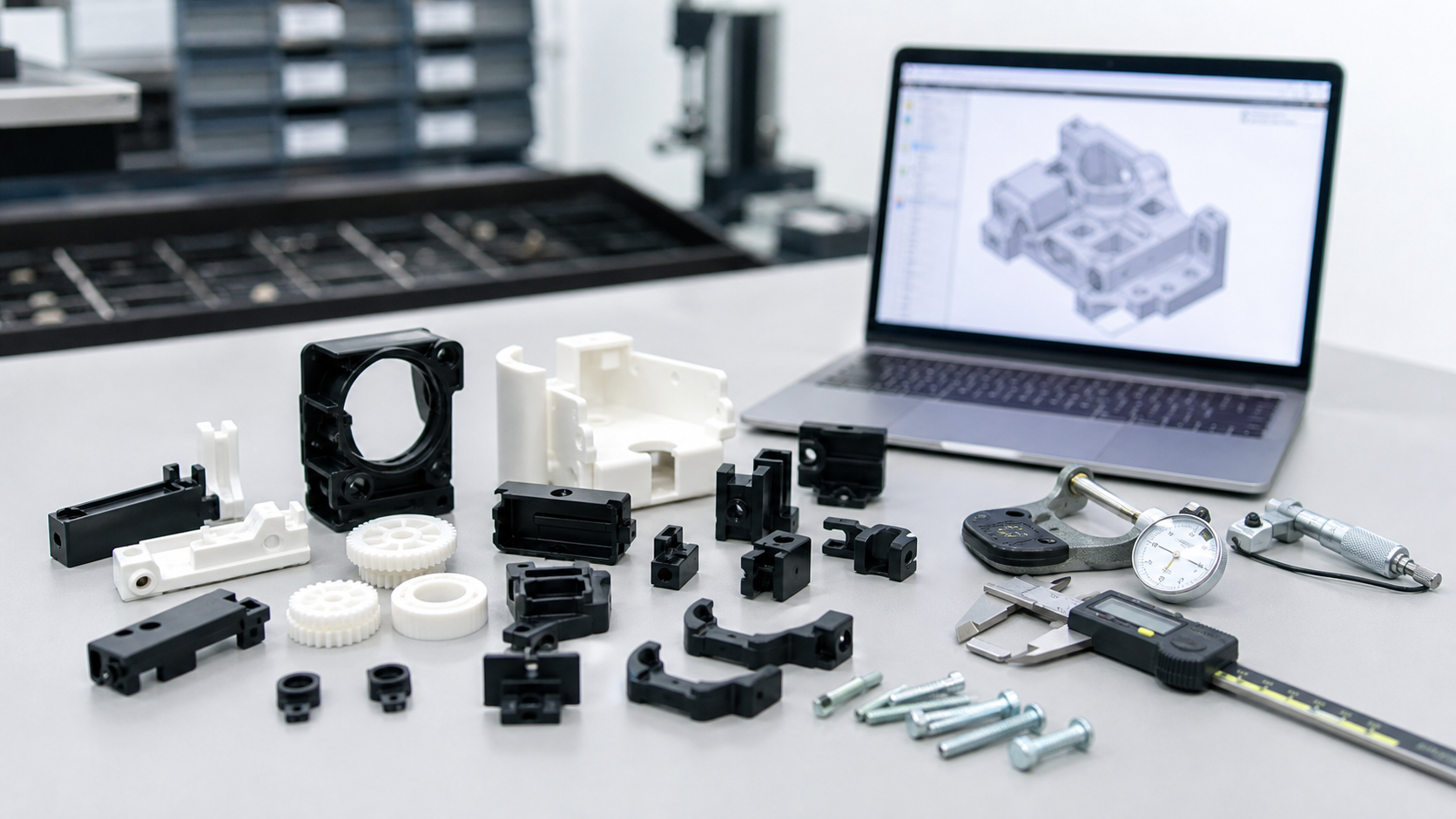
Checklist voor offerteaanvragen voor op maat gemaakte componenten
In een offerteaanvraag voor een onderdeel moet niet alleen de afmetingen, maar ook de functie van het onderdeel worden toegelicht.
Voor een concrete offerte kunt u een 2D-tekening of 3D-CAD-model, het beoogde materiaal, de verwachte hoeveelheid, de tolerantie-eisen, de oppervlakteafwerking, de toepassingsomgeving, de jaarlijkse vraag en eventuele nalevingsvereisten toesturen. Nylon Plastic kan het onderdeel beoordelen op materiaalkeuze, DFM, de aanpak voor het maken van prototypes, risico’s met betrekking tot de matrijzen, doorlooptijd en productiekosten, voordat het project in productie gaat.
Gerelateerde technische handleidingen
- Fabrikant van op maat gemaakte kunststofonderdelen – hoofdpagina voor het inkopen van op maat gemaakte onderdelen
- Centrum voor materiaalkeuze – ondersteunt beslissingen over de keuze van hars
- CNC-bewerking versus spuitgieten – helpt bij het kiezen van de procesroute
Hoe nylonplastic het project ondersteunt
Nylon Plastic helpt kopers bij het vergelijken van materialen en productieprocessen voor op maat gemaakte kunststofonderdelen die worden gebruikt in de automobielindustrie, elektronica, industriële apparatuur, robotica en consumentenproducten.
Neem contact op met Nylon Plastic om de tekening van uw op maat gemaakte kunststofonderdeel te bekijken, productiemethoden te vergelijken of advies over materialen en gereedschappen aan te vragen.
FAQ
Hoe worden op maat gemaakte kunststofonderdelen vervaardigd?
Op maat gemaakte kunststofonderdelen kunnen worden vervaardigd door middel van spuitgieten, CNC-bewerking van kunststof, 3D-printen of rapid tooling, afhankelijk van de ontwikkelingsfase van het ontwerp, de hoeveelheid, het materiaal en de vereiste toleranties.
Hoe kies ik een materiaal voor op maat gemaakte kunststofonderdelen?
Begin met de belasting, warmte-invloeden, blootstelling aan chemische stoffen, montagemethode, toleranties, oppervlakteafwerking en productievolume van het onderdeel, en vergelijk vervolgens de geschikte kunststofsoorten.
Kan een 3D-geprint prototype worden omgezet in een spuitgegoten onderdeel?
Ja, maar het ontwerp moet worden gecontroleerd op de wanddikte van de gietvorm, de uitloophoek, ribben, uitsteeksels, krimp en het gedrag van het materiaal tijdens de uiteindelijke productie.
Wat maakt het moeilijk om een offerte op te stellen voor een kunststof onderdeel?
Ontbrekende CAD-gegevens, onduidelijke materiaalvereisten, onrealistische toleranties, niet nader omschreven esthetische oppervlakken en een onbekend productievolume kunnen ervoor zorgen dat een offerte minder betrouwbaar is.

