
Medical device machining services for plastic components require more than cutting plastic to shape. Buyers usually need stable materials, controlled tolerances, clean handling, inspection records and a supplier that understands how documentation affects validation.
This guide explains how to source medical plastic CNC machining services for prototypes, fixtures, housings, fittings and low-volume functional parts. Nylon Plastic can support project-specific material selection, DFM review, CNC machining and inspection for custom plastic components. Any medical, biocompatibility or regulatory requirement should be confirmed during RFQ with the required standard, material grade and documentation package.
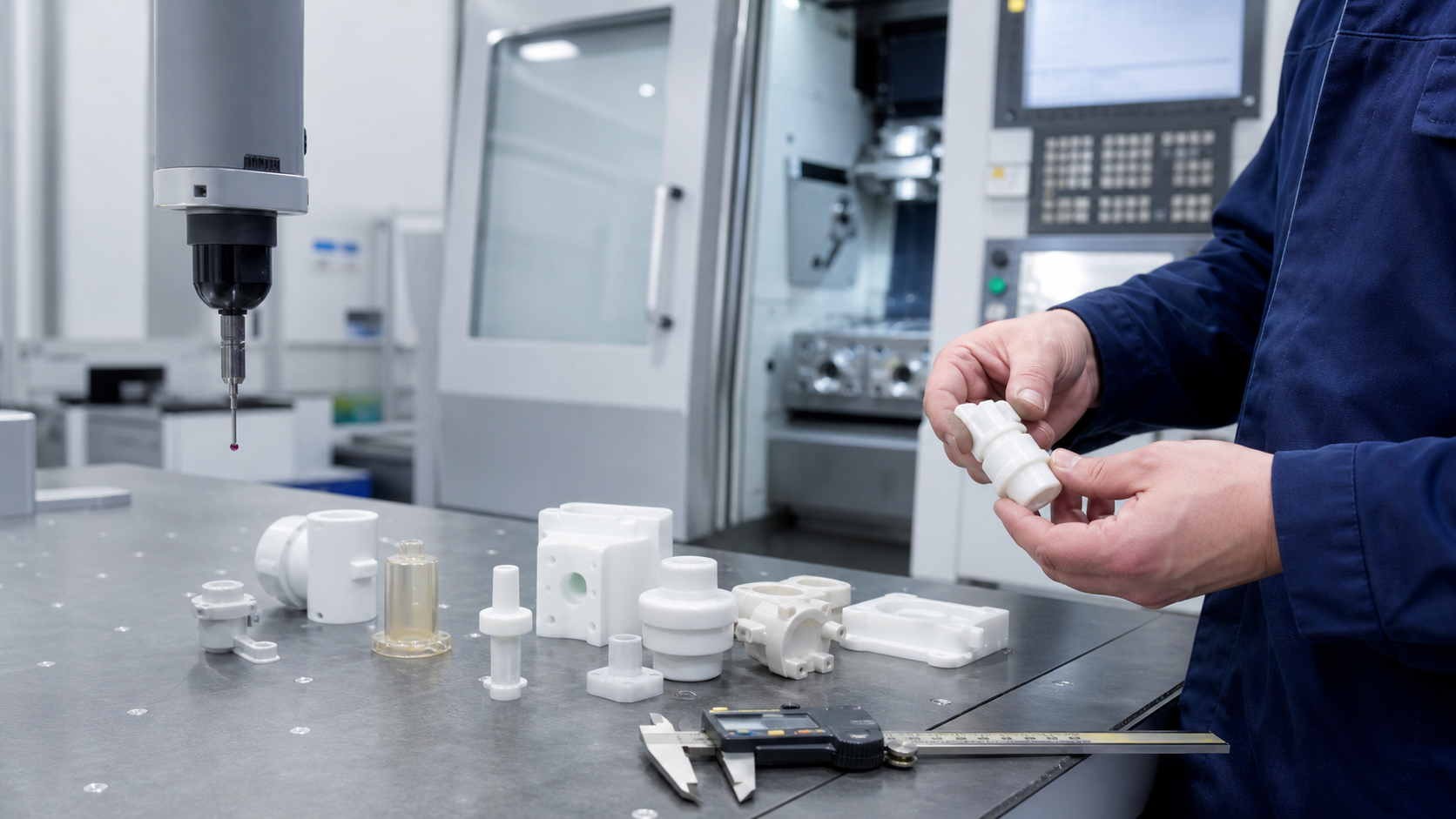
Medical Plastic CNC Machining at a Glance
| Beslissingsgebied | Algemene opties | Koperscontrole |
|---|---|---|
| Materialen | PEEK, PPSU, PEI, POM, PTFE, nylon, PC, UHMWPE | Confirm grade, datasheet, color, lot traceability and application limits |
| Proces | CNC milling, turning, drilling, threading, secondary finishing | Match geometry, tolerance and volume to the right process |
| Toleranties | Standard plastic tolerances, tighter critical features, controlled fits | Separate cosmetic, functional and inspection-critical dimensions |
| Documentatie | Material certificate, inspection report, first article report, packing record | Define required records before quote, not after production |
| Use Cases | Device housings, test fixtures, fittings, manifolds, guides, prototypes | Confirm whether the part is prototype, non-contact, indirect-contact or production-use |
When CNC Machining Is the Right Choice
CNC machining is usually the practical route when a medical plastic part needs fast samples, low-volume production, tight features or design changes before tooling. It avoids injection mold cost and lets engineers validate fit, assembly and material behavior early.
For production volumes, CNC machining can still be useful for high-value parts, replacement components, fixtures, small batches and parts made from high-performance plastics that are difficult or expensive to tool initially.
Material Selection for Medical Plastic Machining
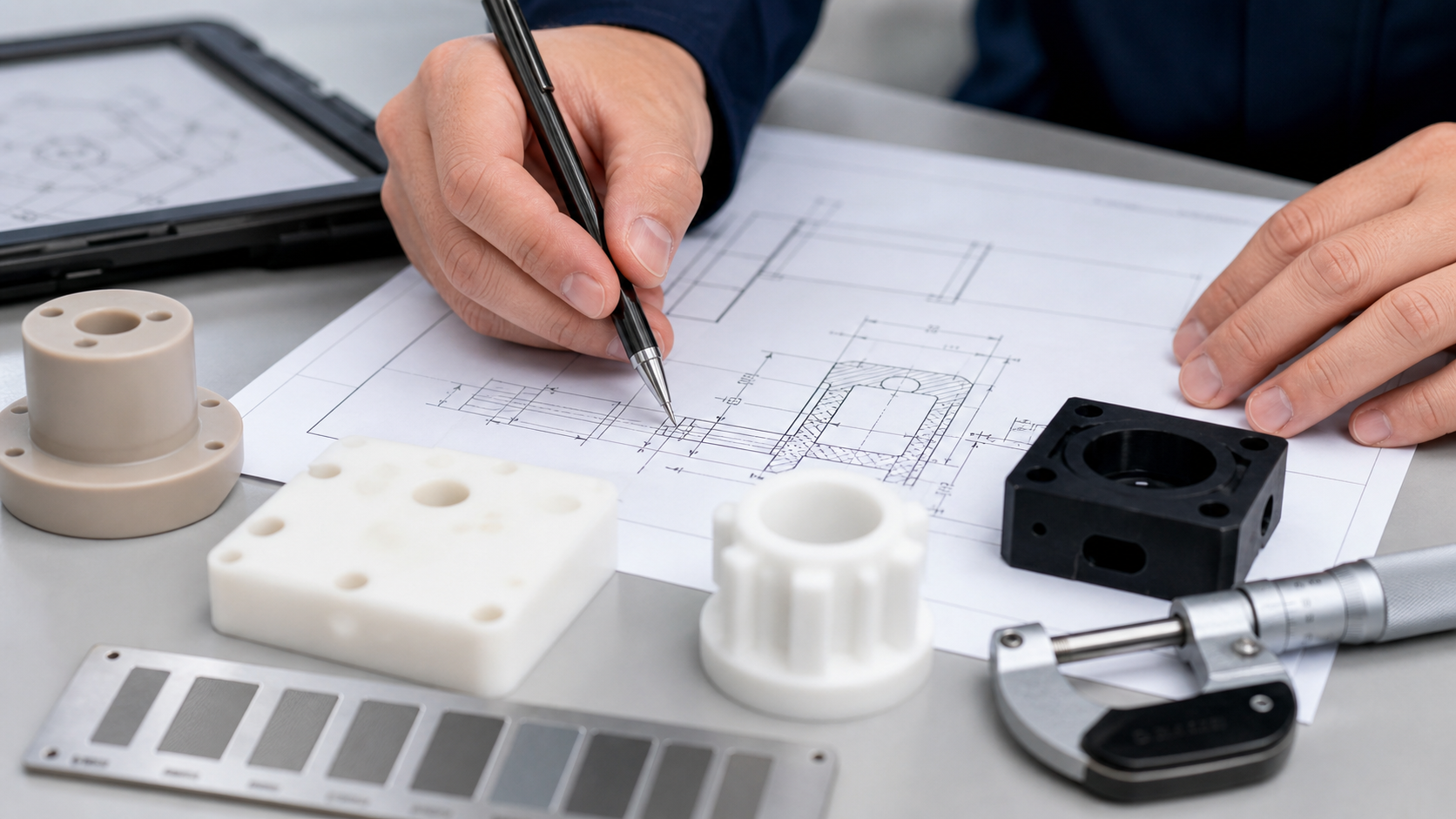
The material should be selected from the application requirement, not from a generic strength chart. For medical device machining, buyers often compare:
- PEEK: high temperature resistance, strength and chemical resistance for demanding components.
- PPSU and PEI: good dimensional stability and heat resistance for reusable or structural parts.
- POM: low friction and good machinability for gears, guides and precision mechanisms.
- PTFE: excellent chemical resistance and low friction, but more difficult to hold tight tolerances.
- Nylon: tough and wear-resistant, but moisture absorption must be considered.
- PC: transparent or impact-resistant parts when the grade and environment fit the requirement.
If a material must meet a specific food-contact, medical, USP, ISO 10993 or other requirement, state the exact requirement during RFQ. A supplier should not guess compliance from a generic material name.
Tolerance Planning for Plastic Medical Parts
Plastic parts move more than metals. Temperature, moisture, internal stress, wall thickness and stock condition can all influence final dimensions. Tight tolerances should be limited to critical interfaces such as sealing grooves, bearing fits, threaded features, alignment pins or assembled surfaces.
For best results, mark critical-to-function dimensions on the drawing and separate them from general dimensions. If the part will be assembled with metal, rubber or molded plastic components, share mating part drawings or target fit conditions.
Inspection and Documentation Checklist
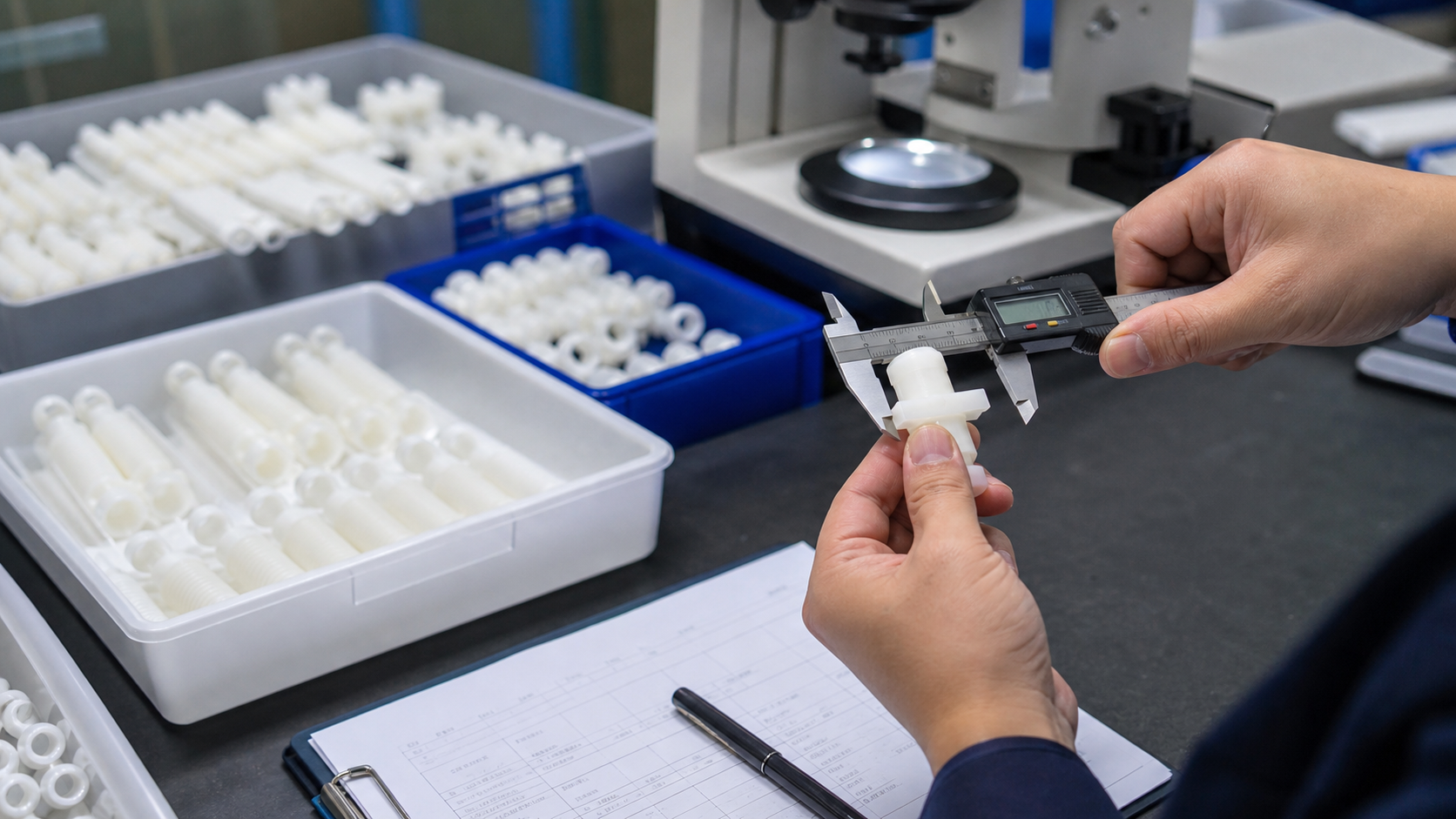
| Vereiste | Waarom het belangrijk is | Wat moet je opsturen? |
|---|---|---|
| 2D drawing | Defines tolerances, datums and inspection method | PDF drawing with revision |
| 3D model | Supports CNC programming and DFM review | STEP, IGES or native CAD |
| Material grade | Controls performance and documentation | Exact grade, color and certificate requirement |
| Kritische afmetingen | Prevents over-inspection of noncritical features | Marked CTQ dimensions or inspection plan |
| Quantity and use | Guides process route and cost | Prototype, validation batch or production quantity |
Common Problems and Practical Solutions
| Probleem | Oorzaak | Practical Solution |
|---|---|---|
| Afwijking in afmetingen | Material stress, moisture or heat | Choose stable material, allow conditioning, inspect after rest time |
| Burrs on small features | Tool wear or difficult geometry | Review tool path, edge break and deburring method |
| Slechte oppervlakteafwerking | Wrong feeds, tool or material choice | Specify surface requirement and test process on sample parts |
| Documentation gap | Records requested too late | Define certificate and inspection report before quotation |
Waarom kiezen voor nylon?
Nylon Plastic supports custom plastic parts from material selection through CNC machining, injection molding, 3D printing and inspection. The team can review drawings, recommend manufacturable plastic alternatives, machine prototypes and prepare production-ready RFQ feedback for B2B buyers.
Gerelateerde lezen
- CNC-draaien van kunststof
- Op maat gemaakte kunststof onderdelen
- PEEK plastic machining guide
- CNC-bewerkingsdiensten voor nylon
Veelgestelde vragen
What materials are common for medical device machining?
PEEK, PPSU, PEI, POM, PTFE, nylon, PC and UHMWPE are common choices. The correct grade depends on strength, temperature, sterilization, chemical exposure and documentation requirements.
Can CNC machined plastic parts be used for validation builds?
Yes. CNC machining is often used for prototypes, engineering validation, fixtures and low-volume builds before injection molding. The final use and documentation requirements should be stated clearly.
How tight can tolerances be on medical plastic CNC parts?
It depends on material, part size, geometry and environment. Tight tolerances should be limited to critical features and confirmed during DFM review.
What should I send for a quote?
Send a 3D file, 2D drawing, material requirement, quantity, surface finish, inspection needs and any certificate or traceability requirements.
Request a Technical Review
Send your drawing, material requirement and quantity for a manufacturability review.

