
CNC-freesdiensten voor kunststof worden gebruikt voor op maat gemaakte vlakke, prismatische en veelzijdige kunststofonderdelen die een hogere nauwkeurigheid, strakkere randen of snellere iteraties vereisen dan spuitgietonderdelen kunnen bieden. Inkopers vergelijken het frezen van kunststof meestal met draaien, 3D-printen en spuitgieten, afhankelijk van de geometrie en de hoeveelheid.
Het beste resultaat wordt bereikt door het onderdeel af te stemmen op de juiste kunststof, opspanstrategie en tolerantieschema. Een freesleverancier die kunststof op dezelfde manier behandelt als aluminium, veroorzaakt vaak problemen met warmteontwikkeling, bramen of vervorming die al in de offertefase hadden moeten worden voorkomen.
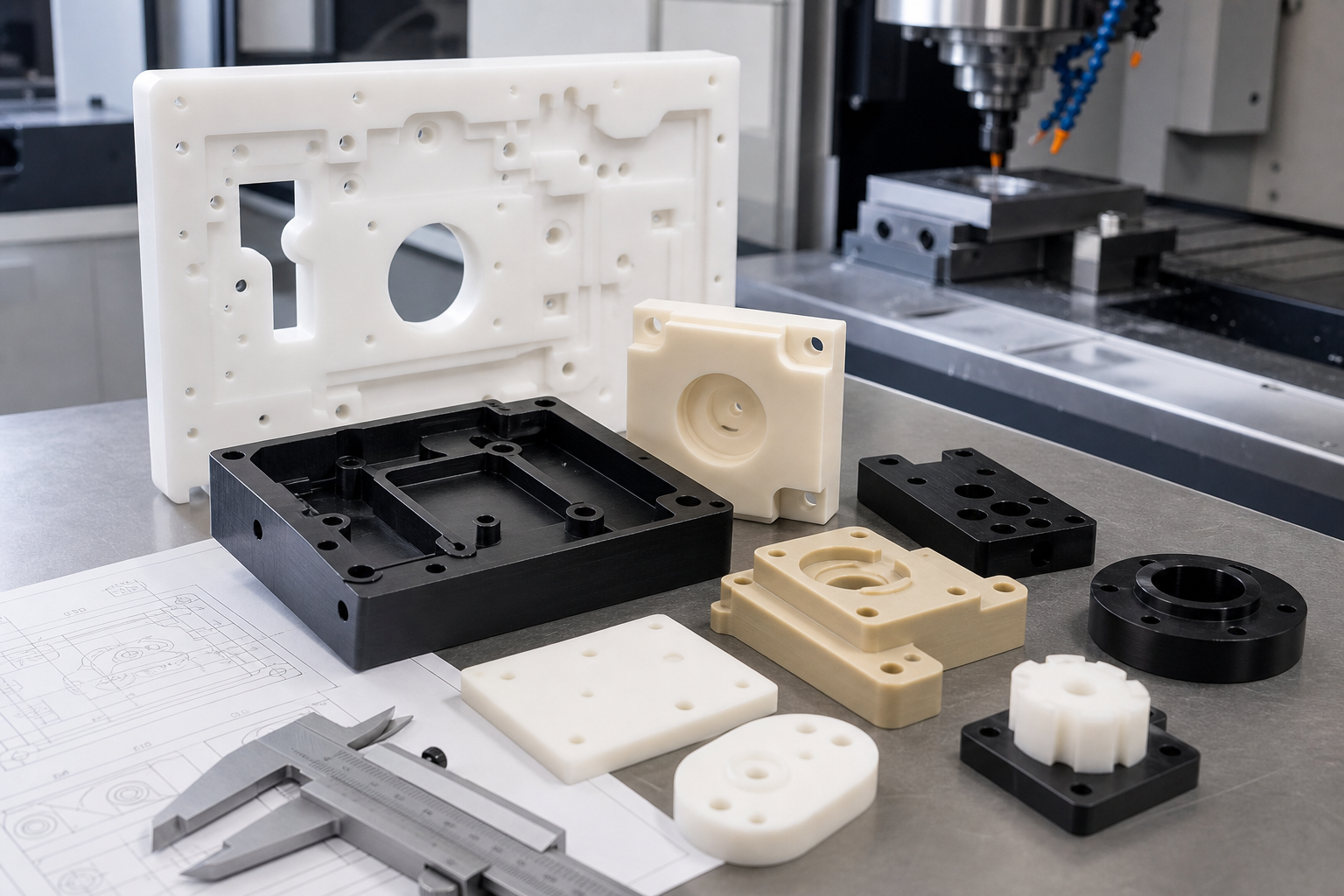
Voor op maat gefreesde kunststofonderdelen
Wanneer frezen de juiste keuze is
Kies voor frezen wanneer het onderdeel plaatvormig is, meerdere vlakken heeft, voornamelijk uit prototypes bestaat of in kleine oplagen wordt geproduceerd en het gebruik van een matrijs niet rendabel is. Vergelijk frezen met draaien voor ronde onderdelen en met spuitgieten wanneer het jaarlijkse productievolume toeneemt.
- Zeer geschikt voor armaturen, verdeelstukken, afdekkappen, elektrische aansluitplaten en constructieve kunststofblokken
- Gebruik een materiaalspecifieke strategie voor POM, nylon, PTFE, PEEK en acryl
- Stel de tolerantie in op basis van de functie, in plaats van de standaard strakke bewerkingswaarden
In één oogopslag
| Beslissingsmoment | Belangrijkste punten over frezen | Opmerking voor de koper |
|---|---|---|
| Meetkunde | Bij uitstek geschikt voor prismatische en veelvlakkige onderdelen | Grote platte of holle onderdelen komen vaak voor |
| Volume | Geschikt voor prototypes tot terugkerende productie in kleine oplagen | Controleer de vormgeving wanneer de jaarlijkse productiehoeveelheid toeneemt |
| Materiaalkeuze | Het type kunststof beïnvloedt het gedrag bij verhitting, de bramenvorming en de bevestiging | Ga er niet vanuit dat alle kunststoffen op dezelfde manier gesneden kunnen worden |
| Verdraagzaamheid | Kan nauwkeurig zijn, maar hangt af van de geometrie en het materiaal | Bij sommige kunststoffen spelen vochtigheid en de mate van spanning nog steeds een rol |
| De beste keuze | Functionele onderdelen op maat zonder doorlooptijd voor het maken van matrijzen | Handig voor proefopstellingen en technische aanpassingen |
Materiaalkeuze voor het frezen van kunststof
POM, nylon, PTFE, PEEK, acrylic, HDPE and UHMW all machine differently. Some cut cleanly and hold shape well. Others move under heat, burr easily or respond poorly to clamping. Good suppliers choose the plastic and workholding strategy together rather than treating materiaalselectie as a separate question.
Zo moet bij nylon bijvoorbeeld meer aandacht worden besteed aan vocht en de timing van de maatveranderingen, moet bij acryl strikt worden gelet op het voorkomen van scheuren, is bij PTFE een soepelere klemmethode nodig en moet bij PEEK de kosten beter worden onderbouwd.
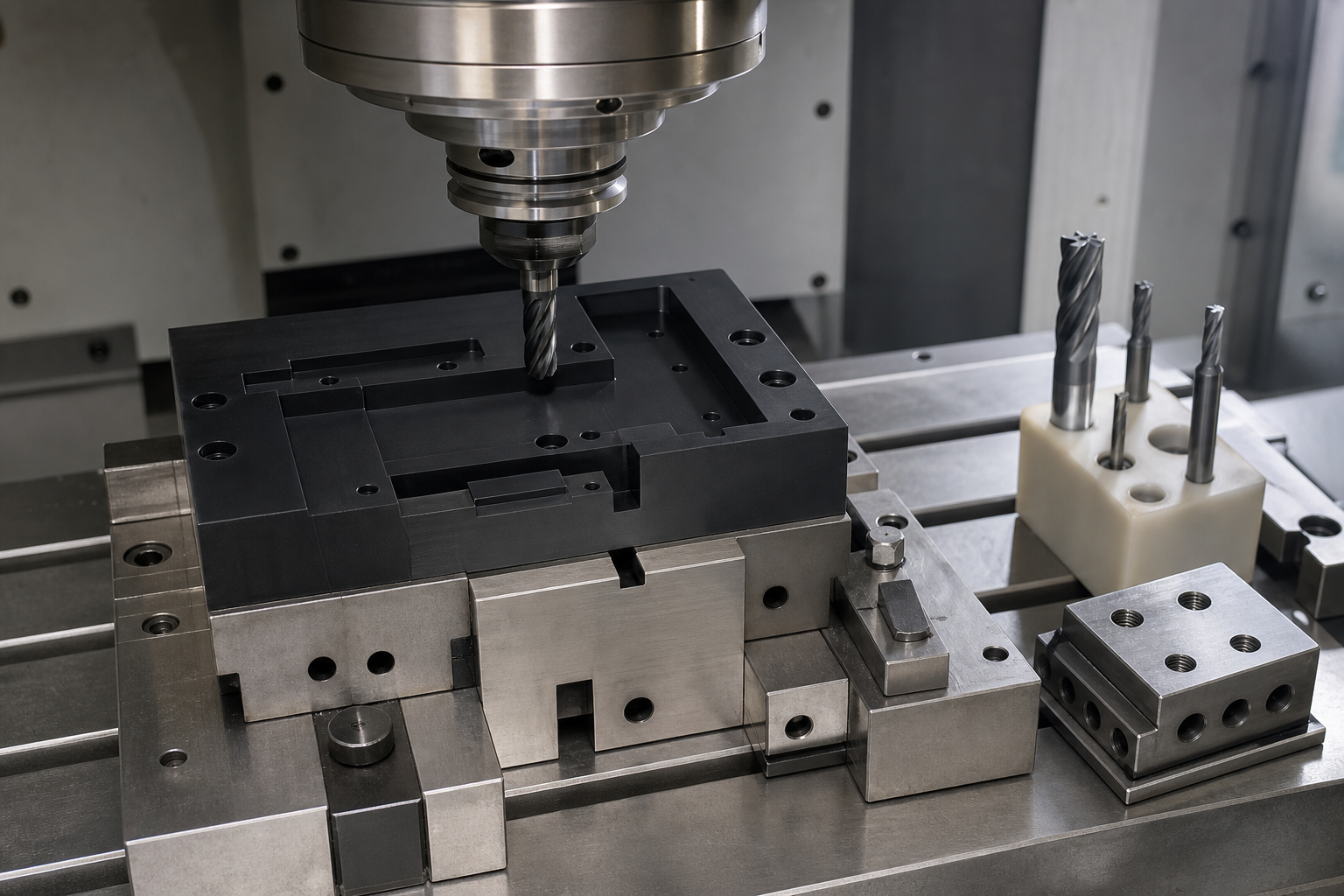
Veelvoorkomende risico’s bij het frezen van kunststof en praktische oplossingen
| Risico | Waarom dit gebeurt | Praktische oplossing |
|---|---|---|
| Gesmolten rand of slechte afwerking | Warmteontwikkeling door onjuiste toevoer of gereedschap | Gebruik gereedschap dat speciaal voor kunststof is ontworpen en een afvoerstrategie voor spanen |
| Vervorming van onderdelen | Dunne wanden of de klemdruk zorgen ervoor dat het onderdeel verschuift | De werkstukopspanning en de bewerkingsvolgorde verbeteren |
| Onverwachte afwijking van de tolerantie | Goederenverplaatsingen of te krappe aannames in de offerte | Bepaal de kritische afmetingen op basis van de functie en het materiaalgedrag |
| Verkeerd proces gekozen | Frezen wordt toegepast om een geometrie te verkrijgen die beter geschikt is voor draaien of gieten | Beoordeel het onderdeel in een vroeg stadium op alternatieve productiemethoden |
Gebruik de plastic-part tolerance guide when defining the critical dimensions and material condition for inspection.
Frezen versus draaien versus spuitgieten voor kunststofonderdelen
Milling is usually better for plates, housings, pockets and irregular prismatic features. Turning is more efficient for rotational parts. Molding wins when volume is high enough and the design is stable enough to justify tooling. The supplier should help compare these routes instead of forcing a single process answer.
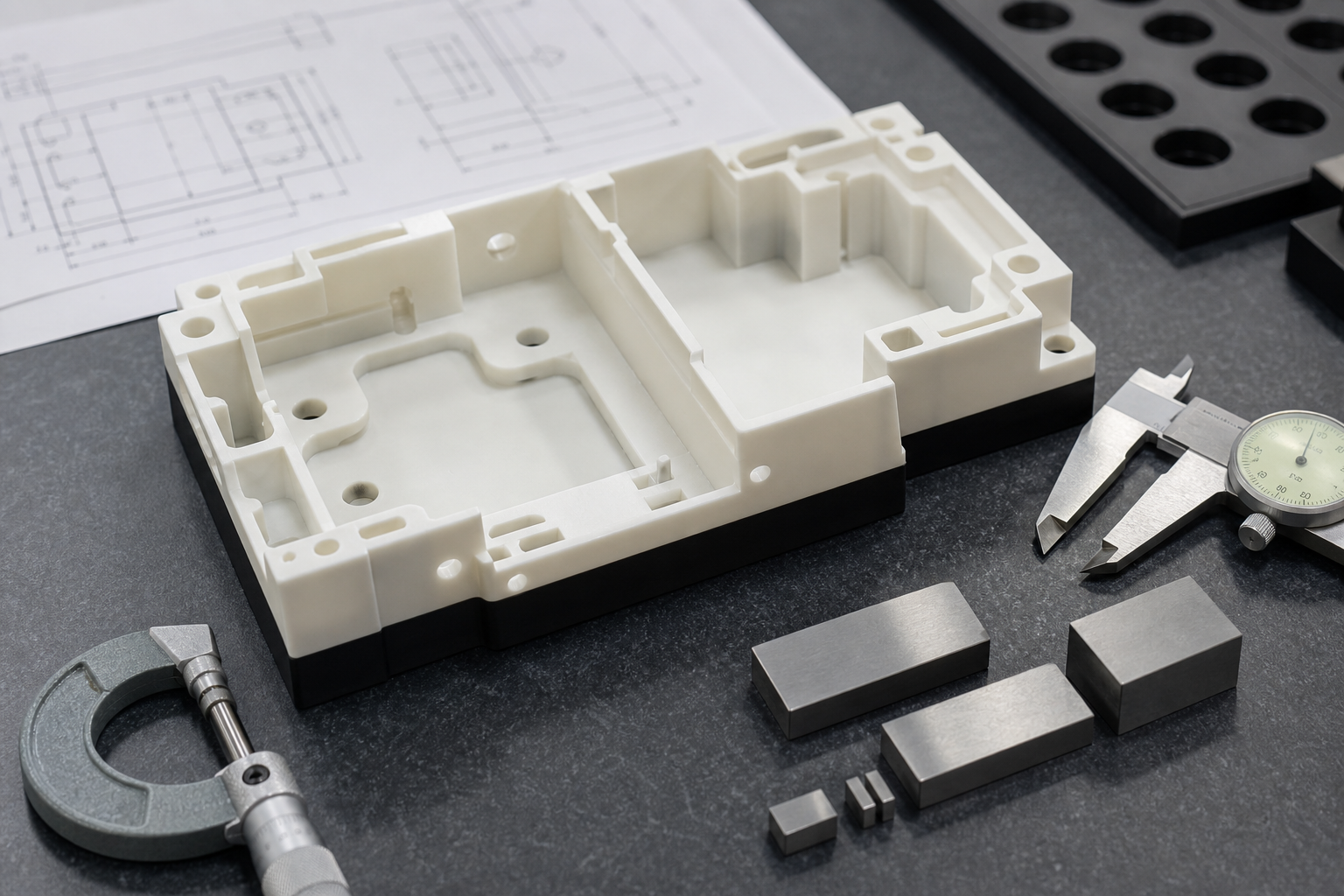
What Makes a Plastic Milling RFQ Comparable
| Gegevens voor offerteaanvraag | Why It Changes the Result | What to Provide |
|---|---|---|
| Material and stock form | Plastic stiffness, moisture, grain, and stock size affect tool load and deformation | Exact grade, plate or rod size, color, and backup material |
| Critical geometry | Thin walls, deep pockets, bores and small radii affect access and fixturing | Controlled drawing, datums, tolerances, and surface zones |
| Quantity and repeat plan | Setup, inspection, nesting and tooling decisions change with volume | Prototype quantity, annual demand, and reorder pattern |
| Inspection and finish | Measurement method and edge treatment must match the functional requirement | FAI or report needs, appearance standard, deburring, and packaging |
Plastic milling quotes are difficult to compare when one supplier includes soft jaws, inspection, deburring, and packaging while another quotes machining only. Put the same scope and acceptance state in every RFQ.
Gerelateerde lezen
Veelgestelde vragen
When is CNC milling the right route for plastic parts?
Milling is often suitable for prismatic, multi-face, pocketed, or low-volume parts that need controlled features without injection mold tooling. Quantity, geometry, material, and tolerance decide the route.
How do I avoid deformation during plastic milling?
Control workholding force, use suitable soft jaws or nests, keep tool engagement stable, allow rest or conditioning where needed, and inspect the part in a defined state.
Can reinforced nylon be CNC milled?
Yes, but PA-GF20 and PA-CF30 may increase tool wear, anisotropy, dust, and edge or surface considerations. Confirm the exact grade, stock condition, tooling, and inspection method.
What should be included in a plastic milling RFQ?
Send the CAD model, controlled drawing, exact material, quantity, critical dimensions, surface finish, deburring, inspection report, packaging, and end-use environment.
Request a CNC Plastic Milling Review
For CNC plastic milling services, share the controlled drawing and the features that determine function. Nylon Plastic can review material and stock, workholding, machining sequence and inspection alongside alternatives for the planned quantity.
Wat moet er worden opgenomen en overeengekomen voordat er een offerte wordt opgesteld?
Nylon Plastic has supported material selection and finished plastic-part manufacturing since 2005. For custom CNC plastic milling, the useful review connects the drawing, material, tooling or machining route, inspection state, and production plan before a quote is approved.
- Include CAD, revision, exact material and permitted alternatives, prototype and repeat-order quantities, annual demand, destination and target timing.
- Mark functional datums, flatness, bores, thin walls, deep pockets, surface zones and acceptable clamp marks; define free-state or assembled measurement.
- State inserts, edge treatment, finishing, appearance reference, first-article records, packaging and sample acceptance responsibility.
Compare programming, stock preparation, fixtures or soft jaws, machining, secondary operations and inspection on the same drawing. Agree which critical features are measured and in what material condition before approving recurring parts.

