
Back pressure in injection molding is the resistance applied to the screw during plasticizing. Correct back pressure can improve melt uniformity, color mixing and shot consistency, while excessive or unstable back pressure can increase shear heat, degrade material, trap gas and contribute to defects such as bubbles, splay, burn marks or color streaks.
Back pressure is often treated as a machine setting, but buyers see its effect as part quality. When a molded part has bubbles, splay, color swirl or inconsistent dimensions, plasticizing stability should be reviewed along with drying, gate design and venting.
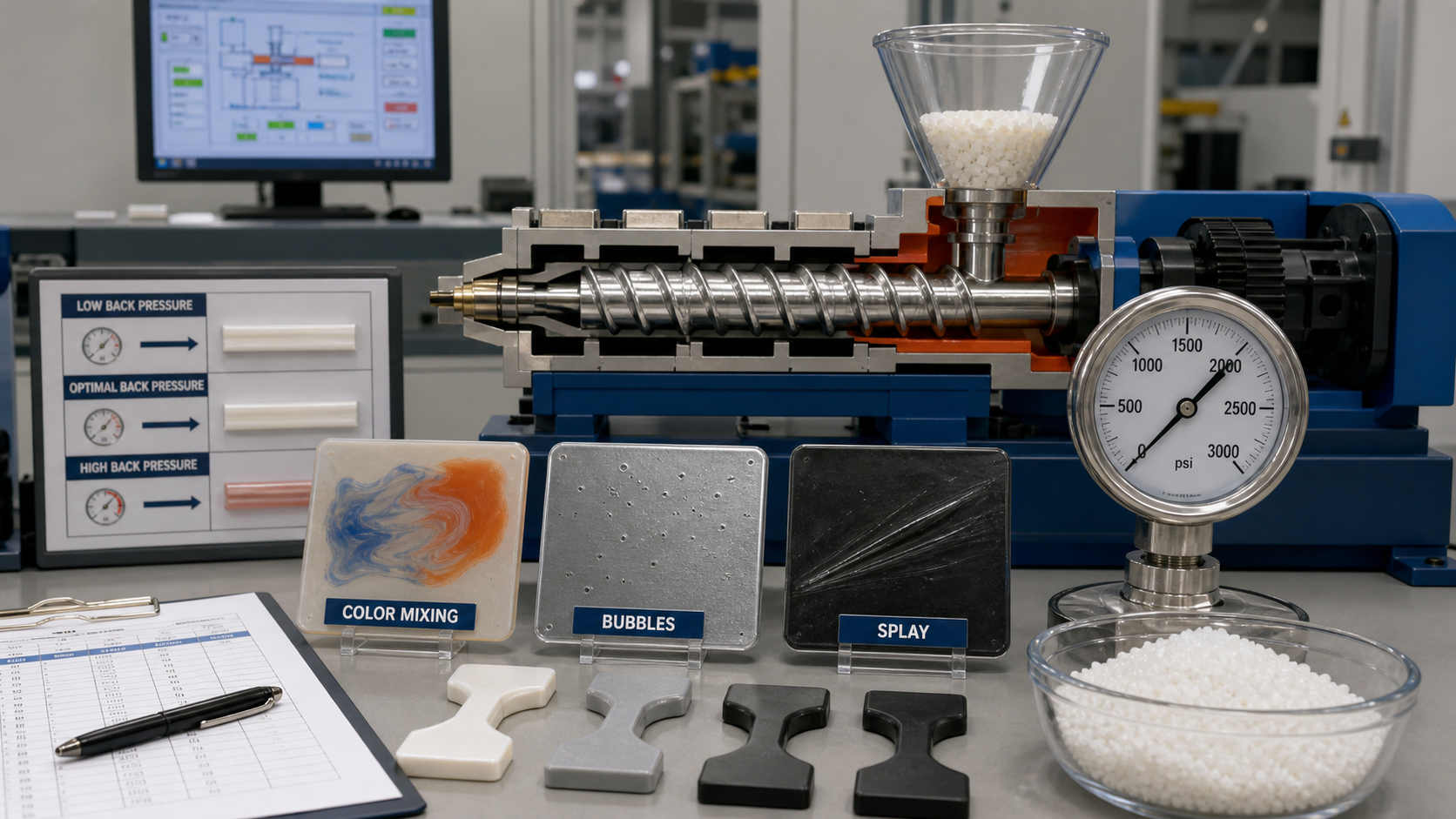
What Back Pressure Changes
The right setting depends on resin, screw design, colorant, regrind, shot size and cycle time. It should be adjusted with process data, not guessed.
| Back pressure effect | Benefit when controlled | Risk when excessive |
|---|---|---|
| Melt mixing | Better color and additive dispersion | Too much shear heat. |
| Shot consistency | More stable cushion and part weight | Longer recovery time. |
| Air removal | Can help compact melt | Can also trap or overheat gas if process is poor. |
| Material temperature | More uniform melt | Degradation in heat-sensitive plastics. |
| Color change | Improved dispersion | Purging may take longer. |
Defects Linked to Poor Back Pressure Control
- Color streaks or poor masterbatch dispersion.
- Bubbles or voids caused by inconsistent plasticizing and trapped gas.
- Splay from excess shear heat, moisture or gas.
- Burn marks or odor from overheating sensitive materials.
- Inconsistent part weight or dimensions from unstable shot preparation.
Material-Specific Notes
Back pressure should be balanced with drying, melt temperature, screw speed and residence time, especially for moisture-sensitive or heat-sensitive materials.
| Materiaal | Back pressure concern | Process note |
|---|---|---|
| PC | Moisture and heat sensitivity | Dry well and avoid excessive shear heat. |
| Nylon | Moisture and fiber orientation | Control drying and mixing consistency. |
| ABS | Color and surface quality | Use enough mixing without overheating. |
| POM | Degradation risk if overheated | Keep within safe processing window. |
| TPE / TPU | Shear and moisture sensitivity | Balance mixing, drying and gate design. |
Set Back Pressure as Part of a Process Window
Back pressure should be evaluated with screw recovery time, cushion, melt temperature, screw speed, residence time, color or additive dispersion, and the final part requirement. A higher value is not automatically better. The useful setting is the lowest stable condition that gives repeatable plasticizing and acceptable melt quality without excessive shear or degradation.
- Record recovery time, cushion, peak pressure, melt temperature, and shot-to-shot variation.
- Keep the resin grade, moisture state, color, regrind ratio, and barrel residence time controlled during the trial.
- Check molded appearance, weight, dimensions, weld lines, bubbles, splay, and odor after each controlled change.
Hoe nylonplastic het project ondersteunt
Nylon Plastic has supported material selection and finished plastic-part manufacturing since 2005. For back pressure trials and injection molding defect prevention, the useful review connects the drawing, material, tooling or machining route, inspection state, and production plan before a quote is approved.
- Review unfilled PA, PA-GF20, or PA-CF30 processing sensitivity together with drying and fiber or additive dispersion requirements.
- Use a documented process window rather than a single back-pressure number copied between machines or grades.
- Connect the machine trial to mold venting, gate design, inspection, and lot-release evidence before volume production.
Gerelateerde lezen
- Injection Molding Process Window
- Splay Troubleshooting
- Diensten op het gebied van spuitgieten van nylon
Veelgestelde vragen
What does back pressure do in injection molding?
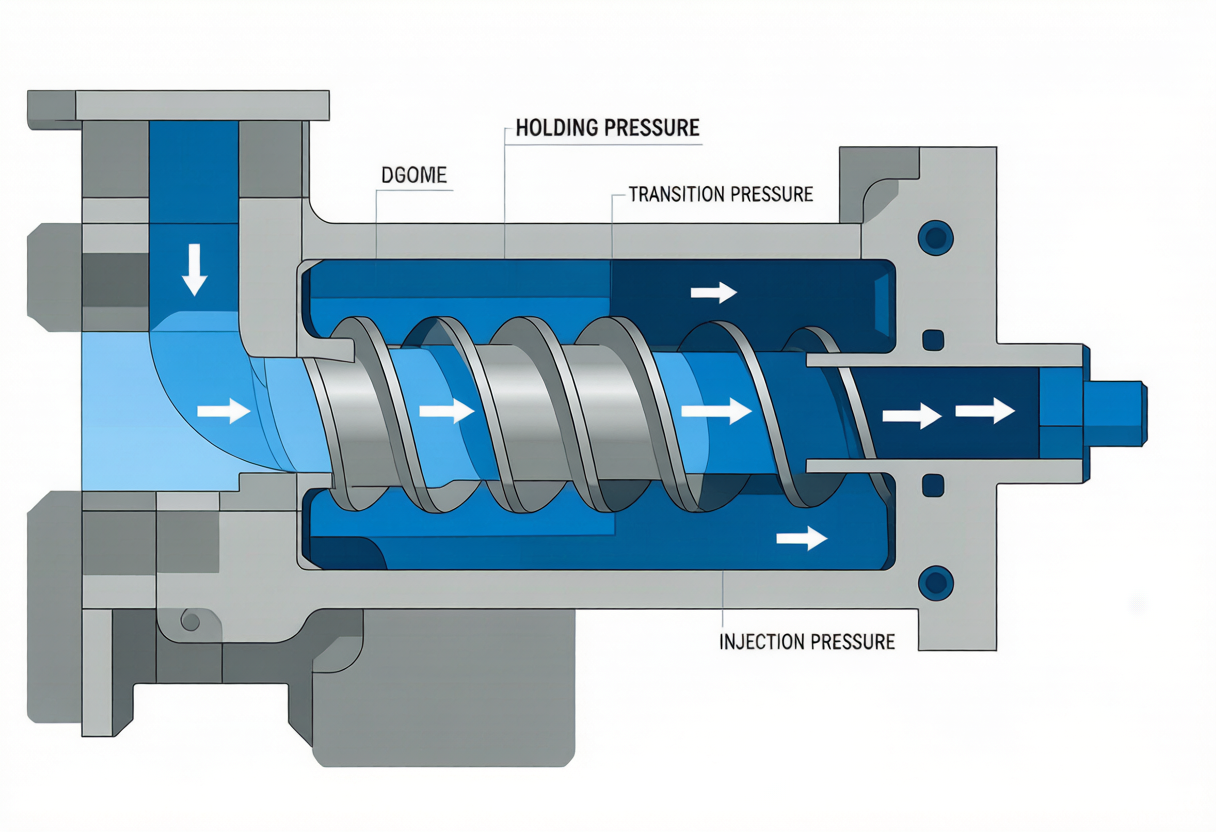
It resists screw recovery during plasticizing. The setting influences mixing, melt uniformity, recovery time, shear heat, shot consistency, and the risk of material degradation.
Is higher back pressure better for nylon?
Not automatically. Use the lowest stable setting that achieves consistent plasticizing for the exact grade, moisture state, color, filler, screw, and cycle. Excessive pressure can add heat and shear.
Can back pressure cause splay or bubbles?
It can contribute when excessive shear or heat combines with moisture, poor venting, volatile contamination, or long residence time. Confirm the complete process and material history.
Should an RFQ specify back pressure?
An RFQ should specify the material, part requirement, defect history, and validation evidence. The molder should establish and document the machine-specific back-pressure window during trials.
Request a Melt Quality and Process Window Review
Send the grade, filler, moisture record, machine data, defect evidence, and part requirements for a controlled process review.

