
Splay in injection molding appears as silver or streak-like marks on the molded part surface. It is commonly caused by moisture in the resin, excessive melt temperature, shear heating, trapped gas, poor venting, material contamination, or an unstable screw and injection profile.
Splay is easy to mistake for a simple cosmetic issue, but it often reveals a process or material control problem. For transparent PC, cosmetic ABS housings, nylon components and flame-retardant materials, splay can affect appearance, mechanical properties and customer acceptance.
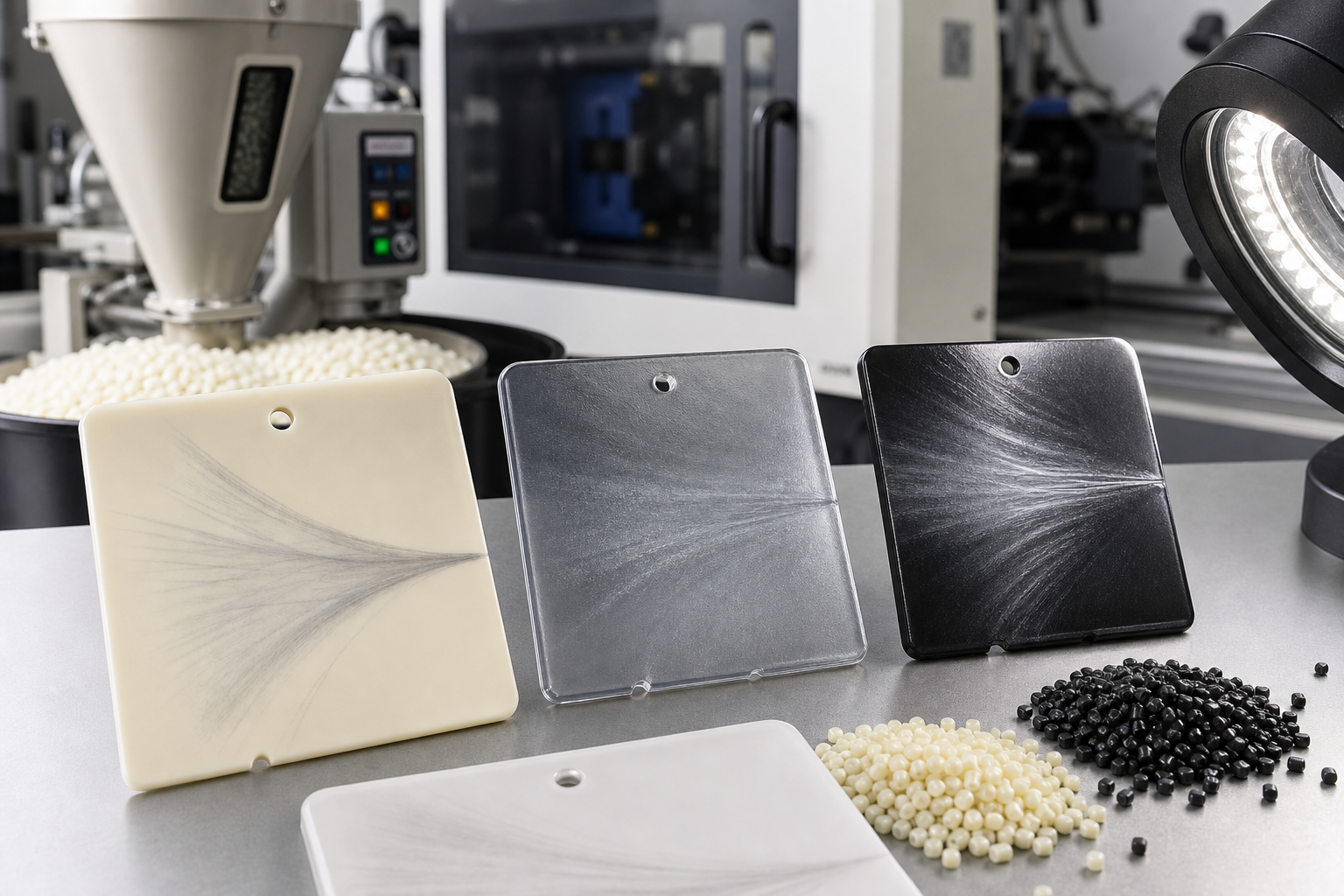
Main Causes of Splay in Injection Molding
| Oorzaak / materiaal | Typisch kenmerk of gebruik | Maatregel van de koper of de technische dienst |
|---|---|---|
| Vocht | Silver streaks, brittleness, random surface marks | Dry resin and protect dried material from reabsorbing moisture |
| Excess melt temperature | Streaks with discoloration or burning risk | Lower barrel temperature and reduce residence time |
| High shear | Splay near gates or thin restrictions | Review gate size, injection speed and screw speed |
| Onvoldoende ventilatie | Streaks near flow end or trapped gas zones | Improve vents and balance filling |
| Contamination | Irregular streaks, black specks or color defects | Clean hopper, barrel, regrind and material handling path |
How to Separate Moisture Splay from Shear Splay
- Moisture splay often changes after drying conditions are corrected.
- Shear splay is commonly concentrated near the gate, ribs or thin flow restrictions.
- Material degradation can appear with odor, discoloration or brittle parts.
- Venting-related splay may repeat at the end of fill or in enclosed flow areas.
- A stable troubleshooting plan changes one variable at a time instead of changing resin, mold and machine settings together.
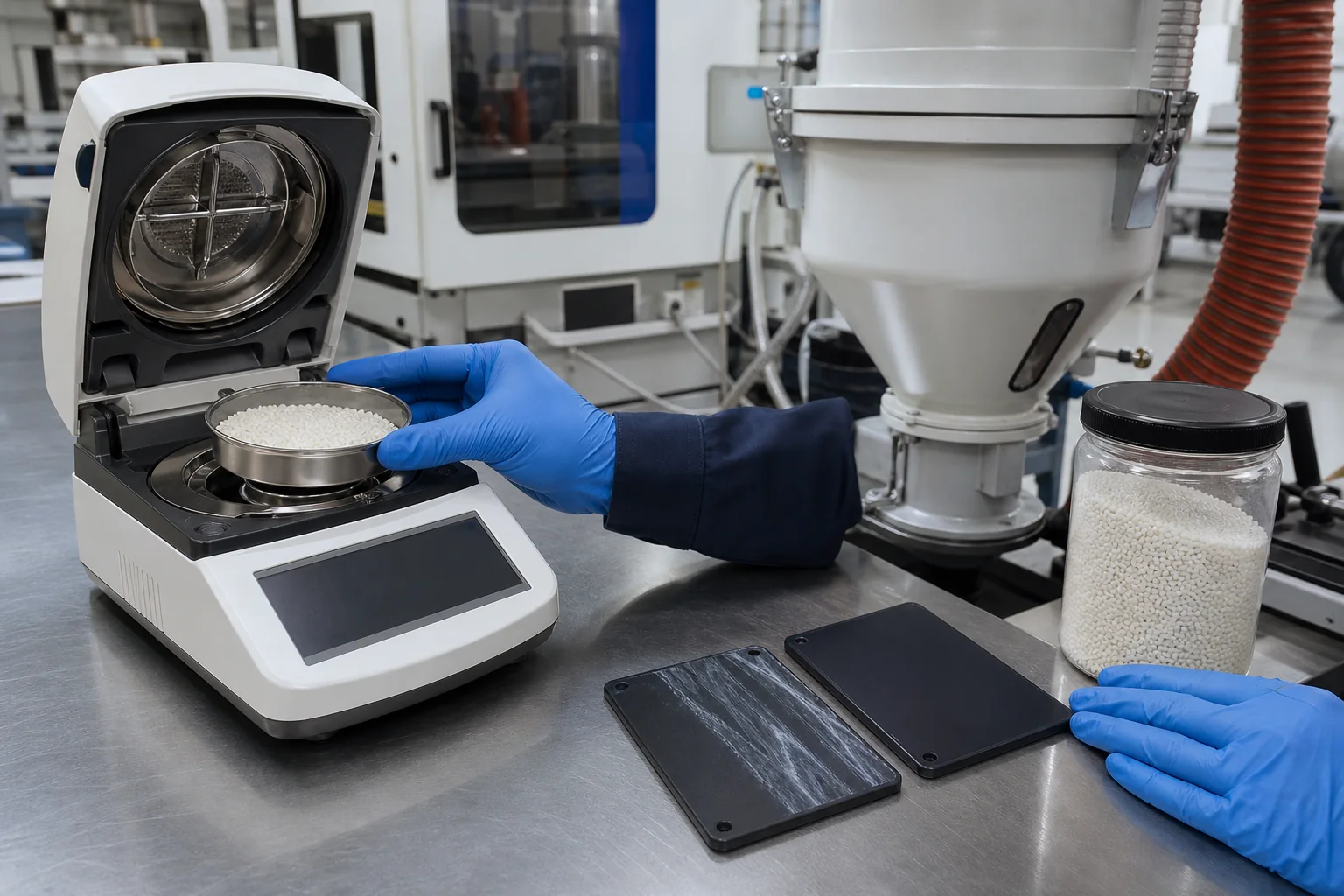
A Controlled Splay Troubleshooting Sequence
- Quarantine the affected lot and record machine, cavity, cycle, material lot, and defect location.
- Verify resin identity, packaging, storage, dryer dew point, residence time, and moisture using a validated method.
- Compare defect direction and gate location before changing melt temperature or speed.
- Change one variable at a time and retain labeled samples.
- Confirm the fix across startup, steady production, cavities, and an agreed inspection standard.
Material-Specific Splay Risks
| Materiaal / behuizing | Belangrijkste punt van zorg | Toelichting bij de selectie |
|---|---|---|
| Polycarbonaat | Moisture and high temperature | Dry thoroughly and control melt temperature |
| Nylon | Moisture absorption | Use correct drying time and sealed material handling |
| ABS | Moisture, overheating and contamination | Check dryer, residence time and regrind |
| TPE / TPU | Moisture and shear sensitivity | Review drying, gate and injection speed |
| Filled materials | Shear, fiber orientation and venting | Balance process and gate design |
Buyer RFQ Details for Splay Troubleshooting
Voor een nuttige beoordeling kunt u het 3D-model of de 2D-tekening, de harssoort of het beoogde materiaal, foto’s van het onderdeel (indien het defect al aanwezig is), informatie over de machine en de matrijs (indien beschikbaar), het verwachte jaarlijkse productievolume, esthetische eisen, kritische afmetingen, de toepassingsomgeving en eventuele inspectienormen toesturen. Nylon Plastic kan het ontwerp, het materiaal en het spuitgietproces beoordelen voordat er wijzigingen in de matrijzen of de productie worden doorgevoerd.
Buyer Information Needed for Root-Cause Review
- Resin family, complete grade, color, additive package, lot, and regrind policy.
- Dryer type, temperature, dew point, time, hopper loading, and measured moisture.
- Melt and mold temperature, screw speed, back pressure, injection profile, and residence time.
- Gate, vent, wall, cavity pattern, defect photos, rejected quantity, and acceptance standard.
Do not change drying, temperature, screw speed, back pressure, injection speed, and venting at the same time. That may hide the defect without establishing root cause. Hold the material lot and mold condition constant, change one controlled variable, label each sample, and confirm the result over enough cycles to include startup and steady-state behavior. If the defect follows one cavity or one flow path, inspect the mold and gate before blaming the entire resin lot.
Hoe nylonplastic de evaluatie ondersteunt
Nylon Plastic has worked across material modification and finished plastic-part manufacturing since 2005. This allows buyers to connect the resin decision with material drying, mold venting, process trials, and defect validation rather than approving a grade from a family name or one dry data-sheet value.
- Compare unfilled PA, PA-GF20, and PA-CF30 against the actual failure mode.
- Review custom compounding when a standard grade misses stiffness, impact, color, wear, heat, or compliance requirements.
- Define TDS, COA, moisture, sample approval, traceability, and lot-release requirements before volume ordering.
Gerelateerde lezen
- Nylon Granules Incoming Inspection
- Diensten op het gebied van spuitgieten van nylon
- Op maat gegoten kunststofonderdelen
Veelgestelde vragen
What is splay in injection molding?
Splay is a silver or streak-like surface defect commonly associated with moisture, gas, excessive heat, shear, contamination, or unstable material handling.
How can moisture splay be confirmed?
Verify resin moisture with a validated method, audit sealed handling and dryer performance, and run a controlled comparison instead of assuming every silver streak is moisture.
Can high injection speed cause splay?
Yes. Excessive shear at a restrictive gate or thin section can contribute, especially when melt temperature or residence time is already high.
What should be included in a splay troubleshooting request?
Provide the full grade, lot, drying and moisture records, process settings, gate and vent details, defect location, photos, cavity pattern, and acceptance criteria.
Request a Splay Root-Cause Review
Send the material, dryer, process, mold, and defect records so moisture, heat, shear, venting, and contamination can be separated systematically.

