
Glass-Filled vs Unfilled Nylon is a common design decision when balancing stiffness, impact behavior, and molding performance.
For GF15, GF30 and higher reinforcement levels, use our glass-filled nylon grade guide; this page focuses on whether reinforcement is needed in the first place.

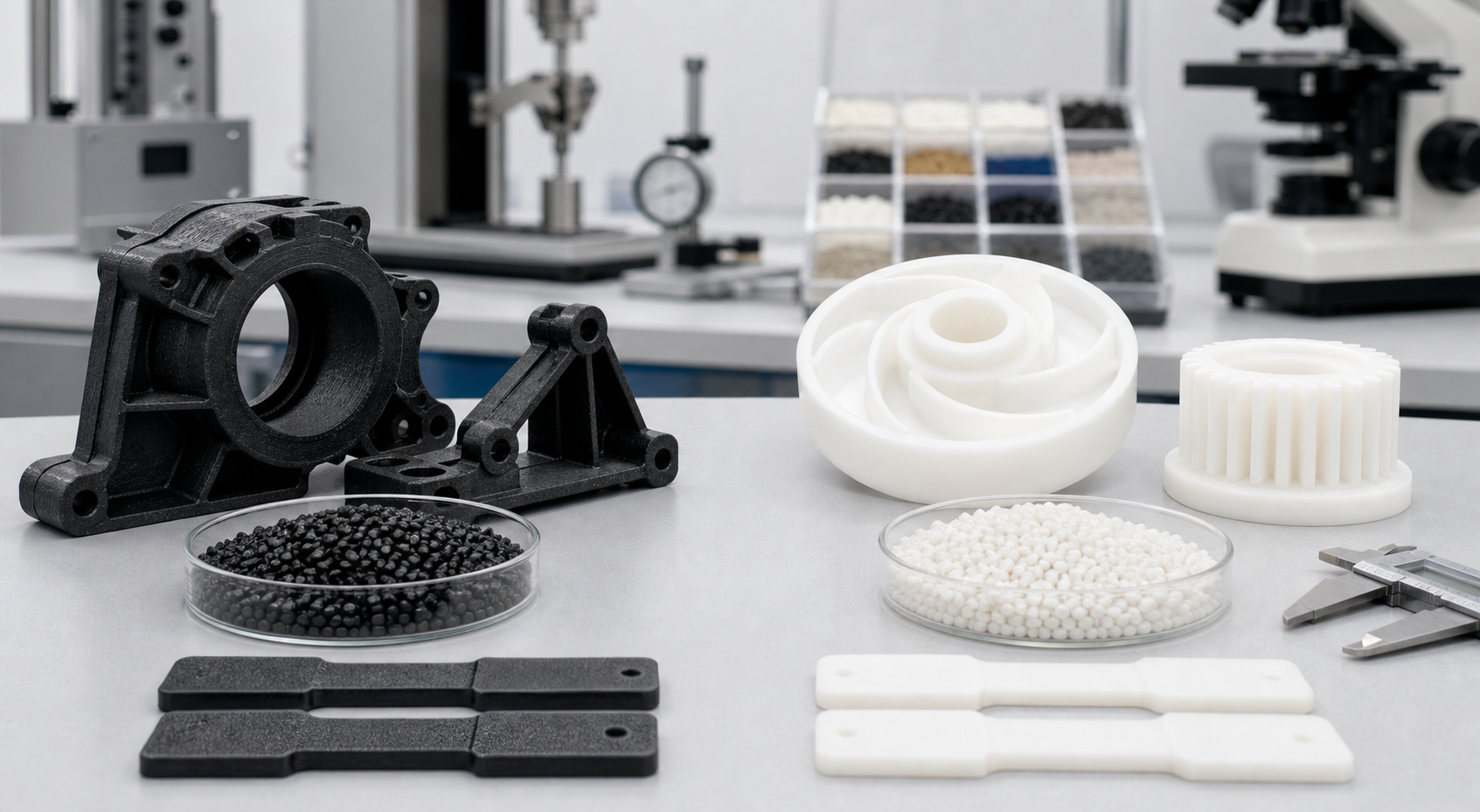
Adding glass fibers to nylon dramatically changes its performance characteristics. While unfilled nylon offers excellent toughness and processability, glass-filled grades deliver substantially higher strength, stiffness, and thermal stability.
Voor engineering- en inkoopteams
Does This Nylon Part Need Glass Reinforcement?
Glass-filled nylon increases stiffness and dimensional control, but it can reduce impact toughness, change shrinkage and increase mold wear. Use reinforcement only when the drawing and load case justify it.
- Use unfilled nylon for toughness, snap fits and smoother surfaces
- Use glass-filled nylon for stiffness, creep control and structural loads
- Review fiber direction, gate location, warpage and cosmetic zones together
Request a filled vs unfilled nylon review → Bekijk onze diensten op het gebied van spuitgieten van nylon
What Is Glass-Filled Nylon?
Glass-filled nylon is a composite material consisting of nylon resin reinforced with short glass fibers. The most common grades contain 15%, 25%, 30%, or 50% glass fiber by weight.
Vergelijking van mechanische eigenschappen
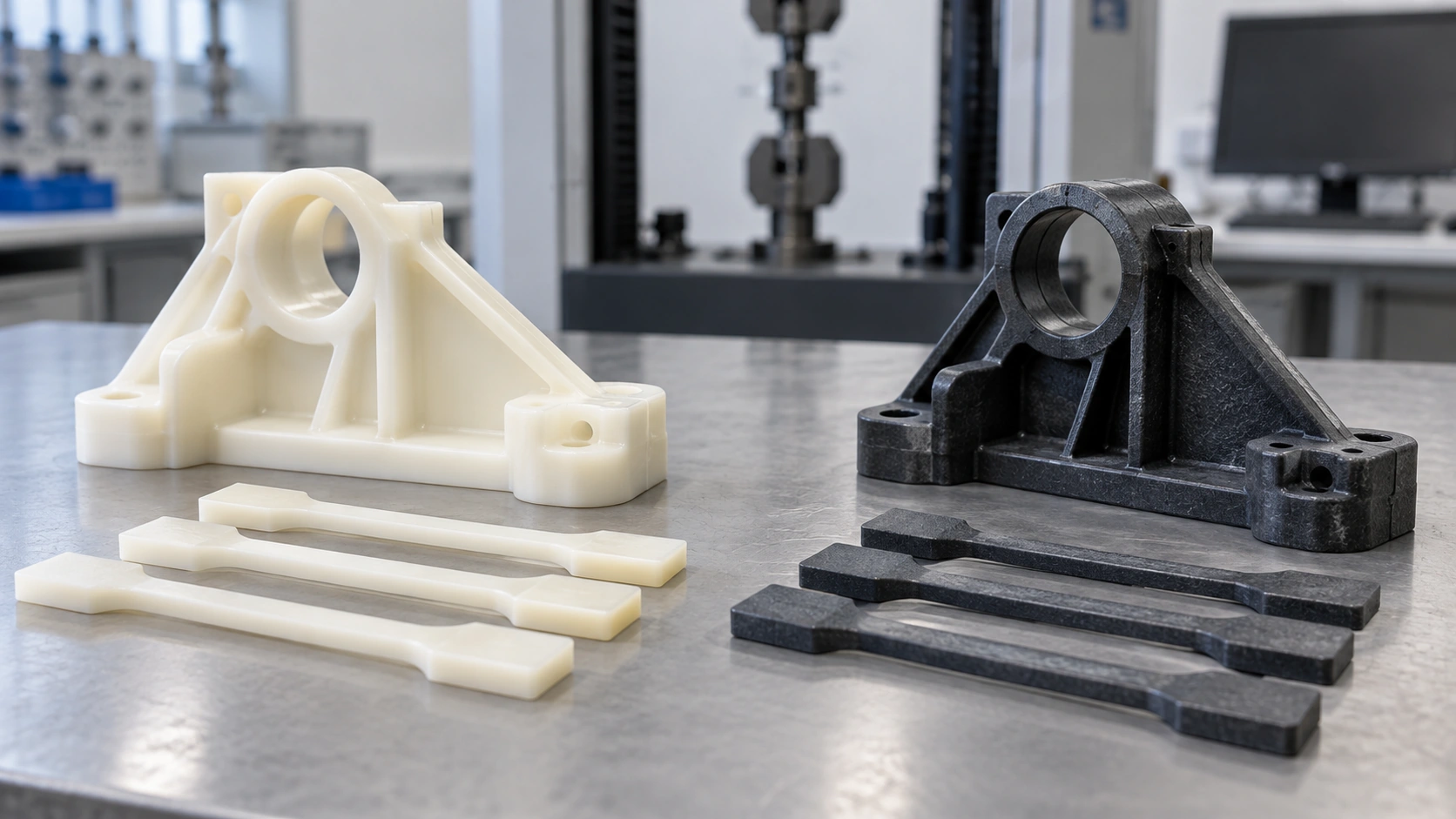
How to use this table: The existing values are broad screening examples, not one named PA6 grade or a design specification. The table does not state specimen conditioning or complete test methods. For approval, compare current datasheets for the exact unfilled and glass-filled grades under matched conditions, then test molded samples.
| Eigendom | PA6 Unfilled | PA6 GF15 | PA6 GF30 | PA6 GF50 |
|---|---|---|---|---|
| Treksterkte (MPa) | 75 | 120 | 170 | 210 |
| Flexural Modulus (GPa) | 2.7 | 5.5 | 8.5 | 14.0 |
| HDT bij 1,8 MPa (°C) | 65 | 180 | 195 | 210 |
Dimensionale stabiliteit
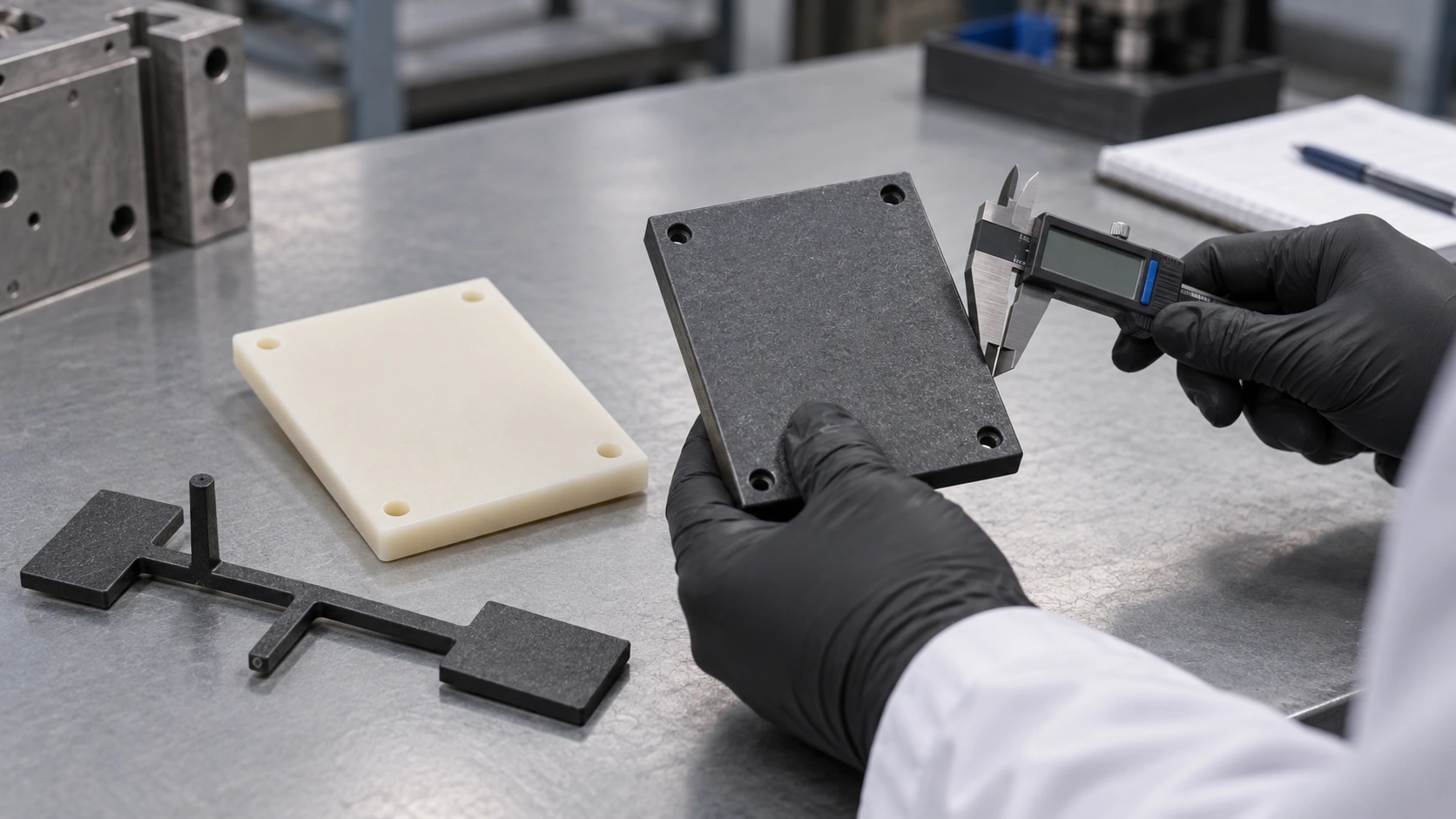
Glass reinforcement can reduce thermal expansion and molding shrinkage along the flow direction, but fiber orientation makes the result direction-dependent. Compare the exact grade’s parallel and transverse values, gate layout and molded-part dimensions before setting tolerances. See Envalior’s explanation of fiber orientation and thermal expansion.
Verwerkingsoverwegingen
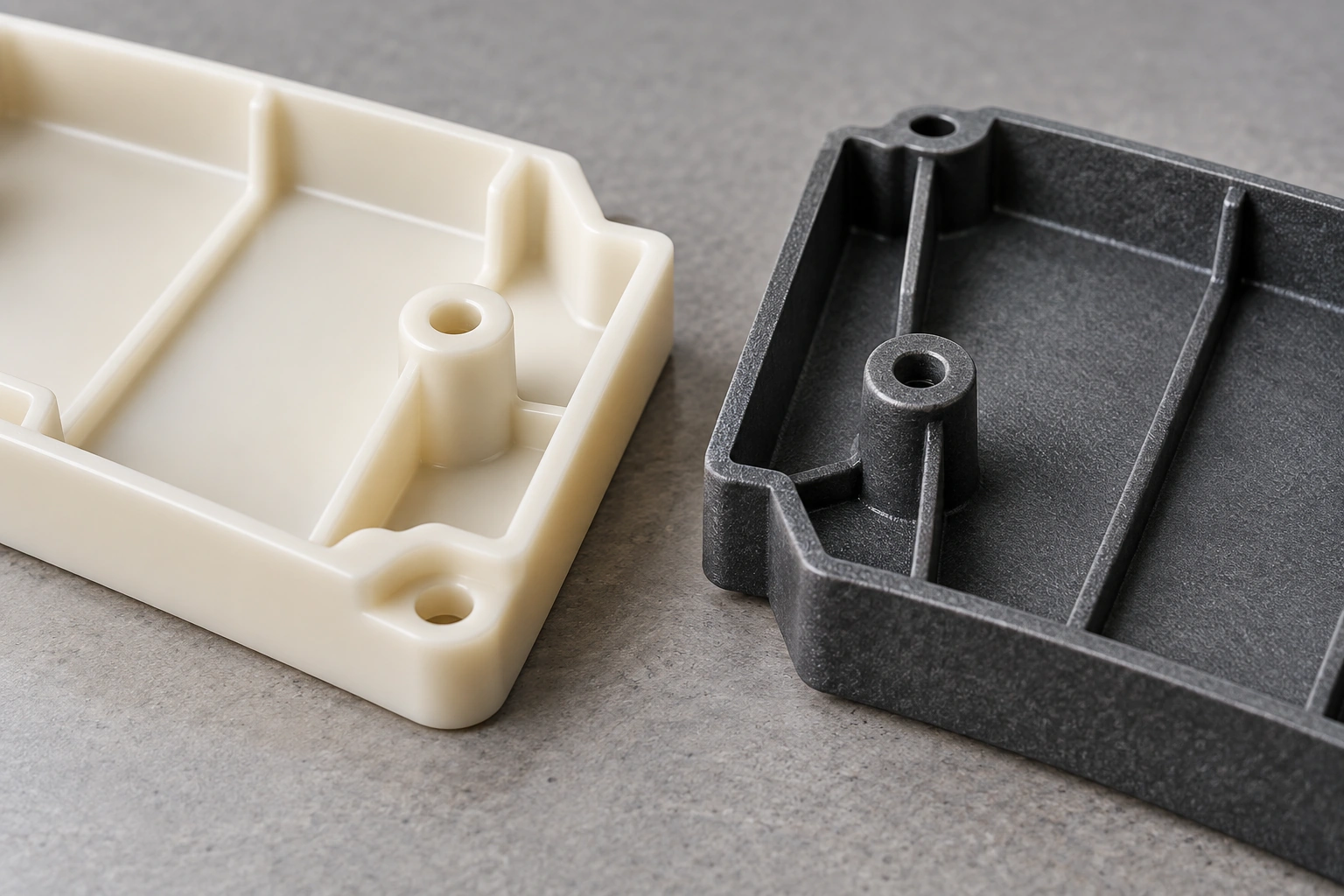
Processing settings depend on the exact nylon and glass-filled grade. Check the supplier’s melt and mold temperature guidance, expected filling pressure and drying conditions; review gate position, fiber orientation and tool wear before production. BASF’s Ultramid molding guide explains the direction-dependent shrinkage and warpage risk.
Cost Considerations
GF30 is a useful structural comparison point, but the lowest-cost choice depends on the part, annual volume and required performance. Compare resin price together with wall thickness, cycle time, scrap, tool wear and qualification cost before choosing an unfilled or reinforced grade.
Gebruiksaanwijzing
Choose Unfilled Nylon When:
- Impact resistance and toughness are critical
- Parts need good surface finish
- Snap-fits or living hinges are required
- Cost is the primary concern
Choose Glass-Filled Nylon When:
- High strength and stiffness are needed
- Dimensional stability under heat is critical
- Metal replacement is the goal
- Precision tolerances must be maintained
Onze mogelijkheden
Met meer dan 300 CNC machines, produceren we meer dan 10.000 stuks per dag met toleranties zo nauw als ±0,005mm. Wij accepteren MOQ vanaf 1 stuk, met levertijden variërend van 24 uur tot 15 dagen. We supply nylon in all grades—unfilled, GF15, GF30, and GF50. Ontvang binnen 24 uur een offerte.
Welke soorten nylonkunststof kunnen voor dit project op maat worden gemaakt?
Nylon Plastic combineert materiaalaanpassing met productontwerp, matrijsontwerp en -bouw, spuitgieten, CNC-bewerking en 3D-printen. De juiste toepassing wordt bepaald op basis van de tekening en de gebruiksomstandigheden, en niet op basis van een algemene materiaalbenaming.
| Aanpassingsgedeelte | Te beoordelen opties | Benodigde informatie |
|---|---|---|
| Nylon family | PA6, PA66, PA12 and suitable reinforced alternatives | Heat, moisture, impact, wear and cost requirements |
| Reinforcement | Unfilled, moderate glass loading or higher-stiffness grade review | Deflection limit, load direction and surface requirement |
| Part design | Rib, boss, gate, draft, warpage and snap-fit DFM | CAD, mating parts, cosmetic zones and critical tolerances |
| Production package | Material review, mold making, molding and inspection planning | Sample quantity, annual volume and required records |
Checklist voor offerteaanvragen
- Current material and the reason a change is being considered
- Load, impact, heat, moisture and wear conditions
- Critical dimensions, flatness and surface requirements
- Gate or weld-line restrictions and assembly information
- CAD, quantity, annual volume and target tooling life
DFM-ondersteuning, NDA-afspraken, documentatie over materialen of samenstellingen en inspectie-eisen kunnen tijdens de offertebespreking worden besproken. De beschikbaarheid hangt af van de omvang van het project en het overeengekomen kwaliteitsplan.
Van beoordeling tot productie
- Definitie: de tekening, de toepassing, de omgeving en het volume delen.
- Recensie: vergelijk risico’s op het gebied van materiaal, proces, DFM en validatie.
- Valideren: Maak waar nodig gebruik van monsters, 3D-printen, CNC-bewerking of prototypegereedschap.
- Producten: de gereedschappen of de productie pas vrijgeven nadat de overeengekomen controles zijn afgerond.
Where PA6-GF20 Fits in the Selection
A material review often compares unfilled nylon directly with a 30% glass grade, although an intermediate loading may be a better fit for the part. PA6-GF20 is worth evaluating when an unfilled grade deflects or shrinks too much, while the cost, brittleness, surface texture, fiber orientation, or tooling burden of a higher loading is not justified.
| Decision | Unfilled PA6 | PA6-GF20 | PA6-GF30 |
|---|---|---|---|
| Primary reason to select | Toughness, fatigue, wear, and surface quality | Balanced stiffness, shrinkage control, and moldability | Higher stiffness and lower directional shrinkage |
| Typical tradeoff | More deflection and moisture-driven movement | Moderate anisotropy and visible fiber texture | More warpage sensitivity, brittleness, abrasion, and cost |
| Validation focus | Conditioned fit, creep, and impact | Gate direction, weld lines, warpage, and conditioned dimensions | Flow orientation, local stress, tool wear, and critical surface acceptance |
Compare the exact matrix and grade in the expected moisture condition. A PA6-GF20 result should not be substituted directly for PA66-GF20, and a headline dry tensile value should not replace molded-part testing. For a higher loading, review the PA6-GF30 product route; for a different reinforcement family, use the PA6-CF30 route only when its specific stiffness or other qualified benefit is required.
Veelgestelde vragen
Can the glass-fiber loading be customized for the part?
The team can review different reinforcement levels, but the choice should be tied to deflection, impact, warpage, flow length, appearance and tool wear rather than selecting the highest percentage by default.
Is unfilled nylon better for snap fits and impact?
Often it is because unfilled nylon generally retains more ductility. The correct answer depends on beam strain, conditioning, wall thickness, assembly cycles and the exact resin grade.
Can color and surface finish be controlled on glass-filled nylon?
Color and mold texture can be reviewed, but exposed fibers and flow orientation may limit the achievable appearance. Identify cosmetic zones and approved reference samples in the RFQ.
What information is needed for a filled-versus-unfilled review?
Send the CAD and drawing, current grade, load and environment, critical fits, appearance target, annual volume and any existing failure or warpage data.
Gerelateerde lezen
- Lange glasvezel vs korte glasvezelversterkte nylon: Complete prestatiegids
- UV-gestabiliseerd nylon: Complete gids voor prestaties bij buitenweer
- PA6 Nylon: De volledige gids voor eigenschappen, toepassingen en wijzigingen
In één oogopslag
| Beslissingsmoment | Met glasvezel versterkt nylon | Unfilled Nylon | Selection Note |
|---|---|---|---|
| Stijfheid | Hoger | Onder | Use GF when deflection must be controlled |
| Risico op kromtrekken | Hoger | Onder | Part geometry and gate design matter more with GF |
| Wear / strength | Better for many structural parts | More flexible | Check load direction and thickness |
| Optimale toepassing | Structural molded parts | General-purpose parts | Match filler to actual loading and cost target |
Waarom kiezen voor nylon?
Nylon Plastic helps project teams decide when reinforcement is worth the added cost, warp risk and tooling sensitivity of a filled nylon grade.
Request a Filled Nylon Review
Send the part use case and tolerance target for a filled versus unfilled nylon check.

