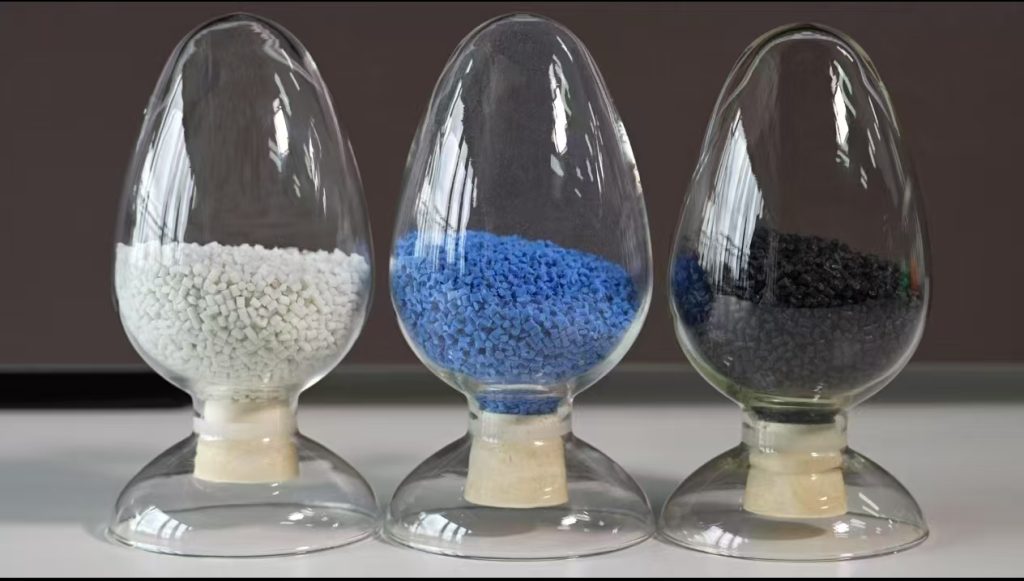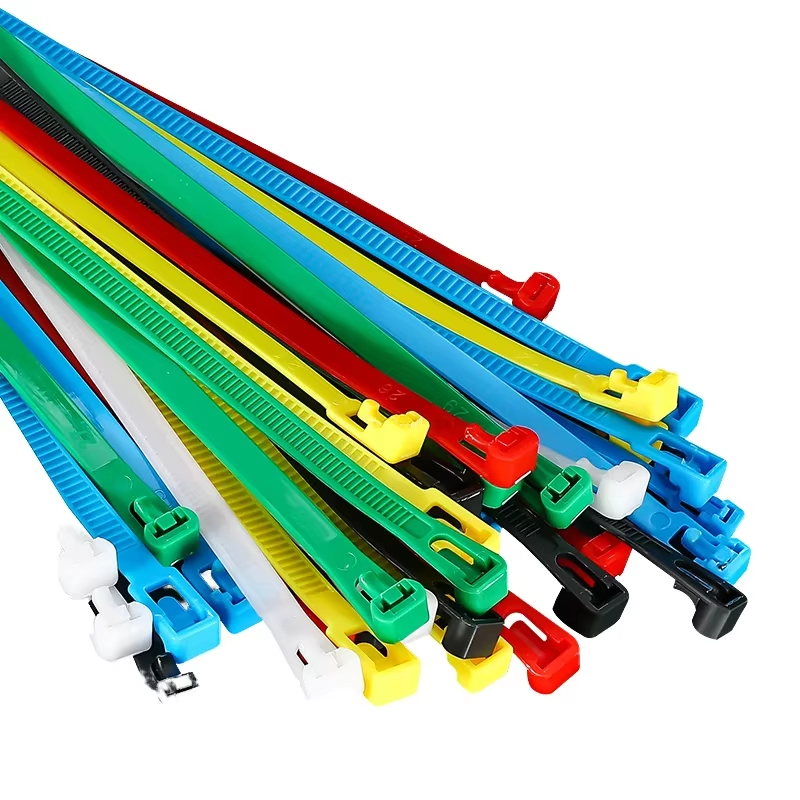
Nylon material selection for injection molding starts with the service condition, not the strongest dry data-sheet value. Choose the PA matrix first, then decide whether the part needs unfilled resin, GF20, GF30, CF30, impact modification, heat stabilization, flame performance, wear additives, or another qualified package.
The drawing should define load, temperature, humidity, chemicals, tolerance state, appearance, annual volume, and approvals before the resin is released for tooling.
How to Choose the Right Nylon: A Systematic Material Selection Guide
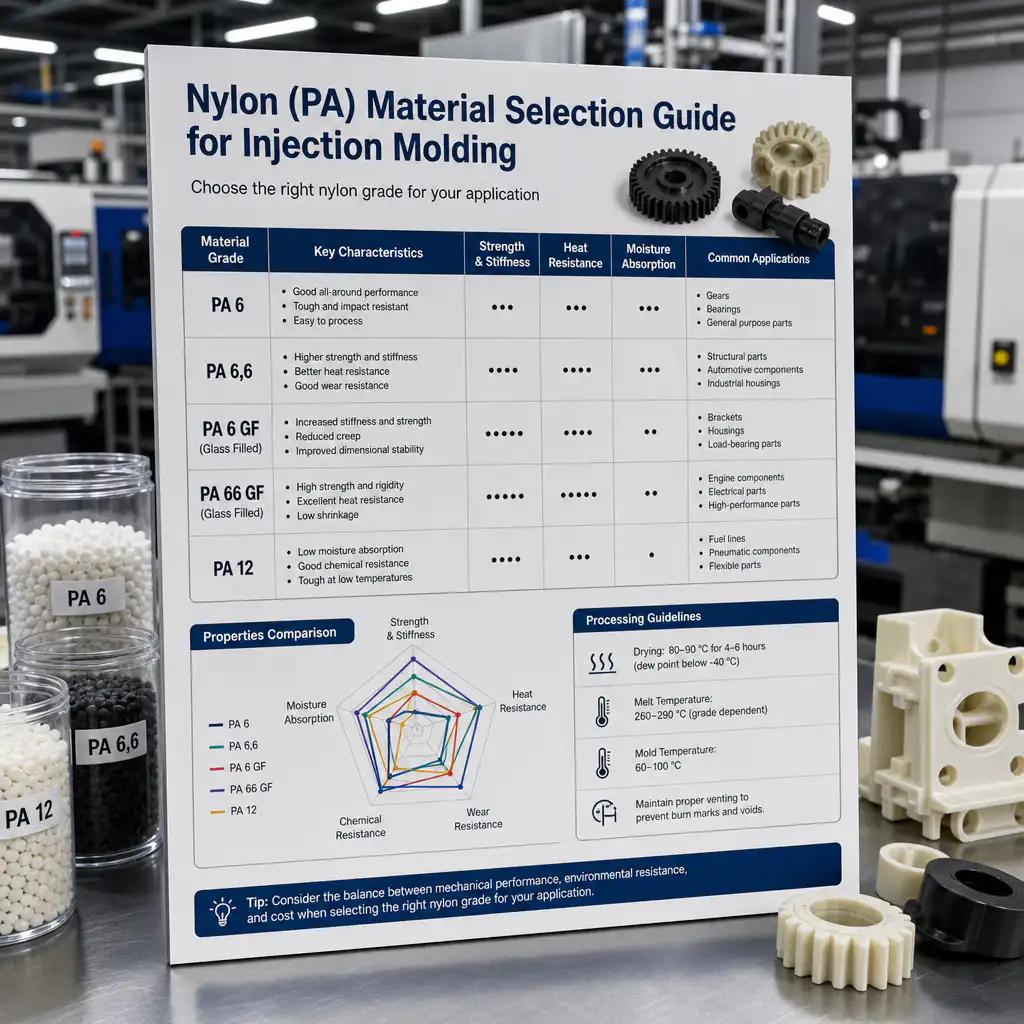
Selecting the correct nylon grade is one of the most consequential decisions in engineering plastics procurement. A wrong choice — choosing PA66 where PA6 suffices, or specifying unfilled nylon for a structural application — can result in field failures, production delays, and costly material substitutions mid-project.
This guide provides a structured decision framework based on actual engineering criteria: mechanical requirements, thermal environment, moisture exposure, chemical contact, regulatory compliance, and cost. Every selection factor is tied to real-world data so you can make evidence-based decisions, not rely on generic rule-of-thumb guidance.
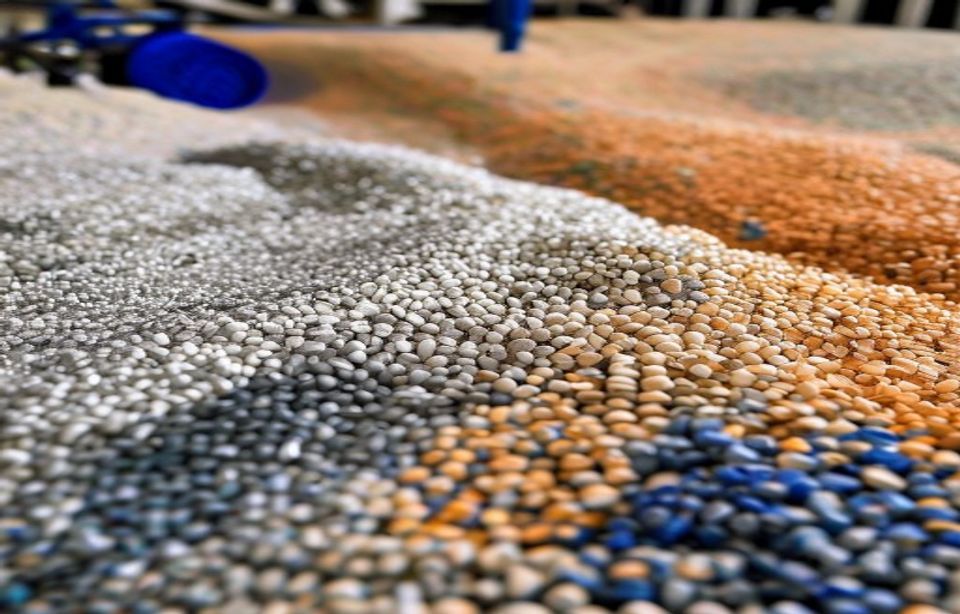
The Five Critical Selection Criteria
Before examining specific grades, establish the priority order of these five criteria for your application. Most applications fail because two or more criteria conflict — understanding which takes precedence avoids costly design changes later.
| Criterium | Waarom het belangrijk is | Primary Impact | Secondary Impact |
|---|---|---|---|
| Mechanische sterkte | Load-bearing capacity required | Structural parts, brackets | Gear teeth, bearing surfaces |
| Thermische weerstand | Maximum service temperature | Engine components, high-heat zones | Processing window |
| Vochtgevoeligheid | Operating humidity environment | Dimensionale stabiliteit | Electrical properties |
| Blootstelling aan chemische stoffen | Fluids in contact with part | Fuel, oil, acid, alkali | Cleaning agents, solvents |
| Regulatory Compliance | Market and industry standards | Food, medical, potable water | Automotive, aerospace |
PA6 vs. PA66: The Fundamental Choice
PA6 and PA66 together account for over 90% of global nylon consumption. Understanding their differences is the foundation of all material selection decisions.
| Eigendom | PA6 | PA66 | Winnaar |
|---|---|---|---|
| Smeltpunt | 220-225°C | 260-265°C | PA66 |
| Crystallinity | Lower (~40%) | Higher (~50%) | PA66 for dimensional stability |
| Treksterkte | 70-85 MPa | 80-90 MPa | PA66 |
| Schokbestendigheid | Higher (tougher) | Lower (stiffer) | PA6 |
| Vormkrimp | 1.0-1.5% | 1.3-1.8% | PA6 (lower warpage) |
| Wateropname | 8.5-9.0% | 8.0-8.5% | Similar |
| Verwerkingstemperatuur | 230-260°C | 270-295°C | PA6 (lower energy) |
| Kosten | Onder | Hoger | PA6 (20-30% cheaper) |
| Weerstand tegen vermoeidheid | Goed | Uitstekend | PA66 |
Reinforced Grades: When to Specify Glass or Carbon Fiber
Unreinforced nylon serves many applications well, but structural, high-temperature, and high-precision applications almost always require reinforcement. GF30 and GF33 (glass fiber) are the workhorses; CF30 (carbon fiber) is selected for ultra-lightweight or high-stiffness applications.
| Rang | Treksterkte | Flexural Modulus | HDT (1,82 MPa) | Belangrijkste voordeel | Typische toepassingen |
|---|---|---|---|---|---|
| PA6 (ongevuld) | 70-85 MPa | 2,800 MPa | 70°C | Tough, cost-effective | Gears, bushes, flexible parts |
| PA66 (ongevuld) | 80-90 MPa | 3.000 MPa | 80°C | Stiff, fatigue-resistant | Structural parts, bearings |
| PA6-GF30 | 160-180 MPa | 8,500 MPa | 215°C | Heat resistant, stiff | Engine covers, brackets |
| PA66-GF33 | 190-210 MPa | 10,500 MPa | 250 °C | Highest stiffness | Structural automotive |
| PA6-GF50 | 200-230 MPa | 15.000 MPa | 220 °C | Metal replacement | Heavy-load brackets |
| PA66-CF30 | 240-280 MPa | 20,000 MPa | 260 °C | Lightweight, ESD-safe | Robotics, aerospace |
| PA12 (unfilled) | 45-55 MPa | 1.800 MPa | 85 °C | Low moisture, flexible | Fluid systems, catheters |
Moisture and Environment: Matching to Operating Conditions
Moisture absorption is the most misjudged selection factor. Engineers often underestimate how dramatically water plasticizes nylon, reducing modulus by 40% and increasing dimensions significantly.
| Bedrijfsomgeving | Aanbevolen leerjaar | Waarom | Alternatief |
|---|---|---|---|
| Dry interior (<50% RH) | PA66 | Dimensional accuracy, stiffness | PA6 |
| Humid interior (50-80% RH) | PA66-GF30 | Moisture-stable when reinforced | PA6-GF30 |
| Outdoor exposed | PA66-GF30 + UV | UV stabilization essential | PA12 |
| Under-hood automotive | PA66-HT or PA66-GF30 | Heat-stabilized for >150°C | PA6-GF30 |
| Potable water contact | PA66-GF30 or PA12 | NSF/ANSI 61 compliant grades | PA66 approved |
| Chemical plant | PA66 or PVDF | Acid/alkali resistant grades | PP or HDPE |
| Low temperature (-30°C) | PA66 | Retains toughness at low temps | PA66-GF30 |
| High temperature (>200°C) | PA66-GF30 or PPA | Beyond PA66 capacity | PEEK or PPS |
After a grade is qualified, the control plan should define how each delivered lot is released. Use the nylon granules incoming inspection guide to connect grade approval with COA review, moisture checks, and traceable material release.
Application-Specific Selection Matrix
Rather than selecting by property alone, match the material to the application category for the fastest path to the right grade.
| Application Category | Industrie | Aanbevolen nylon | Certification Needed |
|---|---|---|---|
| Luchtinlaatspruitstukken | Automotive | PA66-GF30 + warmtestabilisator | OEM approval, under-hood thermal |
| Fuel rails and lines | Automotive | PA66-GF30 or PA12 | EN 594, SAE emissions |
| Elektrische connectoren | E&E, Automotive | PA66 V-0, PA6 V-2 | UL 94, IEC 60335 |
| Beverage tubing and fittings | Food & Beverage | PA12, PA66 food-grade | FDA 21 CFR 177.1500, EU 10/2011 |
| Behuizingen voor medische hulpmiddelen | Medisch | PA66 medical-grade | ISO 10993, FDA 510(k) |
| Industrial gears and bearings | Machinery | PA66-GF30 or PA66-CF30 | None mandatory |
| Sportuitrusting | Consument | PA6, PA66 | REACH, CPSIA for toys |
| Drone structural frames | Robotics/Aero | PA66-CF30 | UL 94 V-0 if electrical |
Common Buyer Errors Before Tooling Release
| Incomplete Decision | Resulting Risk | Required Check |
|---|---|---|
| Drawing says only nylon | PA6, PA66, PA12, and reinforced grades are quoted as interchangeable | Specify matrix, modification, conditioning, and approval |
| Higher fiber loading is chosen from stiffness alone | Impact, weld line, surface, flow, and tool wear suffer | Compare unfilled PA, GF20, GF30, and CF30 against the failure mode |
| Dry dimensions are used for humid service | Fit and flatness change after conditioning | Define inspection and use-state moisture |
| Grade changes after mold design | Shrinkage, gate, venting, and warpage assumptions become invalid | Approve resin and backup grade before tool release |
Hoe nylonplastic de evaluatie ondersteunt
Nylon Plastic has worked across material modification and finished plastic-part manufacturing since 2005. This allows buyers to connect the resin decision with mold design, drying, sampling, dimensional validation, and downstream manufacturing rather than approving a grade from a family name or one dry data-sheet value.
- Compare unfilled PA, PA-GF20, and PA-CF30 against the actual failure mode.
- Review custom compounding when a standard grade misses stiffness, impact, color, wear, heat, or compliance requirements.
- Define TDS, COA, moisture, sample approval, traceability, and lot-release requirements before volume ordering.
Gerelateerde lezen
Veelgestelde vragen
See our PA66 GF33 vs GF40 vs GF60 comparison for detailed grade selection and property data.
Should injection molding material selection start with PA6 or PA66?
Start with the actual heat, moisture, toughness, stiffness, process, cost, and approval requirements. Neither matrix is universally better.
When should PA-GF20 be considered?
GF20 is useful when unfilled PA cannot meet deflection, creep, or shrinkage targets but the project does not need the cost and processing burden of higher reinforcement.
Is PA-CF30 a direct upgrade from glass-filled nylon?
No. CF30 can improve specific stiffness or electrical behavior, but it changes cost, conductivity, anisotropy, brittleness, and processing requirements.
What should be approved before mold production?
Approve the exact grade, backup material, moisture state, shrinkage assumptions, critical dimensions, appearance, compliance, sample plan, and lot documentation.
Request a Nylon Material Selection Review
Send the drawing, annual volume, service environment, current resin, and failure mode for an unfilled PA, GF20, GF30, or CF30 comparison.