
A nylon chemical compatibility chart should separate PA6 and PA66, identify the exact chemical, and consider concentration, temperature, exposure time, load and moisture. Nylon usually performs well with many oils, greases and fuels, but strong acids, some oxidizers and certain solvents can reduce strength or cause cracking.
For molded nylon parts, chemical resistance is not a single yes-or-no property. PA6, PA66, glass-filled nylon and impact-modified grades can behave differently when a part is exposed to hot water, fuel blends, cleaning chemicals, road salt, alcohols or acidic fluids. The safest selection starts with the real service environment.
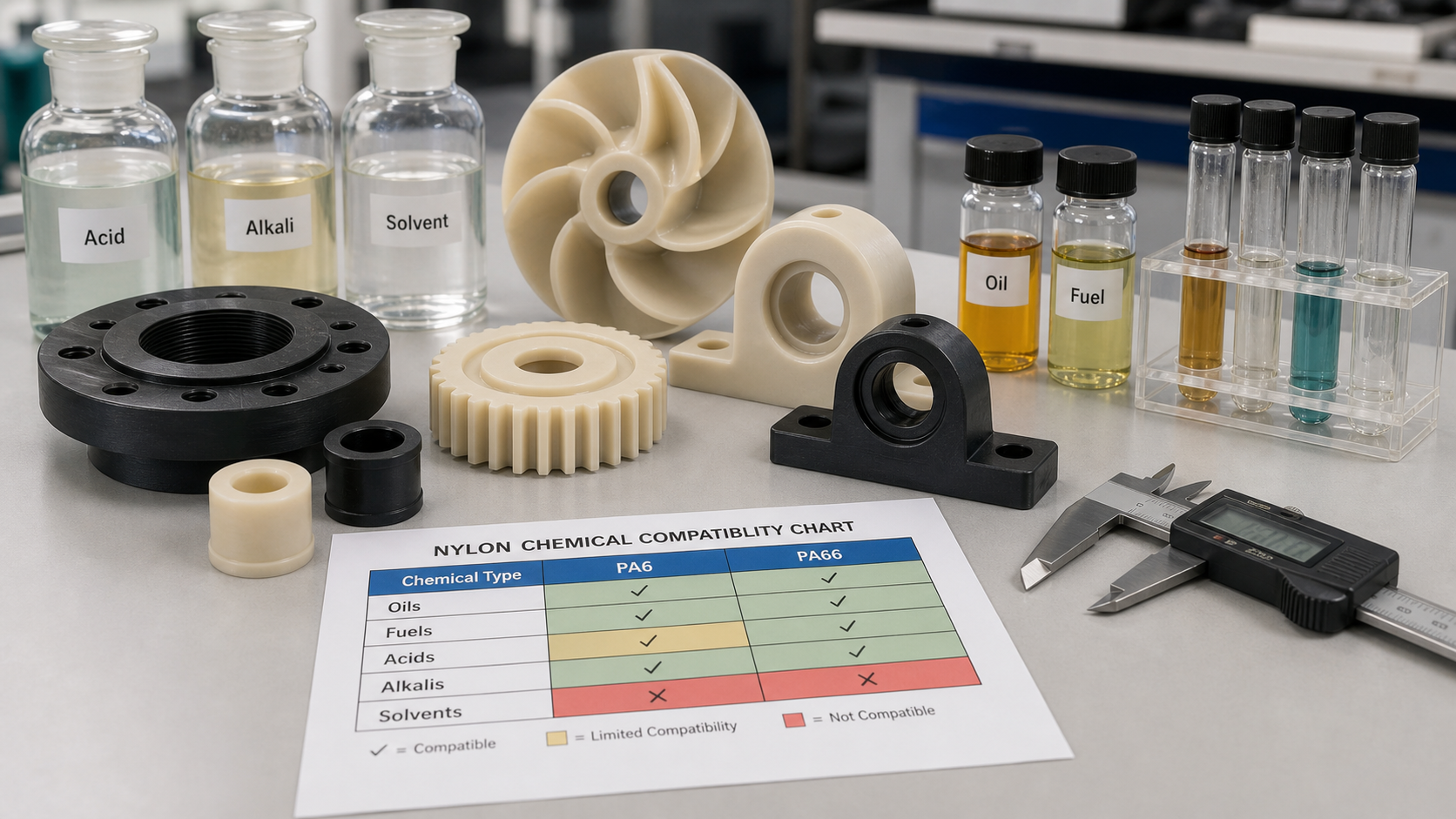
Nylon Chemical Compatibility by Exposure Type
Use this chart as an engineering starting point, not as final approval. Long-term testing is recommended when a part carries load, seals fluid, works at elevated temperature or contacts a chemical mixture.
| Blootstelling aan chemische stoffen | Typical nylon response | Engineering note |
|---|---|---|
| Lubricating oils and greases | Vaak goed | Confirm additives, temperature and long-term dimensional change. |
| Gasoline and diesel | Often usable with grade review | Fuel blends, ethanol and biodiesel can change performance. |
| Dilute alkalis | Often fair to good | Check temperature and stress level before production tooling. |
| Sterke zuren | Usually poor | Acid exposure can attack polyamide and reduce strength. |
| Aromatic solvents and oxidizers | Risk varies by chemical | Use compatibility data and sample testing before selection. |
What Buyers Should Send for Material Review
- Chemical name, concentration and whether the fluid is a mixture.
- Continuous and peak service temperature.
- Exposure time: splash, wipe, immersion or permanent contact.
- Mechanical load, snap-fit stress, sealing force or torque on the part.
- Target material, color, flame rating, glass fiber content and annual volume.
PA6 vs PA66 in Chemical Environments
PA66 is often selected when higher heat resistance and stiffness are needed, while PA6 may offer good toughness and processability. Moisture absorption matters for both because absorbed water changes dimensions, stiffness and impact behavior.
| Material option | Useful when | Watch out for |
|---|---|---|
| PA6 | General molded parts, brackets, clips and gears | Higher moisture uptake can affect dimensions. |
| PA66 | Higher heat parts, connectors and under-hood components | Drying and molding control are important. |
| Met glasvezel versterkt nylon | Stiff structural parts with better creep resistance | Fiber orientation affects strength and warpage. |
| PBT or PPS alternative | Hot, wet or chemical-heavy electrical applications | Cost and processing may increase. |
| POM alternative | Low-friction parts with fuels or sliding contact | Chemical and thermal limits still need review. |
Internal Links for Material Selection
For a custom plastic part, chemical compatibility should be reviewed together with DFM, molding process, tolerance and inspection requirements.
- Engineering plastics chemical resistance chart
- Nylon fuel resistance guide
- Nylon hydrolysis resistance guide
- Fabrikant van op maat gemaakte kunststofonderdelen
Veelgestelde vragen
Is nylon resistant to oil and grease?
Nylon is often resistant to many oils and greases, but the exact additive package, temperature and exposure time should be checked before using it in a loaded molded part.
Is PA66 more chemically resistant than PA6?
PA66 can offer higher heat resistance and stiffness, but chemical compatibility still depends on the fluid, temperature, moisture and stress level. It should not be chosen by polymer name alone.
Can nylon be used with gasoline or diesel?
Nylon can be used in some fuel-contact applications, but gasoline blends, ethanol, biodiesel and DEF exposure require grade-specific review and testing.
What information is needed for a nylon compatibility review?
Send the chemical name, concentration, exposure time, temperature, load, drawing, target quantity and any required compliance standard.

