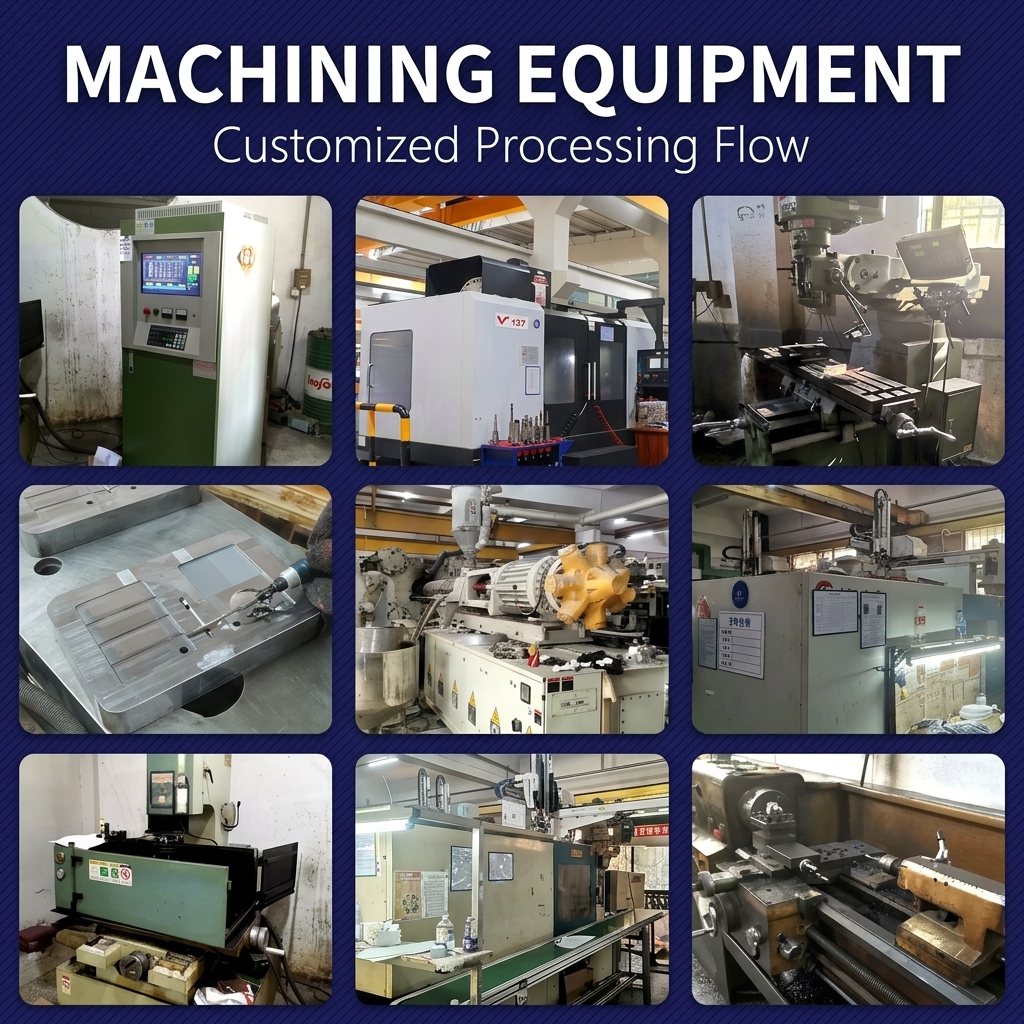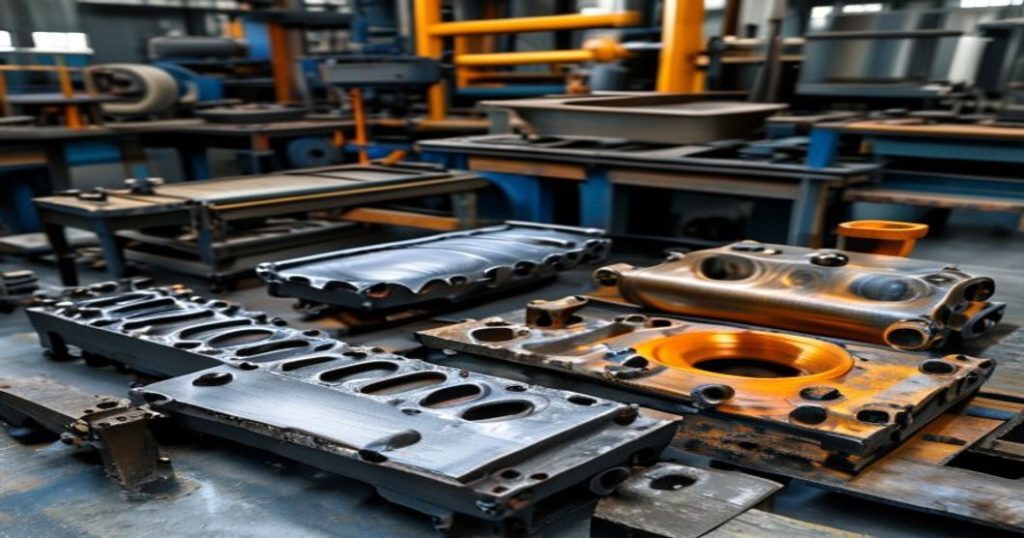
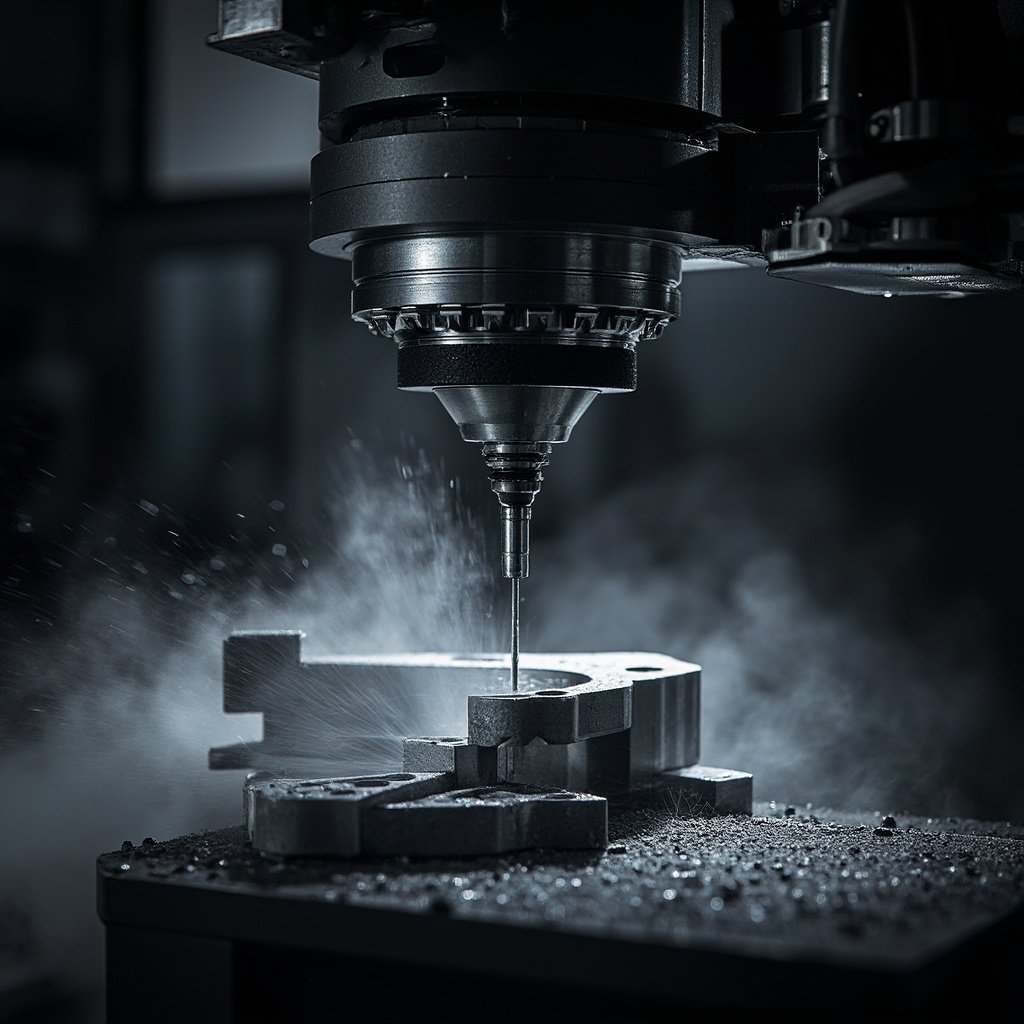
Here’s the thing: CNC machining isn’t magic. It’s not some black-box process that only PhDs understand. It’s a machine cutting metal — guided by a computer instead of a guy cranking handwheels. That’s it. But what makes it revolutionary is everything that comes with that shift: the speed, the repeatability, the ability to make parts you simply cannot make any other way.
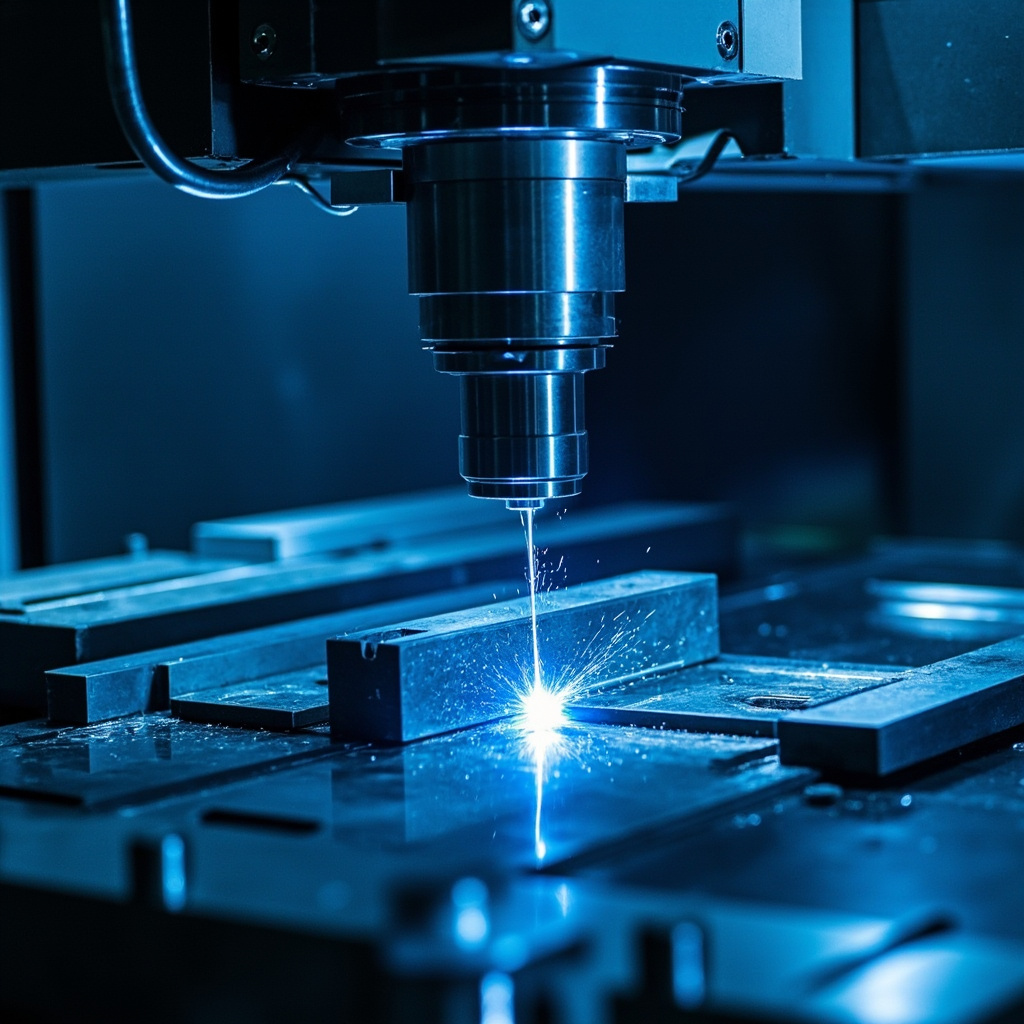
Kernbegrippen en basisprincipes
CNC stands for Computer Numerical Control. That mouthful breaks down into something dead simple: a computer reads a digital file, converts it into motion commands, and a machine tool executes those commands to cut raw material into a finished part.
The modern CNC workflow goes like this:
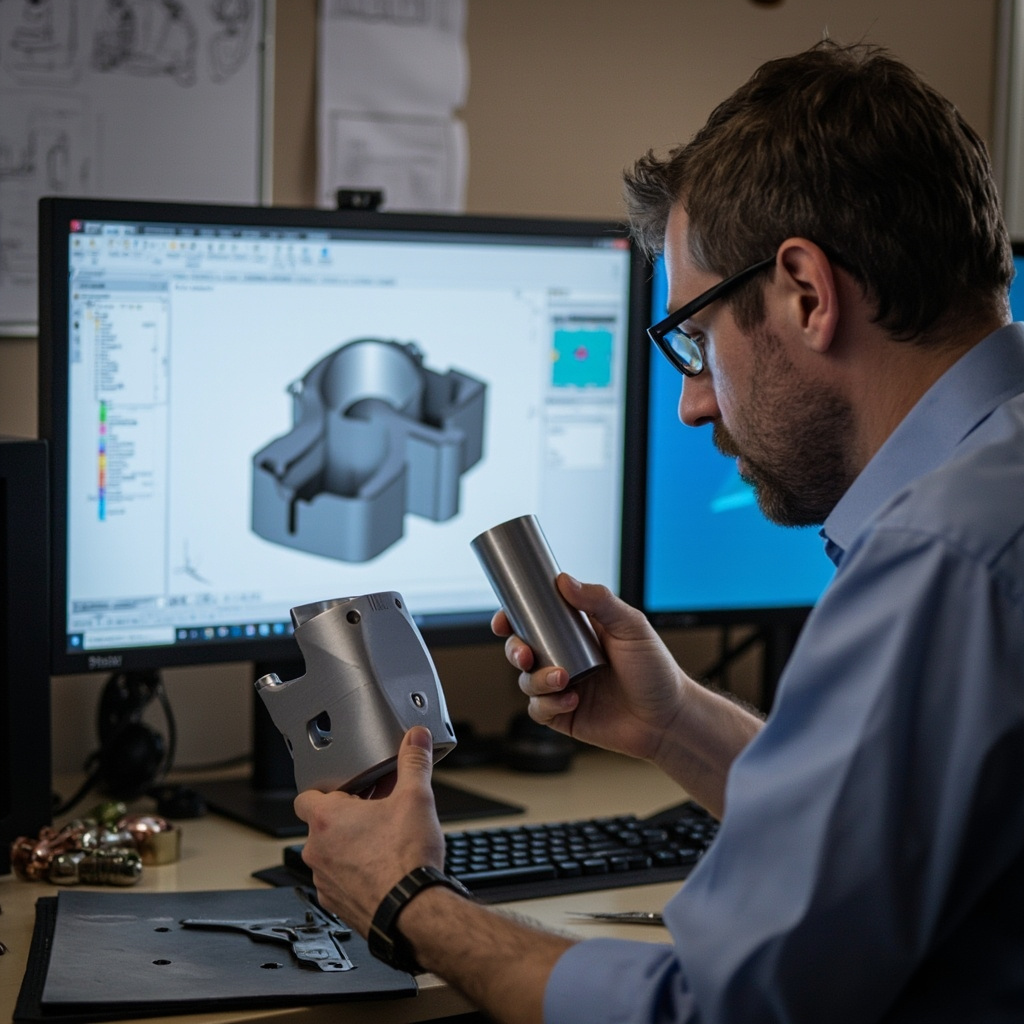
- CAD (Computer-Aided Design): An engineer creates a 3D model of the part. This is the “what we want to make” file.
- CAM (Computer-Aided Manufacturing): Software translates that 3D model into s — the exact movements the cutting tool needs to follow. This is the “how we make it” file.
- G-code: The CAM software spits out G-code, which is essentially a very detailed instruction list: move here at this speed, plunge to this depth, cut along this path, retract, repeat.
- Machine Execution: The CNC controller reads G-code line by line and drives servo motors that move the cutting tool through the material.
Here’s a critical distinction most guides gloss over: CNC isn’t one type of machine. It’s a control method applied to many different machine types. When someone says “we do CNC machining,” they could mean CNC milling, CNC turning (lathe work), CNC grinding, CNC EDM, or any combination. Each has different capabilities, different sweet spots, and different cost structures. We’ll dig into those differences next.
Belangrijke processen en technologieën
When you’re deciding how to make a part, the machine type matters way more than the brand name on the enclosure. Here’s the breakdown that actually matters for sourcing decisions:
| Proces | Beste voor | Typische tolerantie | Kostenniveau |
|---|---|---|---|
| 3-assige CNC-freesbewerking | Flat parts, pockets, holes, simple geometries | ±0,005″ (0,127 mm) | $ |
| 5-assig CNC-frezen | Complex contours, undercuts, aerospace/medical parts | ±0,002″ (0,05 mm) | $$$ |
| CNC Turning (Lathe) | Cylindrical parts, shafts, bushings, fasteners | ±0,001″ (0,025 mm) | $ |
| CNC Swiss Machining | Small-diameter, high-precision turned parts, medical screws | ±0,0005″ (0,0127 mm) | $$ |
| CNC EDM (Wire/Sinker) | Extreme hardness materials, sharp internal corners, mold cavities | ±0,0002″ (0,005 mm) | $$$$ |
| CNC Router | Large-format sheet material, wood, plastics, soft aluminum | ±0.010″ (0.254mm) | $ |
The dirty secret of the industry: a lot of shops will tell you they can hold ±0.001″ all day on a 3-axis mill. They can’t. Not repeatably, anyway. When you’re running parts at 2am and the shop temperature drops 5 degrees, that 0.001″ tolerance goes out the window because the machine frame expands and contracts. Good shops account for this. Great shops have climate control and probing cycles to compensate in real time.
Then there’s CNC turning, which is the unsung workhorse. If your part is round, it should almost certainly be turned. A CNC lathe can hit tolerances that would require very expensive fixturing on a mill, and it does it faster and cheaper. The material spins, the tool stays still — it’s elegantly simple and brutally effective.
Industriële toepassingen
CNC machining touches virtually every industry that makes physical products. Here’s where it shows up most — and why:
| Industrie | Toepassing | Materiaal | Belangrijkste vereiste | nylonplastic.com Voordeel |
|---|---|---|---|---|
| Automotive | Engine components, transmission housings, brake calipers, custom brackets | 6061-T6 Aluminum, 4140 Steel | High-volume consistency, tight GD&T | One-stop from prototype to production with in-house mold making for hybrid metal-plastic assemblies |
| Ruimtevaart | Structural brackets, turbine components, actuator housings, flight control parts | Ti-6Al-4V Titanium, 7075-T6 Aluminum, Inconel 718 | AS9100-level traceability, material certs, FAI | Full material cert chain, CMM reports, serial-numbered parts traceability |
| Medisch | Surgical instruments, implant trials, diagnostic equipment housings, orthopedic jigs | 316L Stainless, PEEK, Ti-6Al-4V ELI | Biocompatibility, surface finish < 32 Ra, cleanroom-compatible | Surface finishing expertise (passivation, electropolishing) for medical-grade finishes |
| Elektronica | Heat sinks, RF shielding enclosures, connector bodies, test s | 6061 Aluminum, Copper C110, Engineering Plastics | Fine feature detail, thermal conductivity, EMI shielding | Combined CNC + injection molding for electronics enclosures with tight EMC requirements |
| Industriële apparatuur | Pump housings, valve bodies, wear plates, custom tooling, conveyor components | Ductile Iron, 17-4 PH Stainless, Wear-Resistant Nylon | Durability under load, corrosion resistance, long service life | Material selection hub helps match alloy to operating environment — chemical exposure, temp range, load cycles |
| Robotica | End-effector arms, gripper fingers, sensor mounts, motor housings, harmonic drive components | 7075 Aluminum, Carbon-Fiber-Filled Nylon, 17-4 PH Stainless | Weight reduction, stiffness-to-weight ratio, precision mounting interfaces | Lightweighting expertise: CNC + 3D printing hybrid approach for optimized robotic components |
Notice the pattern? Every industry is asking for the same three things in different flavors: precision, repeatability, and material flexibility. The application dictates which of those matters most — and that’s what should drive your process selection.
Materiaalkeuze — Wat werkt nu echt?
I’ve seen too many engineers spec a material because “it’s what we used last time” without asking whether it’s actually right for this application. Here’s the real-world material cheat sheet:
Aluminum Alloys:
- 6061-T6: The Swiss Army knife. Good strength, great machinability, welds well, anodizes beautifully. This is your default unless you have a reason to choose something else. About 80% of the aluminum parts we machine are 6061.
- 7075-T6: Aircraft-grade. Nearly twice the strength of 6061 but harder to machine, more expensive, and doesn’t weld as nicely. Use it when weight reduction plus strength matter — aerospace brackets, high-performance bicycle parts, competition robotics.
- MIC-6 (Cast Tool & Jig Plate): Pre-stress-relieved cast plate. Dead flat, dimensionally stable. Use it for s, base plates, and anything where flatness matters more than strength.
- 5052: Great corrosion resistance, excellent formability. Better for sheet metal than machining, but worth knowing about for marine applications.
Steels:
- 1018 (Mild Steel): Cheap, weldable, machinable. Low strength. Good for brackets and non-critical structural parts.
- 4140 (Chromoly): The workhorse alloy steel. Excellent strength-to-weight, can be heat-treated to various hardness levels. Gears, shafts, tooling — this is what you reach for when aluminum isn’t strong enough.
- Stainless 304/316: Corrosion resistance is the name of the game. 316 adds molybdenum for better pitting resistance in chloride environments (think marine or chemical processing). Both are gummy to machine — they work-harden if your feeds and speeds are wrong.
- 17-4 PH: Precipitation-hardening stainless. High strength with decent corrosion resistance. Great for aerospace and medical, but your tooling budget is going to feel it.
Engineering Plastics:
- PEEK: The gold standard for high-performance plastic machining. Handles 250°C continuous, chemical-resistant, autoclave-friendly. It’s also incredibly expensive — plan your nesting carefully because you don’t want to waste this stuff.
- Delrin (acetaal): Machines like a dream. Low friction, good dimensional stability. Gears, bushings, wear pads. The go-to for mechanical plastic parts.
- Nylon: Tough, wear-resistant, self-lubricating. But it absorbs moisture and dimensionally changes — if your part sees humidity swings, account for that in your tolerance stack.
What nobody tells you: the same material grade from two different mills can machine differently. Chinese 6061 isn’t always the same as domestic 6061. Lead times, certifications, and traceability matter as much as the chemistry. At nylonplastic.com, we’ve built relationships with mills that understand our tolerance requirements — and we reject material that doesn’t meet spec before it ever hits a machine.

Afwegingen tussen kosten en prestaties
Let’s talk money. Here’s the honest breakdown nobody puts in the brochure:
What drives CNC machining cost — ranked by impact:
- Material: Switching from 6061 aluminum to titanium can 5x your material cost, and the slower machining speeds multiply that further. A $50 aluminum bracket can easily become a $400 titanium bracket.
- Tolerances: Every time you tighten a tolerance band by half, machining time roughly doubles. Going from ±0.005″ to ±0.001″ on a feature isn’t a 5x precision increase — it’s often a 3-5x cost increase because the shop now needs to slow down, re-probe, and potentially scrap more parts.
- Geometry complexity: A part that can be machined in two setups costs less than one requiring five setups. Internal sharp corners that require EDM will blow your budget. Deep pockets with small corner radii require long-reach small-diameter tools that break easily.
- Quantity: The first part costs $1,000. The hundredth part costs $50. Setup, ming, and fixturing are fixed costs spread across your order. This is why prototyping one part feels expensive until you understand what went into making that first part possible.
- Surface finish: As-machined is cheapest. Bead blast adds a bit. Anodizing adds more. Mirror polishing adds a lot. And if your finish callout requires hand work, you’re paying for skilled labor time.
The sweet spot for CNC: Quantities from 1 to about 10,000 parts. Below that, CNC is your only real option. Above that, you should be looking at other processes — die casting, investment casting, or injection molding if your material allows. But here’s what nobody tells you: for quantities in the 500-5,000 range, CNC can still beat injection molding on total landed cost when you factor in mold tooling amortization. A $15,000 injection mold spread across 1,000 parts is $15/part just for the mold — before you’ve made a single plastic part.
At nylonplastic.com, we help customers navigate this math honestly. Sometimes the answer is “don’t CNC machine this — let’s injection mold it instead.” We’d rather lose a CNC job and gain a long-term manufacturing partner than take work we know is the wrong process.
Kwaliteitsnormen en beste praktijken
Quality in CNC machining isn’t about the machine brand. It’s about the systems around the machine.
equipment matters: A shop running $20,000 machines with a Zeiss CMM (Coordinate Measuring Machine) and proper protocols will produce better parts than a shop running $500,000 machines with a set of Harbor Freight calipers. Always ask how they inspect, not just what they machine with.
The key quality documents to request:
- Eerste artikel (FAI): A complete dimensional check of the first part off the machine. Required for aerospace (AS9102), smart practice for everything else.
- Material certifications: Mill test reports that verify the chemical composition and mechanical properties of the material used. If traceability matters for your application, demand these.
- Certificate of Conformance (CoC): A signed document stating the parts meet your specifications. The legal bare minimum.
- In-process reports: For production runs, shops should be checking critical dimensions at set intervals, not just at the end.
The tolerance trap: The biggest mistake engineers make is over-tolerancing. A block that holds a sensor doesn’t need ±0.001″ on every dimension — it needs ±0.001″ on the mounting hole position and ±0.010″ everywhere else. Over-toleranced drawings are the number one reason quotes come back higher than expected. They also tell an experienced shop that you might not know what you actually need, which changes how they approach your project.
Best practice: Use GD&T (Geometric Dimensioning and Tolerancing) properly. Datum references that match how the part will actually be used. Profile tolerances instead of ± dimensions where it makes sense. And for the love of all things mechanical, don’t tolerance fillet radii — the tool radius does what it does.

Aan de slag — Praktische stappen
So you need CNC-machined parts. Here’s exactly what to do, step by step:
- Get your design ready. You need a 3D CAD model (STEP or IGES format preferred — STEP is the industry standard, IGES works but is older) and a 2D drawing with critical dimensions and tolerances. The drawing tells the shop what matters. Without it, they’re guessing.
- Know your quantities. One prototype? 100 pre-production? 10,000 production? This changes everything — process selection, pricing structure, and lead time. Be honest about where you are in the development cycle.
- Define your must-haves. What are the three things that would make this project a failure if they weren’t met? Surface finish? Dimensional accuracy on a specific feature? Material certification? Lead time? Tell the shop up front. Good shops will tell you if those three things are actually achievable together.
- Share the application context. Tell the shop what the part does. “This is a bracket that holds an optical sensor in a medical diagnostic machine” gets you a very different part than “this is a bracket.” Context helps shops spot potential issues you might not have considered — like material compatibility with cleaning chemicals, or thread strength requirements you didn’t call out on the drawing.
- Request a DFM review. Design for Manufacturability feedback before cutting metal is the cheapest quality improvement you’ll ever get. At nylonplastic.com, we do DFM reviews as standard — we’ll flag overly thin walls, impossible internal corners, and features that will drive cost unnecessarily.
- Start with a sample. Even for production quantities, get a first article or small pilot batch. The cost of one scrapped part is nothing compared to the cost of 1,000 scrapped parts you didn’t catch until assembly.
The whole point of working with a shop like nylonplastic.com’s CNC machining service is that you don’t need to know every detail of strategy. But knowing enough to have an intelligent conversation about your part makes everything faster, cheaper, and less frustrating for everyone involved.
Conclusie
CNC machining is the backbone of modern precision manufacturing — and understanding it doesn’t require an engineering degree. It requires understanding what matters: the process, the material, the tolerances, and the shop behind the machine.
The difference between a good part and a great part isn’t the brand of the CNC. It’s whether the shop asked the right questions before they ever hit cycle start. It’s whether they understood your application, not just your drawing. It’s whether they told you “this tolerance is going to cost you, and here’s why” instead of just pricing the print.
At nylonplastic.com, we do all of that. And we do it across CNC machining, injection molding, 3D printing, and mold making — which means when a part needs a different process than what you initially assumed, we can tell you that honestly and handle it under one roof. That’s the difference between a vendor and a manufacturing partner.
Verwante bronnen
- Our CNC Machining Services — From Prototype to Production
- Material Selection Hub — Find the Right Material for Your Application
- CNC Machining Materials Guide — Metals & Plastics Compared
- One-Stop Manufacturing Solution — CNC, Molding, 3D Printing & More
Ready to Get Your Parts Made?
Whether you need five prototypes this week or 5,000 production parts next month, we’ll give you an honest assessment — including whether CNC is actually the right process for your part. Upload your CAD file and get a quote from engineers who speak your language, not sales jargon. No obligation, no pressure, just practical advice from people who make parts for a living.
FAQ
Waarvoor wordt CNC-bewerking het best gebruikt?
CNC-bewerking is het meest geschikt voor onderdelen waarbij nauwkeurige afmetingen, herhaalbare geometrie en een praktische overgang van prototypeproductie naar massaproductie vereist zijn.
Kan CNC-bewerking zowel bij kunststoffen als bij metalen worden toegepast?
Ja. Met CNC-bewerking kunnen aluminium, staal, messing, technische kunststoffen, nylon, POM, PC en andere bewerkbare materialen worden verspaand, mits de gereedschappen en snijparameters correct zijn gekozen.
Welke gegevens zijn nodig om een offerte te kunnen opstellen voor een CNC-gefreesd onderdeel?
Voor een offerte zijn doorgaans een tekening of CAD-bestand, het materiaal, de hoeveelheid, de tolerantie-eisen, de oppervlakteafwerking, de kritieke kenmerken en eventuele inspectie- of leveringsvoorwaarden nodig.
Wat is het grootste ontwerprisico bij CNC-bewerking?
Het grootste risico is het ontwerpen van geometrie die er in CAD prima uitziet, maar die tijdens de daadwerkelijke bewerking moeilijk te fixeren, te bewerken, te inspecteren of binnen de toleranties te houden is.