
This nylon injection molding china guide explains practical material, design, manufacturing, and sourcing considerations for Nylon Plastic readers.
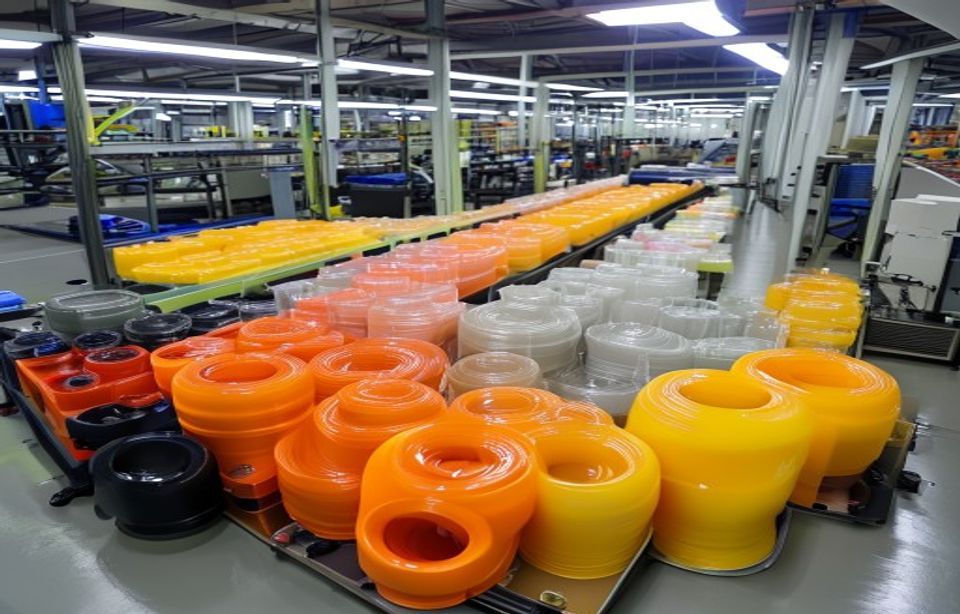
China has become the world’s manufacturing hub for injection molding, producing components for industries ranging from automotive to consumer electronics. For nylon injection molding specifically, Chinese manufacturers offer compelling advantages—but successful partnerships require understanding both the benefits and the considerations.
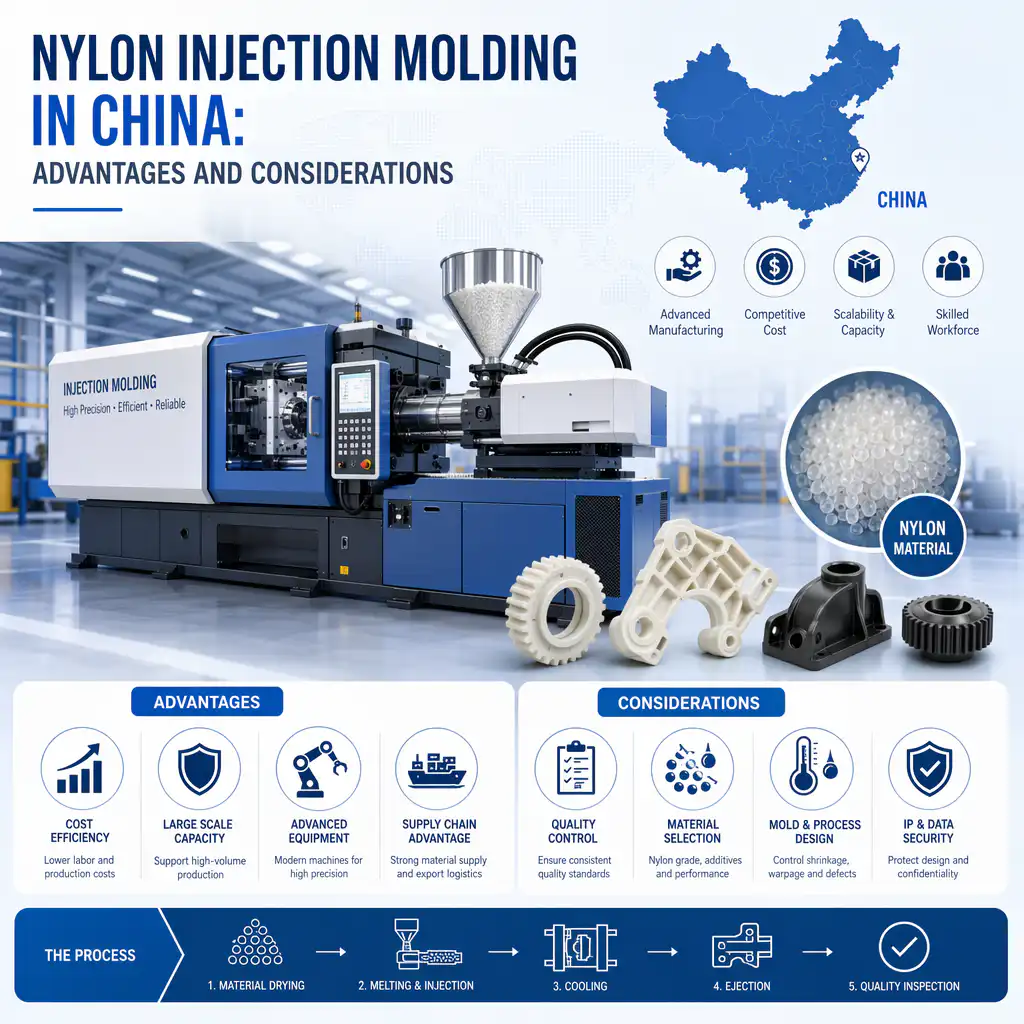
The Advantages of Chinese Manufacturing
Cost Competitiveness
Labor costs, while rising, remain lower than Western alternatives. Combined with established supply chains, efficient logistics, and competitive energy costs, per-part pricing for nylon components can be 20-40% lower than North American or European production.
Manufacturing Infrastructure
Decades of investment have created a robust ecosystem:
- Machine tool manufacturers for injection molding equipment
- Mold base and component suppliers
- Material distributors and compounders
- Surface treatment and secondary operation providers
This infrastructure means faster turnaround for tooling, readily available spare parts, and competitive pricing on materials.
Production Flexibility
Chinese facilities often operate multiple shifts, providing flexibility for volume changes and urgent orders. Many manufacturers can scale production quickly when demand increases, without the capital investment required for new facilities in other regions.
Technical Capability
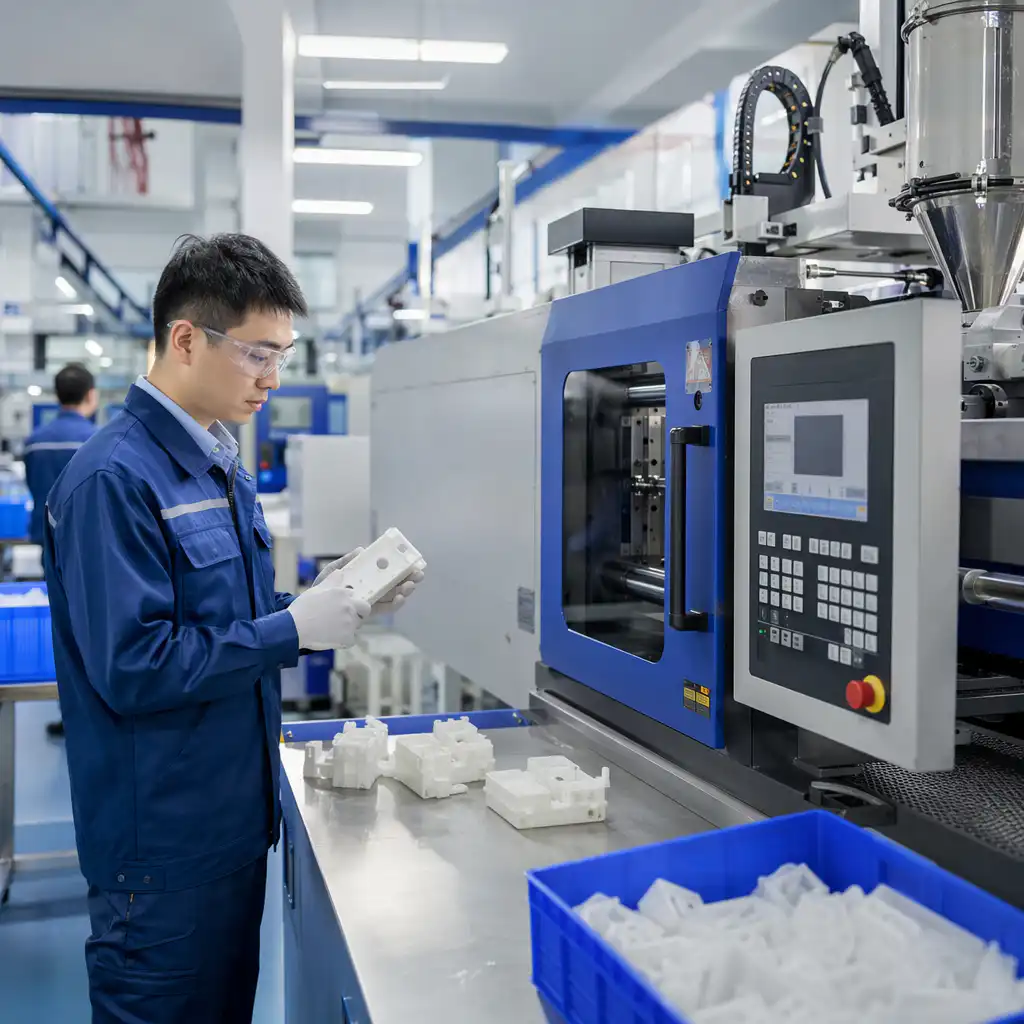
Modern Chinese molding facilities feature state-of-the-art equipment:
- All-electric injection molding machines for precision applications
- In-mold sensing and scientific molding capabilities
- Cleanroom production for medical and electronics
Considerations for Success
Quality Systems
Evaluate potential partners carefully:
| Certification | Relevance |
|---|---|
| ISO 9001 | Basic quality management—minimum requirement |
| IATF 16949 | Automotive quality standard—demonstrates advanced capability |
| ISO 13485 | Medical device quality—required for medical production |
Communication
Effective communication prevents issues and resolves problems quickly:
- English-speaking engineering and project management staff
- Regular progress updates during mold construction
- Clear technical documentation and specifications
- Responsive communication channels (video calls, messaging, email)
Intellectual Property Protection
Protecting your designs requires:
- Non-disclosure agreements before sharing designs
- Patent protection where applicable
- Working with established, reputable manufacturers
- Clear ownership terms for tooling
Logistics and Lead Time
Factor in shipping time for both molds and parts:
- Air freight: 3-7 days, higher cost
- Sea freight: 20-35 days, economical for volume
- Customs clearance: Variable by destination and product
Plan buffer time into schedules, especially for initial mold delivery and production ramp-up.
Our Commitment to Global Standards
With over 20 years serving international customers, we understand what global companies require:
- ISO 9001 certified quality management
- Experienced engineering team fluent in English
- Transparent project management and communication
- Competitive pricing with no compromise on quality
- Flexible production to meet changing demand
FAQ
When does Nylon Injection Molding in China: Advantages and Considerations make sense?
Nylon Injection Molding in China: Advantages and Considerations makes sense when the part volume, material choice, geometry, and repeatability needs justify mold design and tooling investment.
What design factors matter most for Nylon Injection Molding in China: Advantages and Considerations?
Wanddikte, ribben, uitsteeksels, uitloophoek, plaats van de ingietopening, krimp, scheidingslijn en uitwerping zijn allemaal van invloed op de kwaliteit van het spuitgietdeel.
Welke informatie is nodig vóór de productie van mallen?
De leverancier dient het 3D-model, het materiaal, het verwachte jaarlijkse volume, de eisen ten aanzien van het uiterlijk, de tolerantie-eisen en eventuele eisen met betrekking tot montage of functionele tests te bevestigen.
What is the biggest risk in Nylon Injection Molding in China: Advantages and Considerations?
Het grootste risico is dat de matrijzen worden goedgekeurd voordat het gedrag van het materiaal, de krimp, de vloei en de werking van het onderdeel volledig zijn getoetst aan de daadwerkelijke toepassing.

