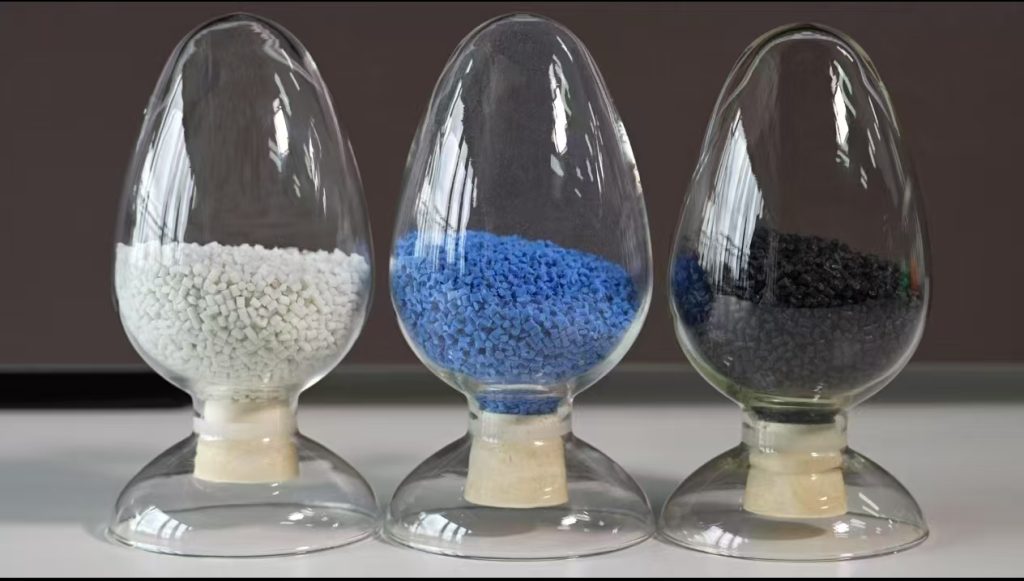
Glas is een praktisch technisch onderwerp wanneer je opties moet vergelijken, grenzen moet controleren en een proces met minder risico moet kiezen.
Zowel met glasvezel als met koolstofvezel versterkt nylon biedt aanzienlijke verbeteringen in de eigenschappen ten opzichte van onversterkt nylon. Als u de voor- en nadelen begrijpt, kunt u de juiste materiaalkeuze maken voor uw specifieke toepassing.
Voor engineering- en inkoopteams
Choosing Reinforcement for a Nylon Production Part?
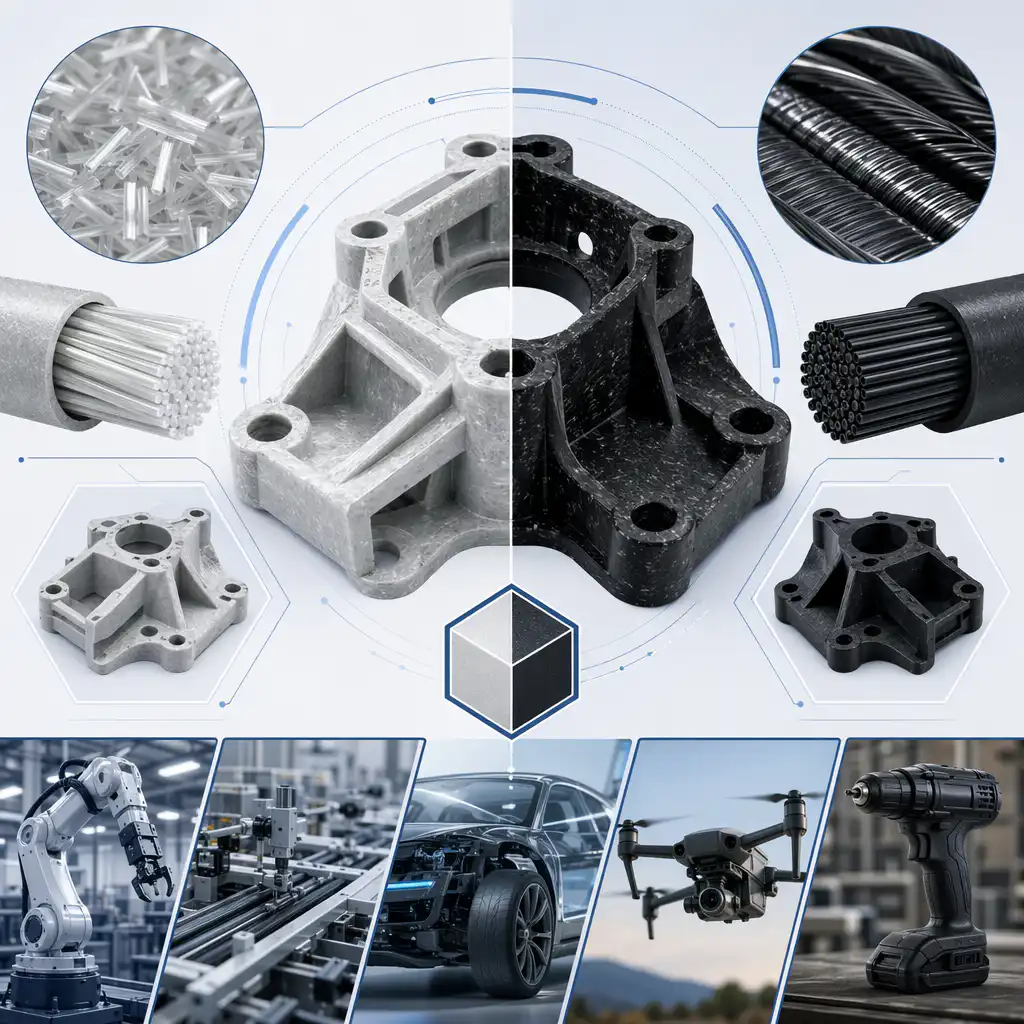
This reinforced nylon comparison is for procurement and early DFM decisions: glass fiber usually offers the lower-cost structural route, while carbon fiber may justify its premium when stiffness-to-weight dominates.
- Choose glass fiber for cost-effective strength and broad molding use
- Choose carbon fiber when stiffness-to-weight is the primary requirement
- Review conductivity, surface finish, fiber direction and tooling wear before release
Request a reinforced nylon sourcing review → Bekijk onze diensten op het gebied van spuitgieten van nylon
Vergelijking van onroerend goed
Treksterkte: Met koolstofvezel versterkt nylon heeft een treksterkte van 70-90 MPa, terwijl met glasvezel versterkt nylon een treksterkte van 40-60 MPa heeft. Dit verschil is van groot belang voor constructietoepassingen.
Stijfheid: Koolstofvezel zorgt bij hetzelfde versterkingspercentage voor een 2-3 keer zo grote stijfheidsverbetering als glasvezel. Een met 20%-koolstofvezel versterkt nylon benadert de stijfheid van met 30%-glasvezel versterkt nylon.
Gewicht: Koolstofvezel is ongeveer 70% lichter dan glasvezel. Met koolstofvezel versterkte onderdelen zijn aanzienlijk lichter dan hun tegenhangers van glasvezel — wat van cruciaal belang is voor gewichtsvermindering in de lucht- en ruimtevaart en de automobielindustrie.
Thermische eigenschappen: Koolstofvezel vermindert de thermische uitzetting met 50-70%, terwijl glasvezel deze met 30-50% vermindert. Met koolstofvezel versterkte onderdelen behouden hun afmetingen beter bij thermische cycli.
Kostenvergelijking
Hier wordt de afweging heel duidelijk. Met koolstofvezel versterkt nylon kost 3 tot 5 keer meer dan met glasvezel versterkt nylon van dezelfde kwaliteit. Voor veel toepassingen zijn de extra kosten van koolstofvezel niet te rechtvaardigen door het prestatievoordeel. Met glasvezel versterkt nylon met een 30%-belasting biedt een uitstekende prijs-kwaliteitverhouding voor de meeste technische toepassingen.
Overwegingen met betrekking tot de productie
Beide materialen zijn schurend en vereisen geharde gereedschappen. Met glasvezelversterkte materialen is de verwerking eenvoudiger en is de slijtage aan de matrijzen geringer. De lagere thermische uitzetting van koolstofvezel kan sommige productieprocessen zelfs vereenvoudigen, maar de schurende eigenschappen versnellen de slijtage van de apparatuur.
Aanbevelingen voor specifieke toepassingen
- Kies voor glasvezelversterkt nylon wanneer: De kosten vormen een belangrijke beperkende factor, de geometrie van de onderdelen is complex, de standaard constructieve sterkte is toereikend, productie in grote volumes
- Kies voor met koolstofvezel versterkt nylon wanneer: Gewichtsvermindering is van cruciaal belang, de hoogste specifieke stijfheid is vereist, thermische stabiliteit is van het grootste belang, hoogwaardige toepassingen met een klein volume
Hybride aanpak
Bij sommige toepassingen biedt hybride versterking voordelen — een combinatie van glas- en koolstofvezel om de verhouding tussen kosten en prestaties te optimaliseren. Deze aanpak komt veel voor bij sportartikelen en hoogwaardige auto-onderdelen.
Vochtgevoeligheid
Zowel glasvezel- als koolstofvezelversterking zorgen ervoor dat er minder vocht wordt opgenomen dan bij onversterkt nylon. Met koolstofvezel versterkt nylon vertoont doorgaans een betere maatvastheid in vochtige omgevingen.
Afwerking oppervlak
Met glasvezel versterkt nylon kan door middel van spuitgieten worden verwerkt tot een glad oppervlak. Versterking met koolstofvezel leidt tot een donkerder, mat uiterlijk doordat de koolstofvezel op het oppervlak zichtbaar is. Voor cosmetische onderdelen kan nabewerking nodig zijn.
Conclusie
Voor de meeste technische toepassingen biedt met glasvezel versterkt nylon de beste prijs-kwaliteitverhouding. Koolstofvezel wordt uitsluitend gebruikt voor toepassingen waarbij gewichtsbesparing en maximale stijfheid de hogere kosten rechtvaardigen. Bij Nylonplastic leveren we beide materiaalsoorten in verschillende kwaliteiten en kunnen we u helpen bij het bepalen van de juiste versterkingsstrategie voor uw toepassing.
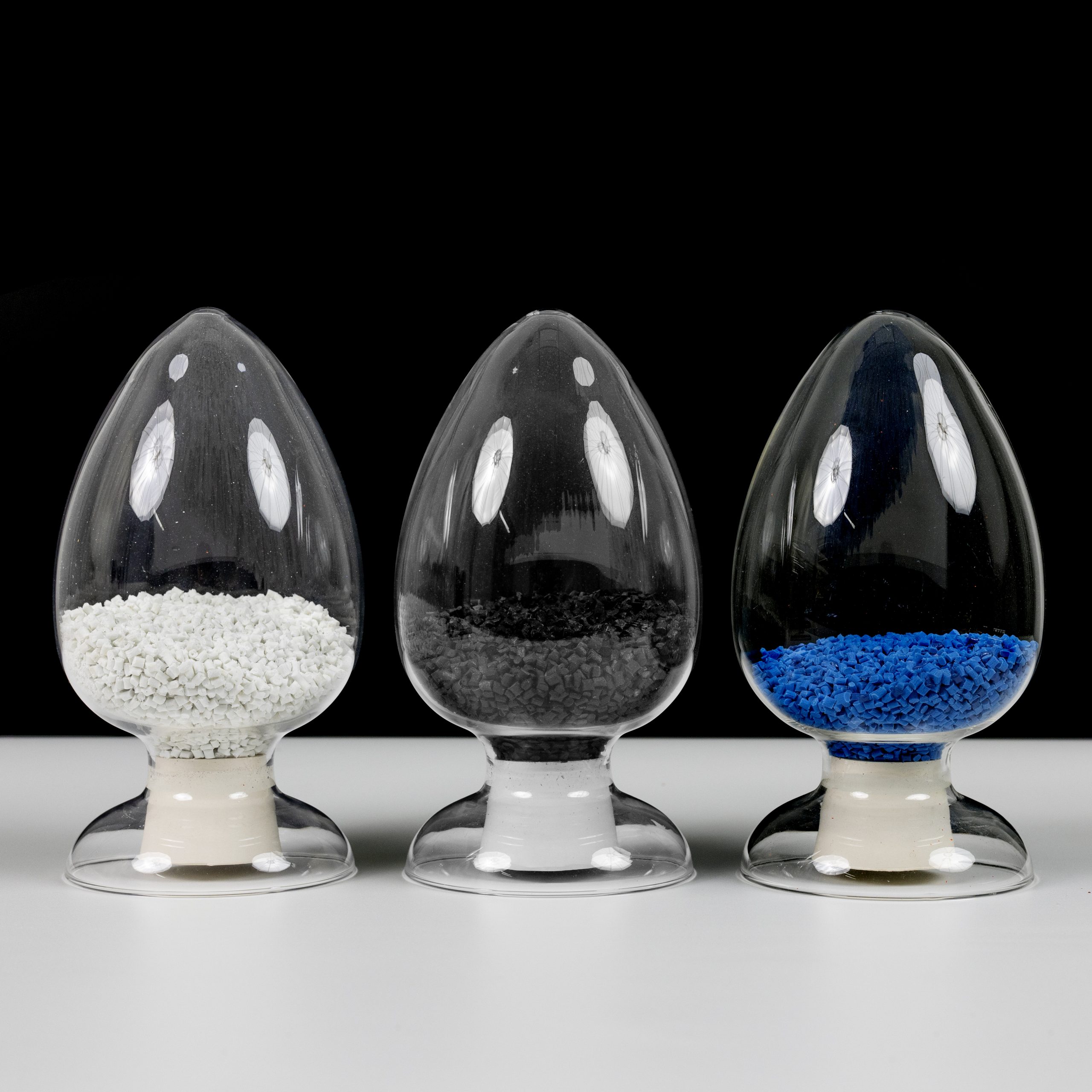
Klaar om in te kopen? Nylonplastic levert alle materialen die in deze gids worden besproken — zowel in standaard- als in op maat gemaakte kwaliteiten, met een kwaliteitscertificering volgens IATF 16949, ISO 9001 en ISO 14001. Vraag een offerte aan →
Welke soorten nylonkunststof kunnen voor dit project op maat worden gemaakt?
Nylon Plastic combineert materiaalaanpassing met productontwerp, matrijsontwerp en -bouw, spuitgieten, CNC-bewerking en 3D-printen. De juiste toepassing wordt bepaald op basis van de tekening en de gebruiksomstandigheden, en niet op basis van een algemene materiaalbenaming.
| Aanpassingsgedeelte | Te beoordelen opties | Benodigde informatie |
|---|---|---|
| Reinforcement system | Glass-fiber, carbon-fiber or unfilled nylon comparison | Stiffness, weight, impact, conductivity and cost priorities |
| Base polymer | PA6, PA66, PA12 or another suitable nylon family | Moisture, heat, chemical and dimensional requirements |
| Prototype route | 3D printing or CNC evaluation before production tooling | CAD file, test quantity and the properties the prototype must represent |
| Production route | Material review, mold DFM, tooling and injection molding | Annual volume, surface class, tolerances and inspection plan |
Checklist voor offerteaanvragen
- CAD and load direction for the real component
- Stiffness, weight, impact and temperature targets
- Electrical conductivity or insulation requirement
- Surface, color, warpage and dimensional limits
- Prototype quantity, annual volume and tooling budget
DFM-ondersteuning, NDA-afspraken, documentatie over materialen of samenstellingen en inspectie-eisen kunnen tijdens de offertebespreking worden besproken. De beschikbaarheid hangt af van de omvang van het project en het overeengekomen kwaliteitsplan.
Van beoordeling tot productie
- Definitie: de tekening, de toepassing, de omgeving en het volume delen.
- Recensie: vergelijk risico’s op het gebied van materiaal, proces, DFM en validatie.
- Valideren: Maak waar nodig gebruik van monsters, 3D-printen, CNC-bewerking of prototypegereedschap.
- Producten: de gereedschappen of de productie pas vrijgeven nadat de overeengekomen controles zijn afgerond.
Glass Fiber vs Carbon Fiber Nylon: Select the Reinforcement Around the Load
Glass-fiber nylon and carbon-fiber nylon are not interchangeable “stronger nylon” options. Glass fiber is often the cost-effective route to higher stiffness, heat performance and dimensional control. Carbon fiber can offer higher specific stiffness, lower weight and conductivity potential, but it also increases cost, anisotropy and sensitivity to fiber orientation. Compare matched base resin, fiber content, test direction and moisture condition before choosing.
Begin with the load direction, allowable deflection, weight limit, temperature, ESD or conductivity requirement, tolerance, surface requirement, manufacturing process and budget. If the part is a molded bracket, the flow direction and weld line may control the result. If it is machined or printed, stock direction and layer or tool orientation must also be documented.
| Decision factor | Glass-fiber nylon | Carbon-fiber nylon | What to verify |
|---|---|---|---|
| Stiffness and heat | Strong stiffness improvement with broad grade availability | Often higher specific stiffness and lower weight potential | Matched fiber percentage, test direction and temperature |
| Gewicht | Usually heavier than comparable carbon-filled grades | Useful where stiffness per mass matters | Density, wall design and required deflection |
| Conductivity | Usually limited unless a conductive package is added | May provide ESD or conductivity potential | Surface and volume resistivity at the actual grade |
| Dimensional behavior | Fiber orientation and shrinkage still matter | Orientation and anisotropy can be pronounced | Flow direction, warpage and conditioned dimensions |
| Cost and tooling | Often lower material cost and broad supply | Often higher material cost and greater abrasive concern | Annual volume, tool steel, wear inserts and scrap value |
Orientation, Anisotropy and Mold Design
Short fibers align with melt flow in molded parts. The resulting stiffness, shrinkage and thermal expansion can differ along and across the flow direction. Gate location, runner balance, weld lines, ribs and wall thickness therefore belong in the material decision. A flat tensile coupon does not represent a bracket with a weld line or a housing with ribs and bosses.
For injection molding, request the gate and flow direction, fiber orientation assumptions, cooling layout and warpage review. For CNC machining, note how the stock was produced and whether machining releases stress. For 3D printing, define layer direction, infill, shell, chamber condition and post-processing. The same words “glass-filled” or “carbon-filled” can describe very different part behavior across processes.
Heat, Weight, ESD and Surface Requirements
Use carbon fiber when a weight or stiffness-per-mass target justifies the added cost and the electrical behavior is useful or manageable. Use glass fiber when a robust stiffness and heat solution with broad sourcing is more important. Neither reinforcement automatically solves creep, impact, chemical resistance or surface appearance. The base nylon, fiber length, fiber percentage, additive package and moisture condition remain important.
| Toepassing | Starting comparison | Validation evidence |
|---|---|---|
| Lightweight bracket | Carbon fiber for stiffness per mass; glass fiber for cost control | Deflection, vibration, density and fatigue |
| Hot fixture or housing | Compare matched reinforced grades at temperature | HDT, creep, thermal cycling and conditioned dimensions |
| ESD enclosure | Carbon-filled grade may be a candidate | Resistivity, grounding, shielding and surface consistency |
| Visible molded component | Glass fiber may offer a more practical finish route | Texture, gloss, fiber read-through and gate appearance |
Cost, Tool Wear and Supplier Evidence
Material price is only one part of the decision. Carbon-filled grades may increase tool wear, require wear-resistant gates or inserts, affect polish and increase scrap cost when orientation or warpage is not controlled. Glass-filled grades can also be abrasive. Ask which steel, surface treatment, replaceable components, maintenance interval and spare parts are included in the tool plan.
Request a grade-specific data sheet, processing guide, moisture condition, test direction, fiber content, color, approved source and change-notification policy. Compare data under matched test methods and do not transfer a value from one base resin or fiber percentage to another. We can review the load direction, weight, heat, ESD, process, volume and candidate grades before the drawing is frozen.
GF Nylon and CF Nylon RFQ Checklist
- Base nylon, fiber type, fiber content, color and exact grade.
- Load direction, allowable deflection, fatigue, impact and temperature.
- Weight, ESD, conductivity, surface, texture and cosmetic zones.
- Injection molding, CNC machining or 3D printing route and orientation.
- Tool steel, wear inserts, dimensional inspection and conditioning state.
- Annual volume, price target, approved suppliers and change control.
Send the load direction, weight, heat, ESD, process, volume and candidate grades with CAD and the controlled drawing. We can compare glass-fiber and carbon-fiber nylon against measurable part requirements and define the validation coupons or molded samples needed.
Veelgestelde vragen
Can Nylon Plastic compare glass- and carbon-fiber grades for one drawing?
Yes. A useful comparison needs the load direction, wall sections, temperature, moisture, surface requirement, target weight and quantity. Fiber percentage alone is not enough to select a grade.
Which reinforcement is normally more cost-effective?
Glass fiber is usually the lower-cost structural route. Carbon fiber may be justified when stiffness-to-weight, lower density or a specific electrical behavior is more important than material price.
Why do gate location and fiber direction matter?
Reinforced polymers are directional. Flow orientation affects stiffness, shrinkage, warpage, weld lines and failure location, so material selection and mold DFM should be reviewed together.
Can a prototype be made before production tooling?
Nylon Plastic offers 3D printing and CNC routes that can support geometry and assembly review. The team should clarify which prototype properties will and will not represent the final molded reinforced material.
Request a Custom Project Review
Send the drawing, application, operating conditions and expected quantity. Nylon Plastic can review material modification, prototyping, tooling and production options within the agreed project scope.