
3D-printservice voor metaal vertegenwoordigt de allernieuwste productietechnologie, waardoor complexe, zeer sterke metalen onderdelen kunnen worden vervaardigd die met traditionele methoden onmogelijk te produceren zijn. Met behulp van geavanceerde technieken zoals Selective Laser Melting (SLM) en Direct Metal Laser Sintering (DMLS) zet deze dienst digitale ontwerpen om in volledig dichte, functionele metalen onderdelen voor sectoren variërend van lucht- en ruimtevaart en de automobielindustrie tot medische apparatuur en robotica. Als veelzijdige productiepartner, Nylon Kunststof combineert additive manufacturing met metaal met onze bredere expertise om complete oplossingen te bieden, van prototype tot productie.
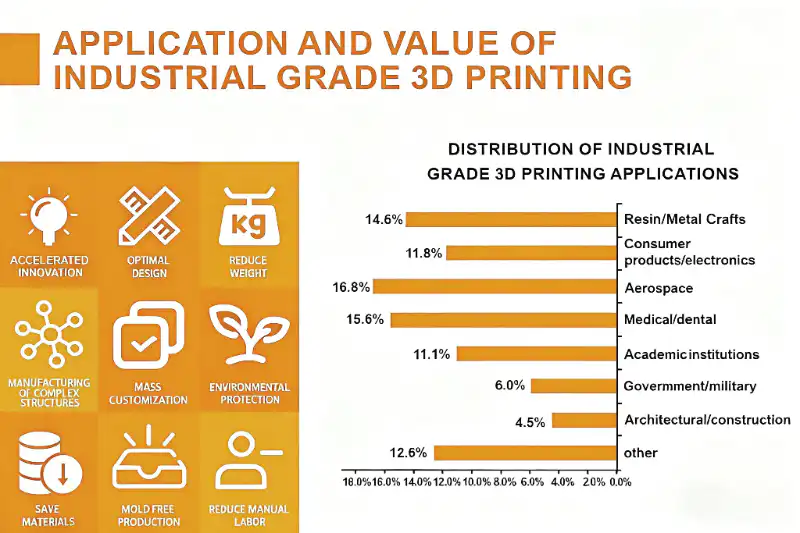
Het voordeel van metaal-AM: ontwerpvrijheid gaat hand in hand met materiaalprestaties
3D-printen met metaal biedt baanbrekende voordelen die de manier waarop ingenieurs en ontwerpers de productie van onderdelen aanpakken ingrijpend veranderen.
- Ongeëvenaarde ontwerpvrijheid: Complexe interne geometrieën, roosterstructuren, organische vormen en conforme koelkanalen kunnen worden vervaardigd zonder de beperkingen van traditionele verspaningstechnieken of gietprocessen. Dit maakt het mogelijk om onderdelen te consolideren, het gewicht te verminderen en de prestaties te optimaliseren. Onze productontwerp Het team is gespecialiseerd in het optimaliseren van geometrieën, specifiek voor additive manufacturing.
- Snelle prototyping en iteratie: 3D-printen met metaal versnelt de productontwikkelingscycli doordat functionele prototypes binnen enkele dagen in plaats van weken of maanden kunnen worden vervaardigd. Ontwerpwijzigingen kunnen snel worden getest en verfijnd voordat er wordt overgegaan tot de productie met dure vaste matrijzen.
- Geen gereedschap nodig: In tegenstelling tot gieten of smeden zijn bij additive manufacturing geen gietvormen of matrijzen nodig. Dit maakt deze techniek bijzonder kosteneffectief voor productie in kleine series, op maat gemaakte unieke exemplaren en vervangingsonderdelen.
- Materiaalefficiëntie: Additieve processen zijn ‘near-net-shape’-processen, waarbij minimale hoeveelheid afval ontstaat in vergelijking met subtractieve productie (CNC-bewerking), waarbij tot wel 80-90% aan materiaal kan worden weggefreesd. Ongebruikt metaalpoeder kan vaak worden gerecycled.
- Productie op aanvraag: Digitale voorraadbeheer houdt in dat onderdelen als bestanden kunnen worden opgeslagen en alleen worden geproduceerd wanneer dat nodig is, waardoor de opslagkosten dalen en snel kan worden ingespeeld op de behoeften van de toeleveringsketen.

Technologieën voor 3D-printen met metaal: het juiste proces kiezen
Verschillende technologieën voor het 3D-printen van metaal zijn geschikt voor verschillende toepassingen. In de onderstaande tabel worden de meest gangbare industriële processen met elkaar vergeleken.
| Technologie | Procesbeschrijving | Belangrijkste voordelen | Typische toepassingen |
|---|---|---|---|
| SLM (selectief lasersmelten) | Een krachtige laser smelt metaalpoeder laag voor laag volledig, waardoor onderdelen met een volledige dichtheid ontstaan waarvan de mechanische eigenschappen vergelijkbaar zijn met die van gesmeed metaal. | Hoogste dichtheid en mechanische sterkte; uitermate geschikt voor functionele eindproducten. | Lucht- en ruimtevaartonderdelen, medische implantaten, hoogwaardige auto-onderdelen. |
| DMLS (Direct Metal Laser Sintering) | Vergelijkbaar met SLM, maar hierbij worden poederdeeltjes gesinterd (versmolten) zonder dat ze volledig smelten; wordt vaak gebruikt voor specifieke legeringen. | Geschikt voor complexe geometrieën met een uitstekende oppervlakteafwerking. | Snijplaten, complexe beugels, lichtgewicht constructies. |
| EBM (elektronenstraalsmelting) | Maakt gebruik van een elektronenstraal als energiebron in een vacuüm; meestal voor legeringen die bij hogere temperaturen worden verwerkt. | Hoge opbouwsnelheden; verminderde restspanning; geschikt voor titanium en kobalt-chroom. | Orthopedische implantaten, structurele onderdelen voor de lucht- en ruimtevaart. |
| Binder Jetting | Er wordt selectief een vloeibaar bindmiddel op een poederbed aangebracht, waardoor de deeltjes aan elkaar worden gehecht. Het “groene” onderdeel wordt vervolgens in een oven gesinterd. | Snelle productie; geen ondersteuningsstructuren nodig; grote bouwvolumes mogelijk. | Grootschalige productie van complexe metalen onderdelen en auto-onderdelen. |
Metaalmaterialen voor 3D-printen: een uitgebreide gids
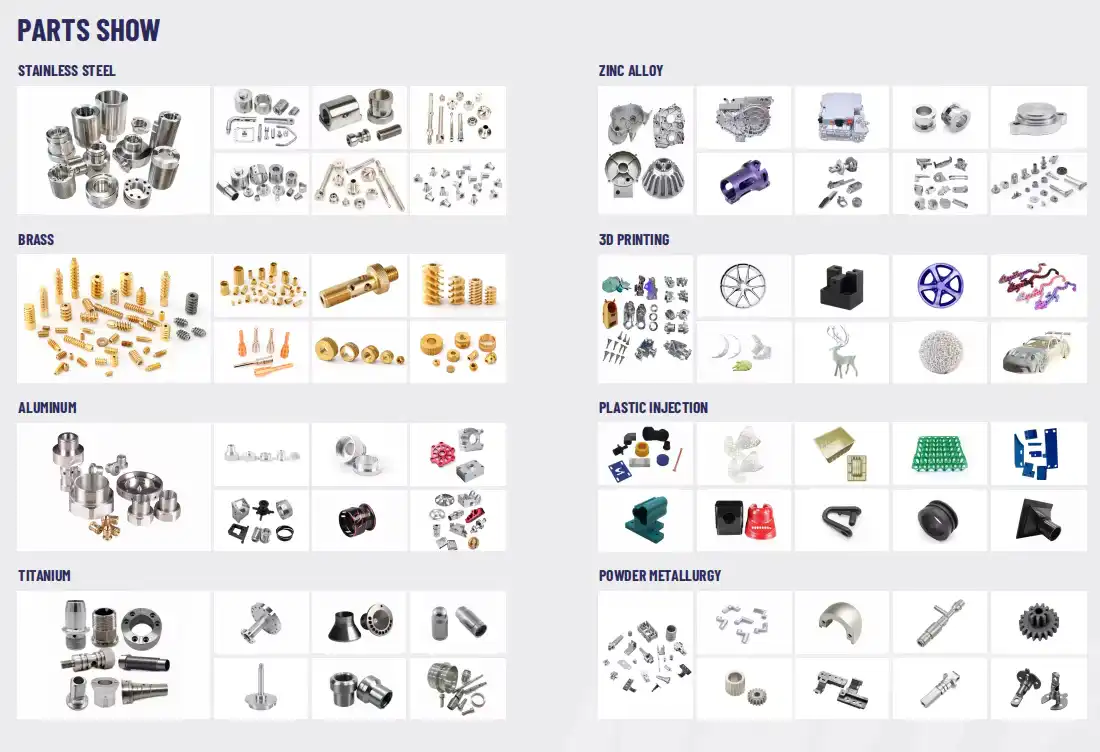
Het assortiment aan printbare metalen blijft zich uitbreiden en omvat inmiddels de meeste technische legeringen. De toonaangevende leverancier biedt materialen aan zoals aluminium, roestvrij staal, titanium en nog veel meer. Onze hub voor materiaalselectie biedt uitgebreidere richtlijnen voor het afstemmen van metaalpoeders op specifieke toepassingsvereisten.
| Materiaalcategorie | Specifieke legeringen | Essentiële eigenschappen | Typische toepassingen |
|---|---|---|---|
| Titaniumlegeringen | Ti6Al4V (klasse 5), Ti6Al4V ELI (klasse 23) | Uitzonderlijke verhouding sterkte/gewicht, uitstekende weerstand tegen corrosie, biocompatibel. | Constructieonderdelen voor de lucht- en ruimtevaart, medische implantaten (heupstelen, wervelkolomkooien), hoogwaardige auto-onderdelen, scheepsbenodigdheden. |
| Roestvrij staal | 316L, 304L, 17-4PH | Goede corrosiebestendigheid, uitstekende mechanische eigenschappen, lasbaarheid, verkrijgbaar in precipitatiehardende kwaliteiten. | Medische instrumenten, apparatuur voor voedselverwerking, onderdelen voor chemische installaties, functionele prototypes, gereedschappen. |
| Aluminiumlegeringen | AlSi10Mg, AlSi7Mg, Scalmalloy® | Licht van gewicht, goede warmtegeleiding, uitstekende verhouding tussen sterkte en gewicht. | Beugels en behuizingen voor de automobielindustrie, onderdelen voor de lucht- en ruimtevaart, warmtewisselaars, lichtgewicht constructieonderdelen. |
| Kobalt Chroom | CoCrMo, CoCrW | Sterkte bij hoge temperaturen, uitstekende slijtvastheid, biocompatibel. | Tandprothesen (kronen, bruggen), orthopedische implantaten, onderdelen voor gasturbines, toepassingen met hoge slijtage. |
| Nikkel-superlegeringen | Inconel 625, Inconel 718, Hastelloy X | Uitzonderlijke sterkte bij hoge temperaturen, en uitstekende weerstand tegen oxidatie en corrosie. | Onderdelen voor straalmotoren, onderdelen voor gasturbines, warmtewisselaars, kernreactoren, apparatuur voor chemische verwerking. |
| Gereedschapsstaal | Maraging-staal (MS1), H13, 420 | Hoge hardheid, slijtvastheid, goede taaiheid. | Injection molds, die casting tools, cutting tools, high-strength mechanical parts. |
| Copper Alloys | Pure Copper, CuCrZr, CuNi2SiCr | Excellent electrical and thermal conductivity. | Induction coils, heat sinks, electrical connectors, welding nozzles, thermal management components. |
| Precious Metals | Gold, Silver, Platinum, Palladium | Biocompatible, corrosion resistant, aesthetic. | Jewelry, dental restorations, luxury goods, specialized electrical contacts. |
The Metal 3D Printing Process: From Design to Delivery
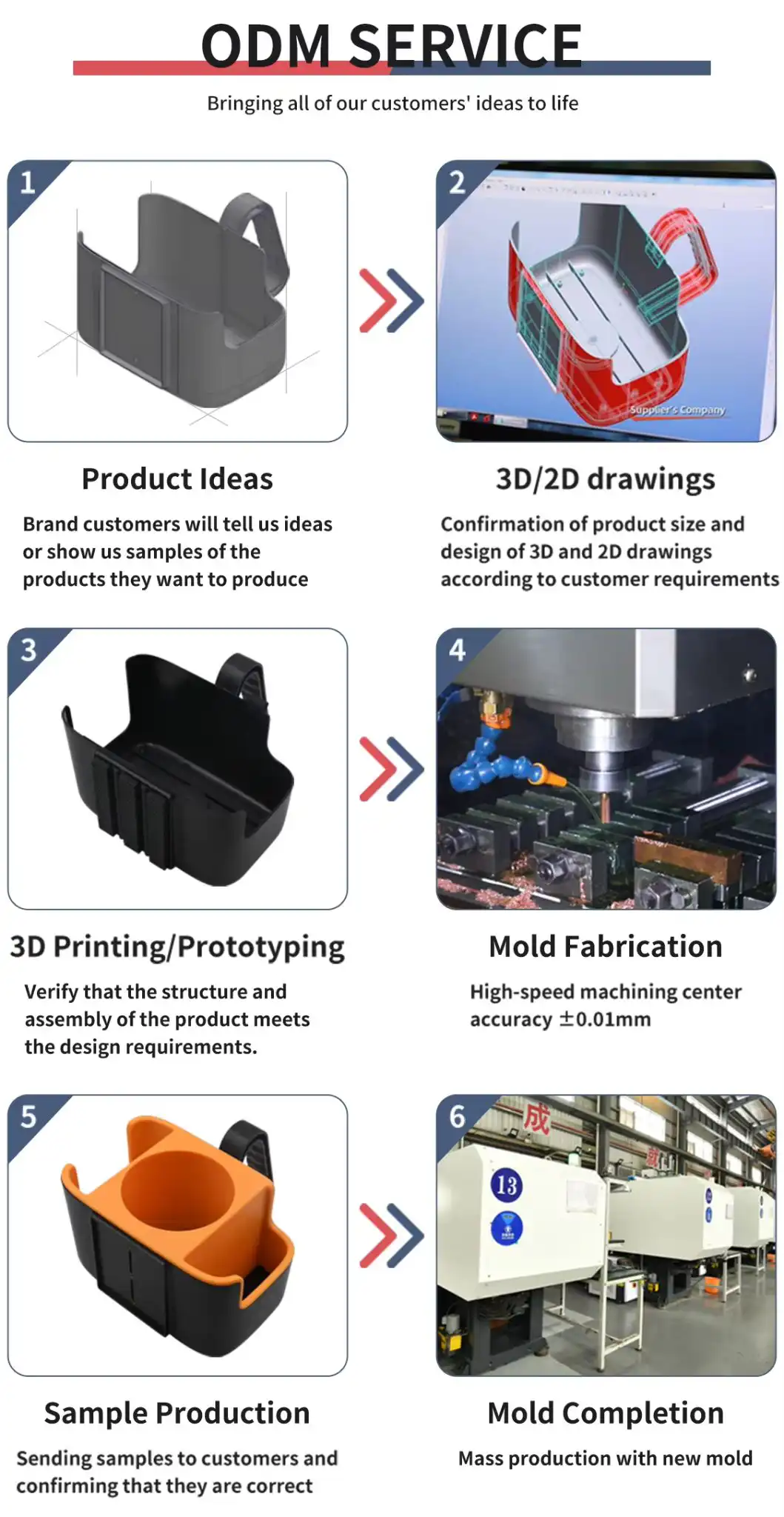
Een professioneel 3D-printservice voor metaal follows a systematic workflow to ensure quality and precision at every stage, from file submission to finished part.
| Stadium | Kernproces & Technologie | Kwaliteit en prestaties Resultaat |
|---|---|---|
| 1. Ontwerp en bestandsvoorbereiding | – Customer provides 3D model in standard formats (STEP, STL, OBJ, 3MF). - Ingenieurs beoordelen het ontwerp op printbaarheid, oriëntatie en vereisten voor de ondersteuningsstructuur. – DFAM (Design for Additive Manufacturing) analysis optimizes geometry for the chosen process. |
Een gevalideerd digitaal model, klaar voor succesvol printen met een minimaal risico op mislukte bouw. |
| 2. Materiaalkeuze | – Optimal metal powder is selected based on application requirements (strength, temperature, corrosion, biocompatibility). – Certified powders with verified chemistry and particle size distribution ensure consistency. |
Guaranteed material properties and traceability for critical applications. |
| 3. Build Preparation & Slicing | – Parts are oriented and support structures are generated within the build volume. – Slicing software converts the model into thin layers and generates laser paths. - De bouwparameters worden geoptimaliseerd voor het specifieke materiaal en de geometrie. |
Geoptimaliseerde bouwstrategie voor maatnauwkeurigheid, oppervlaktekwaliteit en minimale nabewerking. |
| 4. Additive Manufacturing | – The metal 3D printer builds the part layer by layer (typically 20-60 microns thick) in an inert atmosphere (argon or nitrogen). – Processes are monitored for quality assurance. |
A near-net-shape metal part with properties matching the intended design. |
| 5. Nabewerking | – Thermal stress relief (heat treatment) to relieve internal stresses. – Part removal from build plate (wire EDM or bandsaw). – Support structure removal. – Surface finishing options: CNC machining, polishing, bead blasting, anodizing, coating. |
A finished part meeting dimensional tolerances and surface finish specifications. |
| 6. Kwaliteitsborging en inspectie | – Dimensional inspection using CMM or optical scanners. – Material verification and mechanical testing as required. – Non-destructive testing (CT scanning, dye penetrant) for critical applications. |
Certified part quality with full traceability and compliance with industry standards (ISO 9001, CE). |
| 7. Verpakking & levering | – Parts are carefully packed with protective materials (cotton filling, sealed/foam bags, standard cartons) for safe transit. - Wereldwijde verzending met tracking. |
Veilige, tijdige levering van afgewerkte componenten. |

Industry Applications: Where Metal 3D Printing Excels
Metal additive manufacturing serves a growing range of industries, each leveraging its unique capabilities. Our expertise spans diverse industrieën , allowing us to apply metal 3D printing solutions across diverse sectors.
| Industrie | Toepassingen | Belangrijkste gerealiseerde voordelen |
|---|---|---|
| Ruimtevaart | Turbine blades, fuel nozzles, brackets, ducting, engine components, satellite parts. | Weight reduction, part consolidation, complex cooling channels, reduced lead times for complex geometries. |
| Automotive | Custom brackets, intake manifolds, heat exchangers, lightweight structural parts, tooling, jigs, fixtures. | Rapid prototyping, weight savings for performance vehicles, custom and low-volume production, conformal cooling in molds. |
| Medisch en tandheelkundig | Custom implants (hip, knee, spinal), surgical guides and instruments, dental crowns and bridges, prosthetics. | Patient-specific customization, biocompatible materials, porous structures for osseointegration. |
| Industriële machines | Complex machine components, custom tooling, conformally cooled injection mold inserts, wear parts. | Optimized performance, reduced lead times for replacement parts, improved tool life through better cooling. |
| Robotica | Lightweight end-effectors, grippers, structural frames, custom brackets. | Weight reduction for faster movement, complex integrated designs, rapid iteration. |
| Consumentenproducten | Custom jewelry, eyewear, watches, high-end sporting goods, design prototypes. | Design freedom for unique aesthetics, personalization, rapid market testing. |
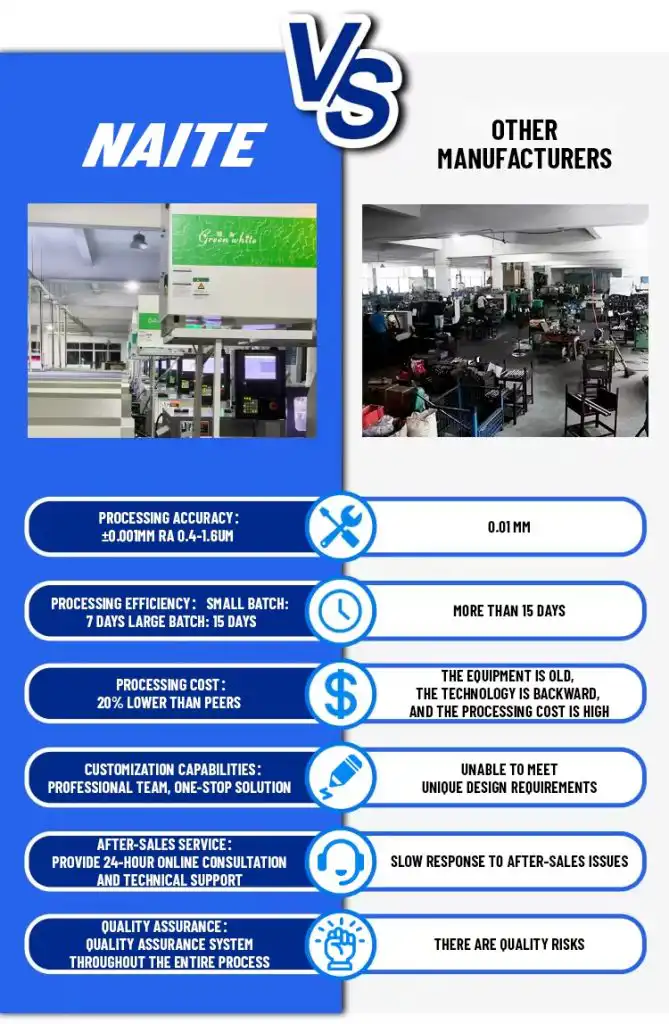
Metal 3D Printing vs. Traditional Manufacturing
Understanding when to choose additive manufacturing over conventional methods is key to leveraging its strengths.
| Aspect | Metal 3D Printing | Traditional Manufacturing (CNC, Casting) |
|---|---|---|
| Design Complexity | Uitstekend – No additional cost for complexity; can produce internal channels, lattices. | Limited – Complexity increases cost; some geometries impossible. |
| Doorlooptijd | Snel – Days for prototypes; no tooling delays. | Langzaam – Weeks to months for tooling and setup. |
| Volume Geschiktheid | Low to Medium (1-1,000+ parts) – Most cost-effective for low volumes. | Hoog – Economical only at high volumes due to tooling amortization. |
| Materiaalkeuzes | Growing – Wide range of metals but less than traditional. | Extensive – Virtually all metals and alloys available. |
| Part Size | Limited – Restricted by build chamber size (parts can be segmented and welded). | Onbeperkt – Large parts possible with appropriate machines. |
| Afwerking oppervlak | Goed – Typically 4-12 µm Ra; may require post-processing. | Uitstekend – As-machined finishes down to 0.4 µm Ra achievable. |
| Mechanische eigenschappen | Uitstekend – Comparable to wrought; fully dense parts. | Uitstekend – Well-established, predictable properties. |

Integratie met bredere productiemogelijkheden
Metal 3D printing does not exist in isolation. At Nylon Plastic, we integrate additive manufacturing with our comprehensive spuitgieten and finishing services to provide true end-to-end solutions.
| Geïntegreerde service | How Metal 3D Printing Enhances It | Voordeel voor jou |
|---|---|---|
| Rapid Tooling for Injection Molds | 3D printed conformal cooling inserts produced in tool steel or copper alloys are integrated into injection molds. | Reduced cycle times (30-50% faster), improved part quality, reduced warpage. |
| Hybride productie | Complex core geometries are 3D printed, then precision machined on CNC equipment for critical surfaces and tolerances. | Best of both worlds: design complexity + machined precision. |
| Brug van prototype naar productie | Functional metal prototypes produced via 3D printing for validation, then transition to casting or machining for high-volume production. | Snellere time-to-market met gevalideerde ontwerpen voordat er hard gereedschap wordt gemaakt. |
| Inrichtingen en gereedschappen op maat | On-demand production of assembly jigs, fixtures, and workholding tools using metal 3D printing. | Minder stilstand, geoptimaliseerde productieworkflows. |
FAQ: Metal 3D Printing Service
Q1: What file formats do you accept for metal 3D printing?
A: We accepteren alle standaard 3D-bestandsformaten, waaronder STEP (.stp), STL (.stl), OBJ (.obj), IGES (.igs), 3MF (.3mf), and FBX (.fbx) . For best results, STEP files are preferred as they preserve exact geometric data.
Q2: What is the minimum order quantity (MOQ) for metal 3D printed parts?
A: Metal 3D printing excels at low-volume production. Our MOQ is 1 piece, making it ideal for prototyping, custom one-offs, and small-batch production. Volume discounts apply for larger quantities.
V3: Wat zijn typische doorlooptijden?
A: Lead times depend on part complexity and quantity. Standard lead times range from 4-15 days for most projects, including printing and post-processing. Expedited options may be available for urgent requirements.
Q4: What surface finish can I expect?
A: As-printed parts have a characteristic matte finish with a surface roughness typically between 4-12 µm Ra. We offer various post-processing options to improve surface finish, including CNC machining, polishing, bead blasting, and coating.
Q5: How strong are 3D printed metal parts compared to machined parts?
A: Properly processed SLM and DMLS parts achieve fully dense (99.5%+) structures with mechanical properties equivalent or superior to castings and comparable to wrought materials in many alloys. Post-process heat treatment further optimizes properties.
Q6: Can you produce parts with internal channels or lattice structures?
A: Absoluut. These complex geometries are where metal 3D printing excels. We can produce conformal cooling channels, lightweight lattice infills, and intricate internal passages impossible to machine.
Q7: Do you offer design assistance for additive manufacturing?
A: Ja. Ons engineeringteam biedt Ontwerp voor additieve productie (DFAM) support, helping optimize your designs for printability, strength, weight reduction, and cost-effectiveness while maintaining functional requirements.
Q8: What quality certifications do you hold?
A: Onze faciliteit is ISO 9001:2015-gecertificeerd and our products comply with CE standards. For medical and aerospace applications, we can provide material certifications and inspection reports as required.
Q9: Can metal 3D printing be combined with other manufacturing processes?
A: Yes. We specialize in hybrid approaches that combine additive manufacturing with spuitgieten , CNC machining, and finishing to deliver complete solutions.
Q10: Do you offer color customization for metal parts?
A: While metal parts themselves are colored by their material (e.g., titanium’s natural silver, aluminum’s brightness), we offer various kleuraanpassing options through post-processing finishes including anodizing (for aluminum), PVD coating, and painting.
Conclusion: Unlock New Possibilities with Metal Additive Manufacturing
3D-printservice voor metaal empowers engineers and designers to transcend traditional manufacturing limitations, creating components that are lighter, stronger, and more functional than ever before. Whether you need rapid prototypes, custom one-offs, or low-volume production runs, this technology delivers unparalleled design freedom and speed to market.
Ready to transform your design into reality? Contact our engineering team today to discuss your project requirements. From initial DFAM analysis to finished, inspected parts, we provide end-to-end metal additive manufacturing solutions integrated with our broader materiaalselectie , productontwerp , en spuitgieten mogelijkheden.
Een offerte aanvragen | Neem contact op met ons engineeringteam
FAQ
When is metal 3D printing a good option?
3D-printservice voor metaal: precisie-additieve productie voor complexe onderdelen is een goede keuze wanneer snelle iteratie, complexe geometrie, lage matrijskosten of productie in kleine series belangrijker zijn dan de stukprijs van gegoten onderdelen.
What should be checked before ordering a metal 3D printed part?
Controleer de onderdeelgrootte, materiaaleigenschappen, oppervlakteafwerking, maattolerantie, blootstelling aan hitte, belastingsrichting en of nabewerking nodig is.
How does metal 3D printing compare with CNC machining?
Met 3D-printen kunnen complexe vormen snel worden gemaakt, terwijl CNC-bewerking vaak sterker is voor precieze oppervlakken, nauwere toleranties en productiematerialen.
What usually drives metal 3D printing cost?
De kosten zijn afhankelijk van het materiaal, het bouwvolume, de printtijd, de laaghoogte, het verwijderen van de ondersteuning, de afwerking, de inspectie en het aantal onderdelen in de bouw.

