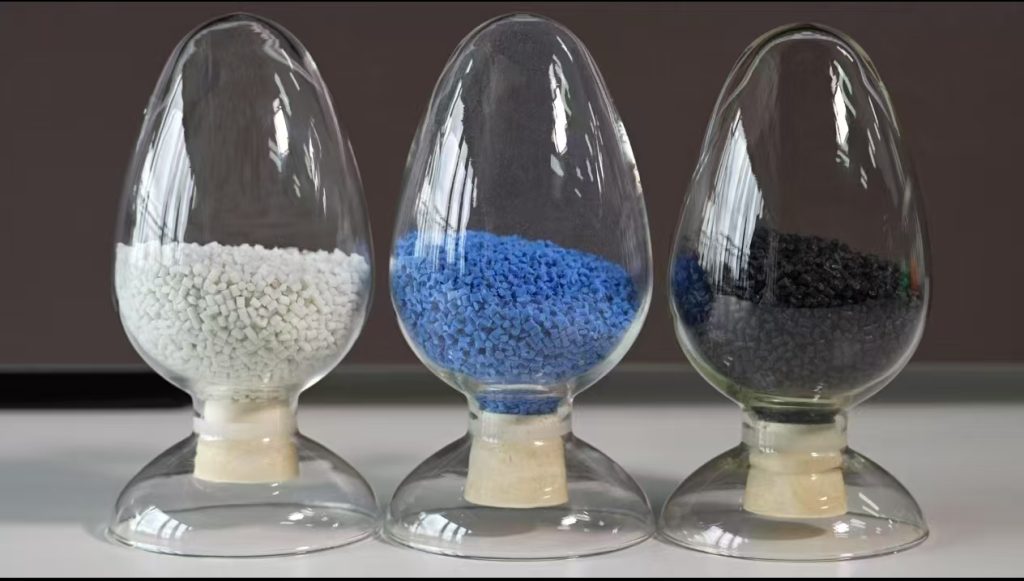
Nylon granules incoming inspection should confirm identity, condition, traceability, and process readiness before a lot reaches the molding machine. A supplier certificate is useful, but it does not prove that every bag arrived dry, clean, correctly labeled, and consistent with the approved grade. The receiving plan should combine document review, packaging checks, representative sampling, moisture verification, and a defined hold-and-release decision.
This guide is written for buyers, quality engineers, and molding teams sourcing PA6, PA66, PA12, or reinforced nylon compounds. The goal is not to create a laboratory test for every delivery. It is to catch the few incoming problems that can become hours of drying, unstable molding, cosmetic rejects, dimensional drift, or a difficult supplier claim.
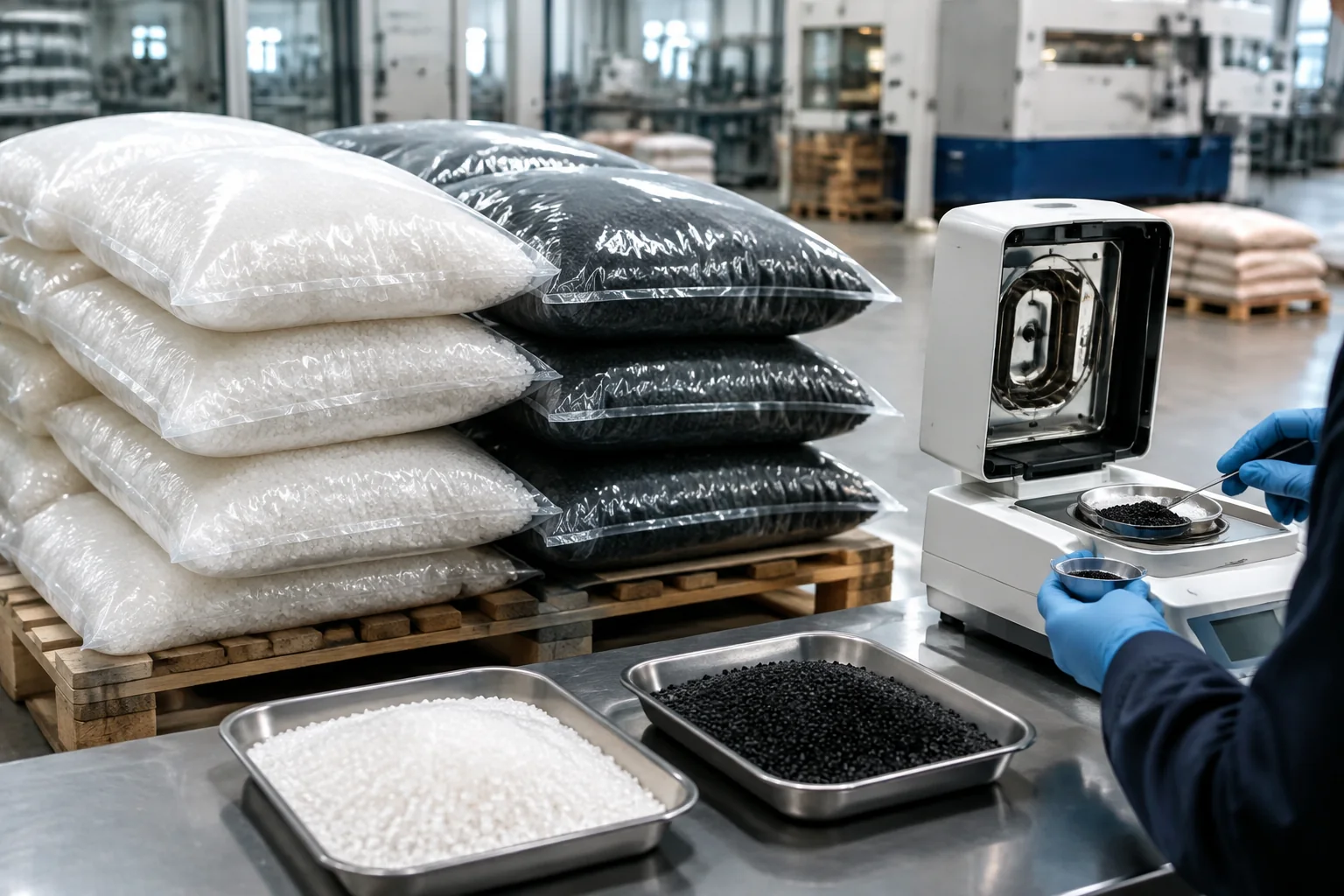
What Should Incoming Inspection Prove?
A practical receiving check should answer six questions before material is released:
- Is this the exact manufacturer, grade, color, and modification that was approved?
- Can each bag be traced to a supplier lot and purchase order?
- Did the packaging protect the resin from moisture and contamination?
- Does the certificate of analysis match the purchase specification?
- Does the sampled material pass the tests that matter to the molding process?
- Is any deviation documented and approved before the lot is mixed with released stock?
The acceptance limits should come from the approved material specification, supplier technical data, and the process window validated for the part. Nylon grades differ too much for a single moisture, viscosity, or color limit to be reliable across all materials.
| Inspection point | Typical method | Acceptance source | Hold trigger |
|---|---|---|---|
| Grade identity | Bag label, PO, approved material list | Drawing and purchase specification | Wrong grade, suffix, color, or supplier |
| Lot traceability | Lot code and quantity reconciliation | Supplier quality agreement | Missing or conflicting lot information |
| Packaging condition | Visual inspection and seal check | Packaging specification | Torn, wet, open, or contaminated bag |
| Certificate data | COA review against agreed fields | Material specification | Missing result or result outside limit |
| Vocht | Validated moisture analyzer or laboratory method | Supplier TDS and molding validation | Result above the release limit |
| Uiterlijk | Controlled sample comparison | Approved sample or color tolerance | Foreign particles, mixed pellets, or color shift |
Start with the Purchase Specification, Not the COA
The purchase specification is the control document. The certificate of analysis is evidence that the supplier tested selected properties against that agreement. If the purchase order only says “PA66 black,” incoming inspection has little authority to reject a lot that is technically PA66 but has the wrong heat stabilization, reinforcement, flame rating, viscosity range, or color package.
To set the right document requirements before sampling, delivery, or part approval, see our plastic material and part documentation guide.
Before the first production order, define the complete commercial grade designation and any approved alternatives. Include the manufacturer, grade code, reinforcement level, color code, additive package, packaging type, and required certificate fields. For critical parts, identify which changes require written approval, including polymer source, filler content, color masterbatch, recycled content, manufacturing site, and test method.
This is especially important for glass-filled nylon. Two PA66-GF30 grades may both contain nominally 30 percent glass fiber while behaving differently in flow, weld-line strength, surface appearance, shrinkage, and warpage. A broad material description is not a substitute for a controlled grade.
Review the COA as a Lot Record
A useful COA should identify the supplier, grade, production lot, manufacture or test date, test methods, measured results, and specification limits. Confirm that the lot on the document matches every pallet or bag in the shipment. A certificate copied from a previous delivery is not traceability.
Review only properties that have a defined purpose. Depending on the resin and application, the agreed certificate may include relative or solution viscosity, melt flow or melt volume rate, moisture, ash or reinforcement content, density, color, and selected mechanical values. The exact list should reflect the risks of the molded part rather than a generic template.
Trend the values when the application is sensitive. A result can remain inside a wide supplier limit while moving far enough from the historical mean to affect filling pressure, flash tendency, fiber orientation, or dimensions. Trend review is not an automatic rejection rule, but it is a good reason to increase sampling or run a controlled molding trial before full release.
Inspect Packaging and Traceability Before Sampling
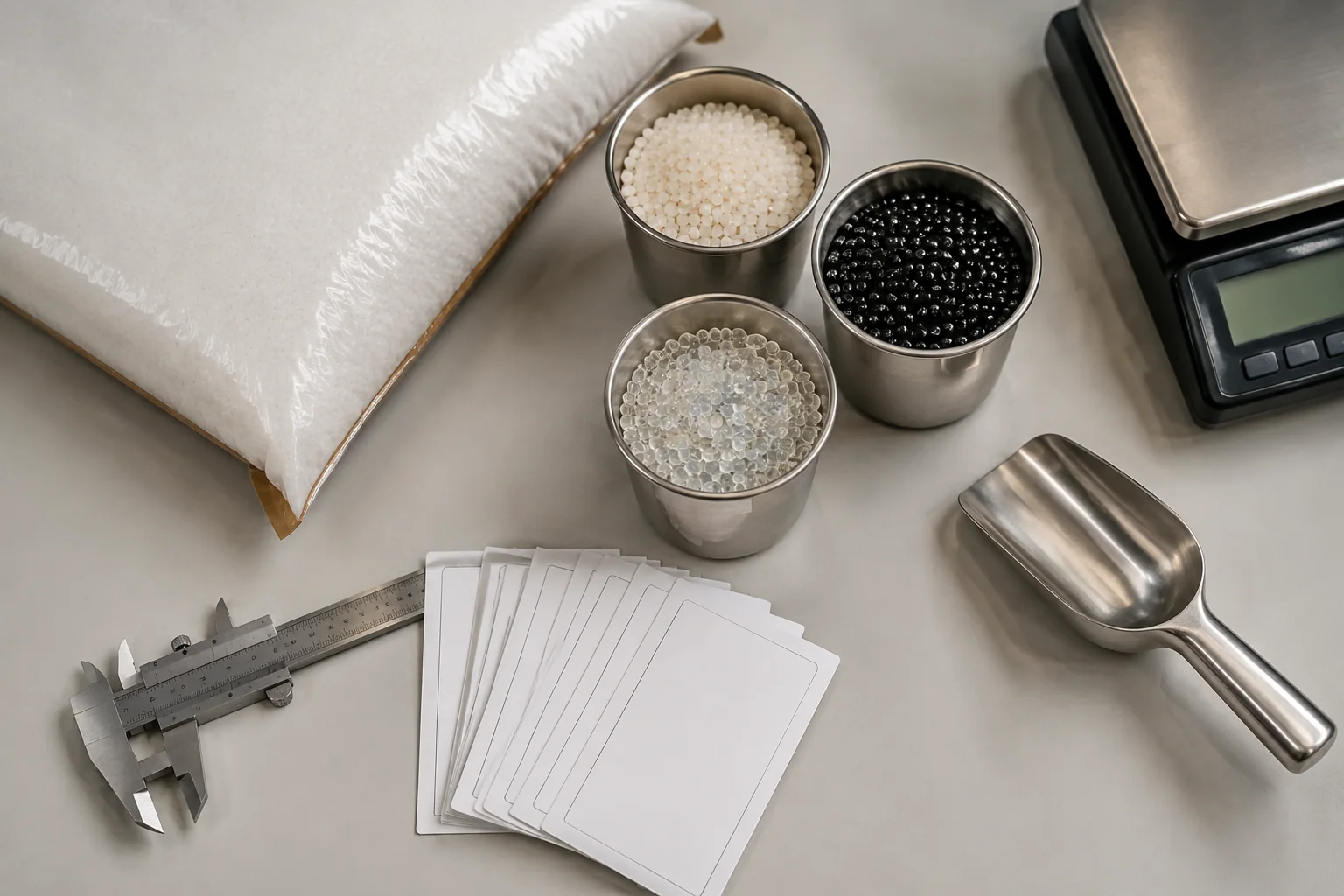
Inspect the shipment before opening bags. Look for punctures, broken seals, water marks, collapsed cartons, mixed labels, damaged pallet wrap, and signs that material was repacked. Record the number of bags, net weight, lot codes, and visible condition. Photographs at receiving are valuable evidence when a freight or supplier claim follows.
Keep suspect bags physically separated from released stock. Do not solve a label mismatch by handwriting a new label without a controlled disposition. Once an unidentified bag enters a central drying or conveying system, the cost of containment rises quickly because the affected material boundary is no longer clear.
Use a sampling plan that represents the shipment. Pulling pellets from one convenient top bag cannot characterize a multi-pallet lot. The sample count and locations should follow the supplier agreement, lot size, material risk, and past performance. Use clean, dry tools and containers so the sampling process does not add the moisture or contamination being measured.
Verify Moisture with a Method Fit for Nylon
Nylon is hygroscopic. It absorbs moisture into the polymer, so a bag can look dry while the pellets contain enough water to affect processing. Excess moisture at melt temperature can reduce molecular weight through hydrolysis and may contribute to splay, weak parts, unstable viscosity, or surface defects. Drying can remove moisture, but it cannot reverse polymer degradation that has already occurred in the barrel.
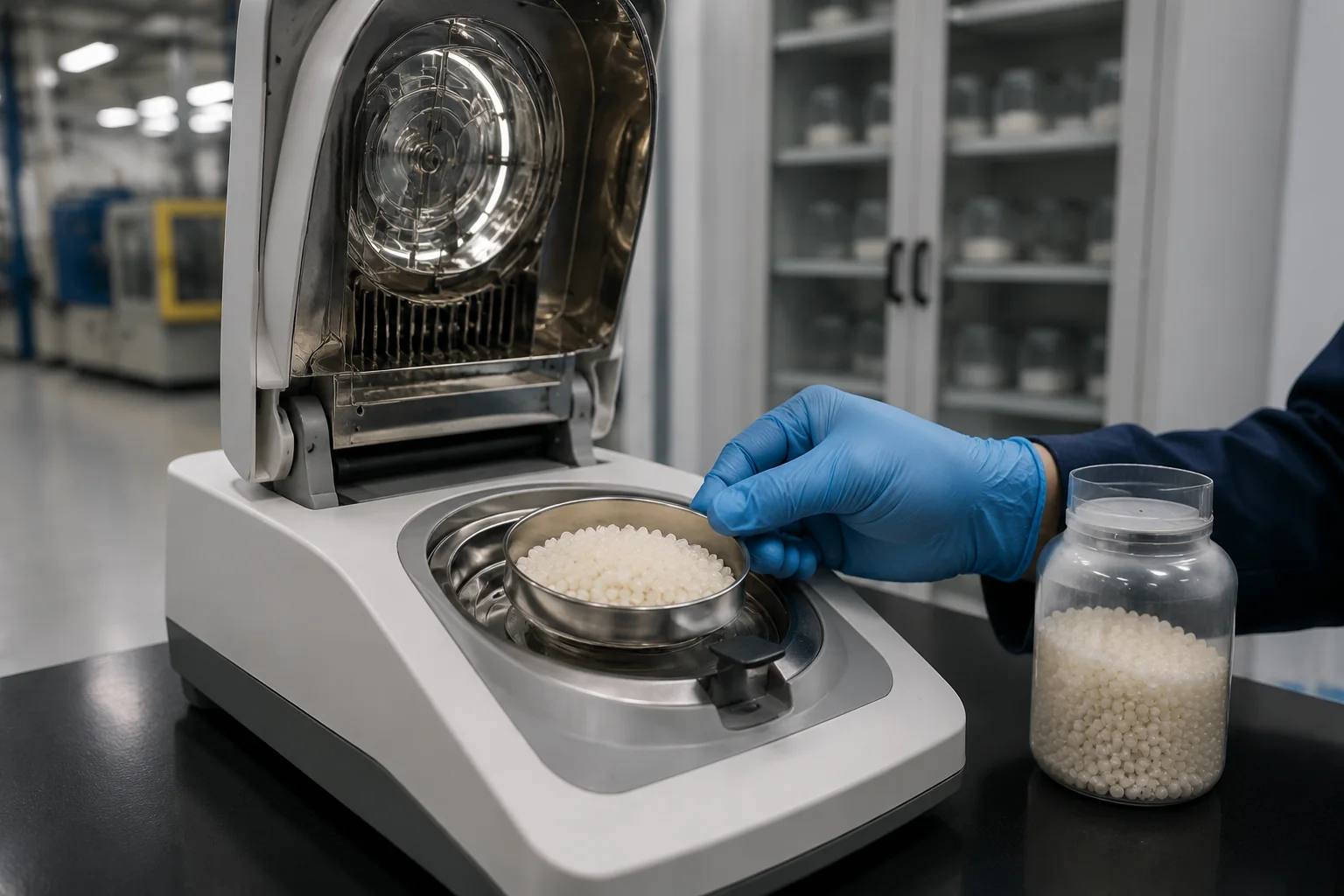
Use a moisture method that is validated for the grade and the required range. Loss-on-drying instruments are convenient but can count other volatile material as moisture. Karl Fischer methods can provide greater specificity when properly applied. Whichever method is selected, standardize sample mass, temperature program, handling time, instrument checks, and reporting units.
Do not expose a sample to plant air for an extended period and then treat the result as the sealed bag condition. Prepare the container before opening the package, sample quickly, close it immediately, and record the time. If material will be dried before molding, define separate limits for incoming condition and machine-ready condition rather than confusing the two decisions.
For a deeper explanation of measurement and conditioning, see the nylon moisture content and control guide.
Check Identity, Appearance, and Contamination
Visual inspection can catch mixed colors, foreign pellets, metal particles, dust, excessive fines, and inconsistent pellet shape. It cannot verify polymer identity by itself. Where a substitution would create a serious quality or regulatory risk, consider a material identification method such as FTIR, DSC, density, ash content, or another validated test suited to the grade.
Filled and modified materials require extra care. Ash testing can help verify inorganic filler content, but it does not by itself prove fiber length, coupling chemistry, or the full formulation. Color measurement should use controlled lighting, sample preparation, and an agreed delta value when appearance matters. Comparing loose pellets by eye under changing warehouse light is not a repeatable color approval method.
If foreign material is found, stop the inspection and protect the evidence. Record the bag and pallet location, isolate adjacent packaging, and avoid blending the sample back into stock. A few wrong pellets can indicate a wider line-clearance or repacking problem at the supplier.
When Is a Small Molding Trial Worthwhile?
Not every lot needs a molding trial. It is most useful for a new supplier, a changed grade, a large first order, a lot with unusual test trends, or a part with a narrow process window. Run the trial with a documented dryer condition, machine setup, mold, and inspection plan so the result can be compared with the approved baseline.
Watch process signals as well as finished parts. Fill pressure, cushion stability, screw recovery, part weight, flash, splay, weld lines, warpage, and critical dimensions can reveal a material shift. Do not change several process settings at once simply to make the lot run. That may hide a material problem and create a new uncontrolled process window.
For production parts, connect the material release plan with your nylon injection molding process. The incoming resin condition, dryer performance, molding parameters, and inspection condition should form one traceable chain.
A Simple Hold, Release, and Escalation Workflow
- Receive: assign an internal lot, reconcile quantity, and inspect packaging before storage.
- Sample: select representative bags with clean, dry tools and retain a sealed reference sample.
- Recensie: compare grade, labels, COA, and required test results with the approved specification.
- Test: complete the risk-based moisture, appearance, identity, or composition checks.
- Disposition: release, conditionally release, return, rework, or hold for supplier investigation under documented authority.
- Trace: preserve the link from supplier lot to dryer batch, machine run, finished lot, and inspection report.
A conditional release should state exactly what is being accepted, who approved it, which quantity is covered, and what additional controls apply. It should not become an informal route for repeatedly accepting the same supplier deviation.
What Should Buyers Send in a Nylon Granules RFQ?
Send the application, current material grade, annual quantity, molding process, color, reinforcement, performance requirements, regulatory needs, packaging preference, and required lot documents. If an alternate grade is acceptable, define the qualification work instead of asking for a “similar” nylon.
For a new program, our nylon engineering plastics team can review PA6, PA66, PA12, reinforced, flame-retardant, impact-modified, and custom compound options. Buyers comparing commercial factors can also use the nylon granules price and sourcing guide.
Connect Incoming Inspection to the Molded-Part Risk
Incoming inspection is useful only when each check has a disposition rule. A moisture result should trigger a drying or hold decision; a traceability mismatch should stop the lot; a COA deviation should start an investigation; and a small molding trial should be tied to measurable part or process criteria. This makes the receiving plan practical for production rather than a paperwork exercise.
- Unfilled PA: pay close attention to moisture, viscosity, conditioning, and dimensional state.
- PA-GF20: verify filler claim, lot consistency, color, moisture, flow, and fiber-related dimensional behavior.
- PA-CF30: verify the exact carbon-fiber formulation, electrical or thermal target if relevant, tool-wear implications, and lot documentation.
Hoe nylonplastic het project ondersteunt
Nylon Plastic has supported material selection and finished plastic-part manufacturing since 2005. For modified nylon granules incoming inspection and molding release, the useful review connects the drawing, material, tooling or machining route, inspection state, and production plan before a quote is approved.
- Review COA, moisture, packaging, identity, traceability, and lot approval for unfilled PA, PA-GF20, PA-CF30, and custom modified compounds.
- Connect material receiving evidence to drying, sampling, molded-part inspection, and the production route before a new lot is released.
- Use the same grade, moisture state, acceptance criteria, and change-control rules in supplier quotations and repeat orders.
Gerelateerde lezen
- Modified Nylon Engineering Plastics
- Diensten op het gebied van spuitgieten van nylon
- Nylon Granules Price Factors
Veelgestelde vragen
Vergelijken PA66 properties and PA6 vs PA66 comparison including strength, heat, cost and application recommendations.
What should incoming inspection prove for nylon granules?
It should confirm the approved grade, packaging condition, identity, traceability, moisture state, key COA requirements, and the lot’s readiness for the intended process.
Is a nylon COA enough to release a lot?
Not by itself. A COA describes supplier test results, while receiving inspection confirms that the delivered lot, bags, labels, samples, moisture, and local acceptance requirements match the approved specification.
What is different about checking PA-GF20 or PA-CF30?
Verify the exact matrix and filler or fiber formulation, color, moisture, flow or viscosity evidence, lot consistency, and any dimensional, electrical, thermal, or tool-wear requirement tied to the part.
What should a nylon granules RFQ include?
Include the exact grade or performance target, PA family, reinforcement, color, annual volume, COA items, moisture limit and method, packaging, traceability, approvals, sample plan, and change-notification requirements.
Request a Modified Nylon Granules Review
Send the current grade, part application, annual demand, required test data, and any molding or quality issue for a material and lot-control review.