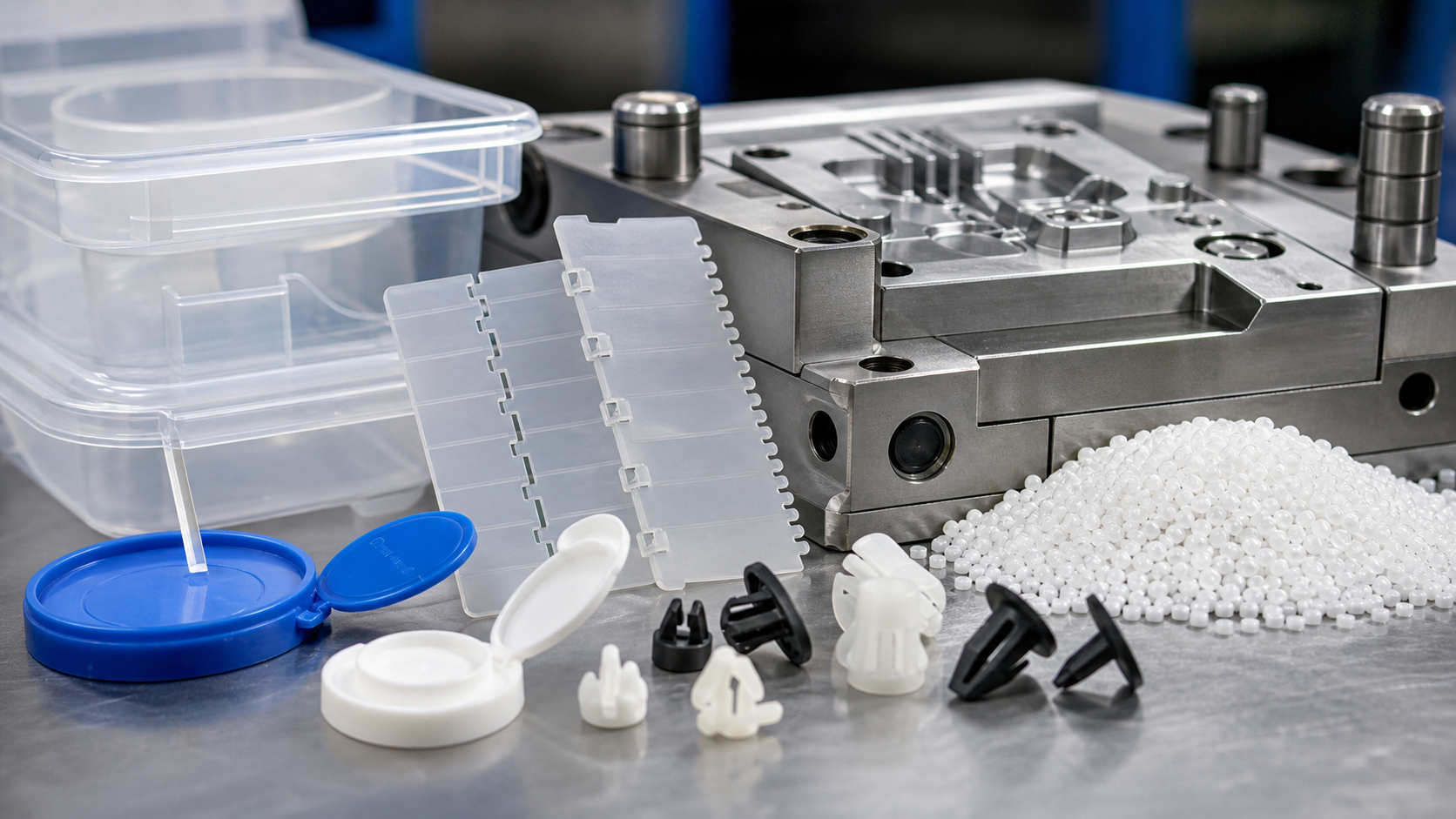
Polypropylene injection molding is a strong choice for lightweight, chemical-resistant, flexible or hinge-based plastic parts, but PP shrinkage and stiffness must be handled carefully in DFM.
PP is widely used for living hinges, containers, clips, caps and automotive trim because it is light, fatigue-resistant and economical. It also shrinks more than many engineering plastics, so part design and mold compensation matter.
PP Injection Molding Route
PP molding is often cost-effective, but thin walls, warpage, hinge design and gate location need early review.
| Route | Optimale toepassing | Opmerking voor de koper |
|---|---|---|
| Standard PP molding | Lightweight clips, lids and containers | Economical for many production parts |
| Living hinge molding | Integral hinges and flip covers | Needs hinge geometry and fatigue review |
| Filled PP molding | Higher stiffness parts | Review shrinkage, warpage and surface needs |
PP Grades and Alternatives
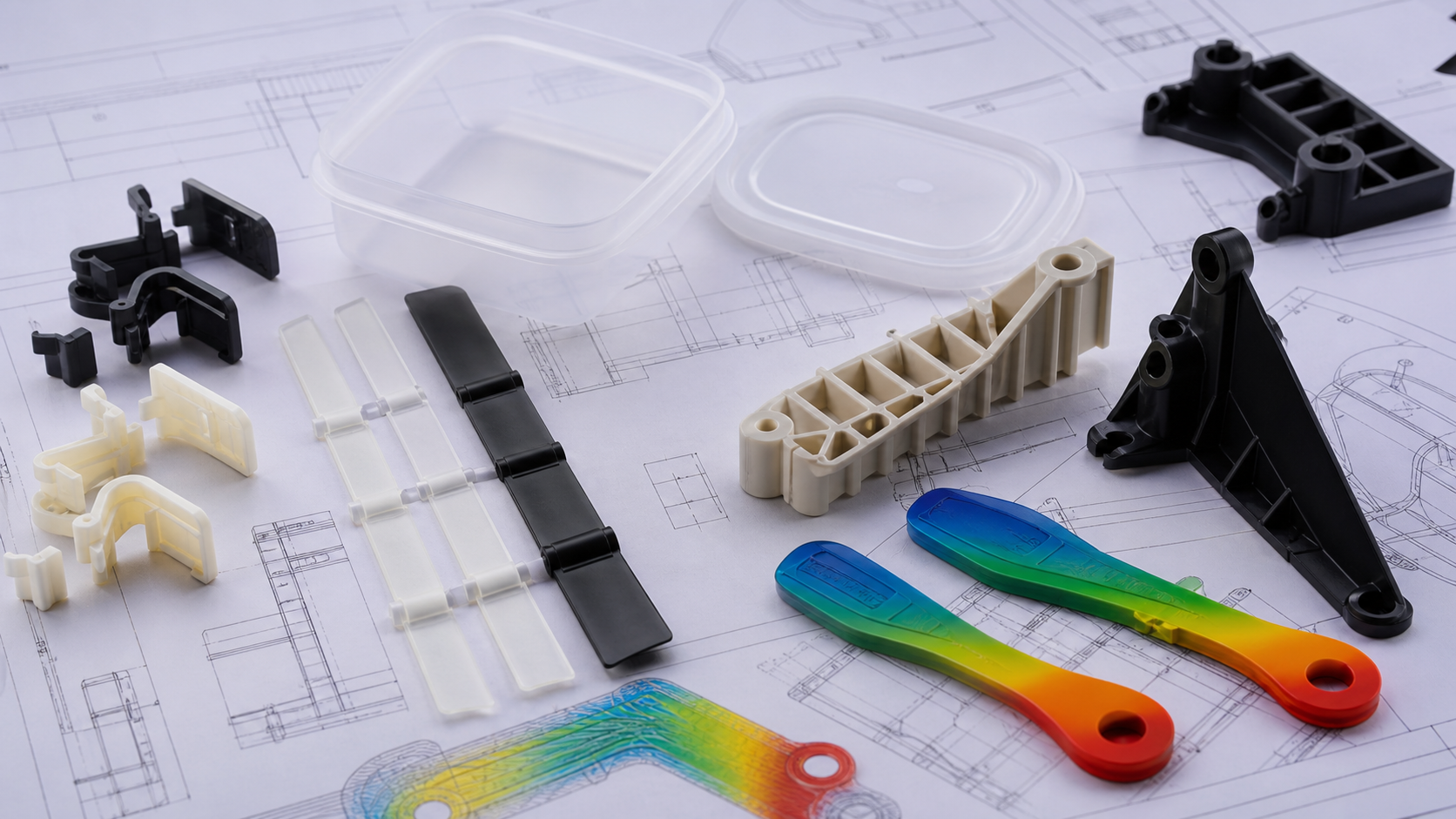
PP grades differ by stiffness, impact strength, filler content, heat resistance and UV stability.
| Materiaal | Het meest geschikt voor | Toelichting bij de selectie |
|---|---|---|
| Homopolymer PP | Stiffer molded parts | Often used when impact demand is moderate |
| Copolymer PP | Better impact resistance | Useful for clips and covers |
| Talc-filled PP | Dimensional stability and stiffness | Check cosmetic and warpage requirements |
| UV-stabilized PP | Outdoor parts | Confirm exposure life and color |
PP Design Checks
PP part design should consider shrinkage, hinge life, snap fit flexibility and assembly loads.
- Design living hinges with proper thickness and flow direction.
- Allow for PP shrinkage during mold design.
- Avoid flat unsupported surfaces that can warp.
- Confirm snap fit strain and fatigue life.
- Specify whether recycled or virgin PP is required.
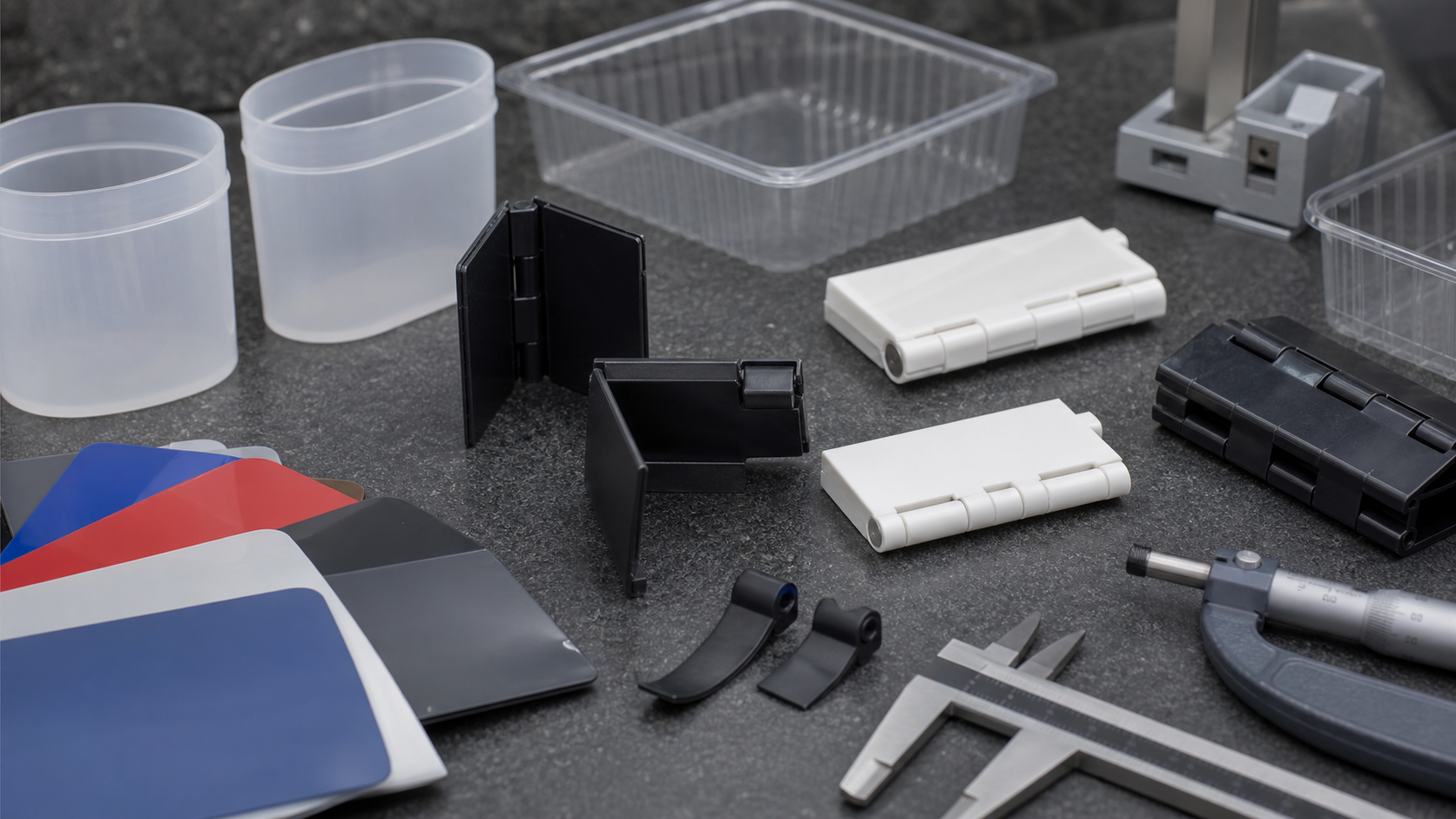
Use the PP material and design checks below with our diensten op het gebied van kunststofspuitgieten when planning a custom production part.
PP Injection Molding Design Factors
| Factor | Waarom dit belangrijk is | DFM note |
|---|---|---|
| Shrinkage | PP shrinkage is higher than many engineering plastics. | Review tolerance, ribs, bosses and mold shrinkage assumptions. |
| Kromtrekken | Uneven walls, long flow paths and unbalanced cooling can twist flat parts. | Use balanced wall design, gate placement and cooling. |
| Living hinges | PP is one of the best materials for molded hinges. | Hinge thickness, flow direction and radius control hinge life. |
| Chemische bestendigheid | PP resists many acids, bases and cleaning chemicals. | Confirm temperature, concentration and mechanical load. |
PP Homopolymer vs Copolymer
| Grade type | Optimale toepassing | Toelichting bij de selectie |
|---|---|---|
| PP homopolymer | Stiffer parts, caps, containers and general molded components. | Good stiffness but lower low-temperature impact. |
| PP copolymer | Impact-resistant parts, automotive components and tougher covers. | Better toughness, especially at lower temperatures. |
| Filled PP | Stiffer or dimensionally improved parts. | Fillers can change shrinkage, surface and warpage behavior. |
Polypropylene DFM Checklist
- Allow realistic shrinkage and avoid over-tight tolerances on noncritical features.
- Keep wall thickness consistent to reduce sink and warpage.
- Gate living hinges so flow supports hinge performance.
- Use ribs carefully because thick ribs can cause sink and distortion.
- Review snap fits for creep, stress relaxation and repeated use.
- Validate chemical and temperature exposure before production approval.
Veelgestelde vragen
Waarvoor wordt spuitgieten met polypropyleen gebruikt?
Polypropyleen-spuitgieten wordt gebruikt voor lichtgewicht klemmen, doppen, verpakkingen, scharnieren, afdekkingen en onderdelen die chemische bestendigheid of weerstand tegen buigmoeheid moeten bieden.
Waarom is krimp van PP belangrijk bij het ontwerpen van matrijzen?
PP krimpt meer dan veel technische kunststoffen, dus moeten de matrijscompensatie, de wanddikte, de plaatsing van de spuitopening en de beheersing van kromtrekken in een vroeg stadium worden beoordeeld.
Is PP geschikt voor scharnieren?
Ja. Polypropyleen is een van de meest gebruikte materialen voor flexibele scharnieren, mits de dikte van het scharnier, de stromingsrichting en de vermoeiingseisen correct zijn ontworpen.
Wat moeten kopers specificeren bij PP-spuitgietonderdelen?
Kopers dienen de PP-kwaliteit, stijfheid, eisen inzake slagvastheid, vereisten met betrekking tot scharnieren of buigzaamheid, blootstelling aan chemicaliën, kleur, voorschriften inzake het gehalte aan gerecycled materiaal en de verwachte hoeveelheid te specificeren.
Gerelateerde lezen
Request a PP Molded-Part Review
For clips, caps, containers or living-hinge components, send the controlled drawing, PP grade or permitted alternative, and quantity by phase. Nylon Plastic can review material, hinge or snap-fit design, tooling and production scope before quotation.
Wat moet er in een offerte voor het spuitgieten van polypropyleen worden vermeld met betrekking tot scharnieren of klikverbindingen?
Identify whether the part must flex repeatedly, retain a clip load or resist a chemical. Specify the PP grade or permitted alternative, temperature range, mating parts and the acceptance test. The quotation should distinguish resin selection, gate and hinge review, tooling, sample validation and recurring production; a quote for a rigid housing does not cover the same review as a living hinge.
- Include CAD, drawing revision, critical fits, color, virgin or recycled-content rules, initial and annual quantity, destination and target timing.
- Define hinge cycles or clip retention, mating parts, chemical concentration and temperature, and any required documents.
- Specify the sample report, test method and acceptance limit; distinguish appearance approval from flex or load validation.
Agree which samples, functional tests and records are included in the quote. A printed or machined fit sample does not qualify a molded living hinge.

