
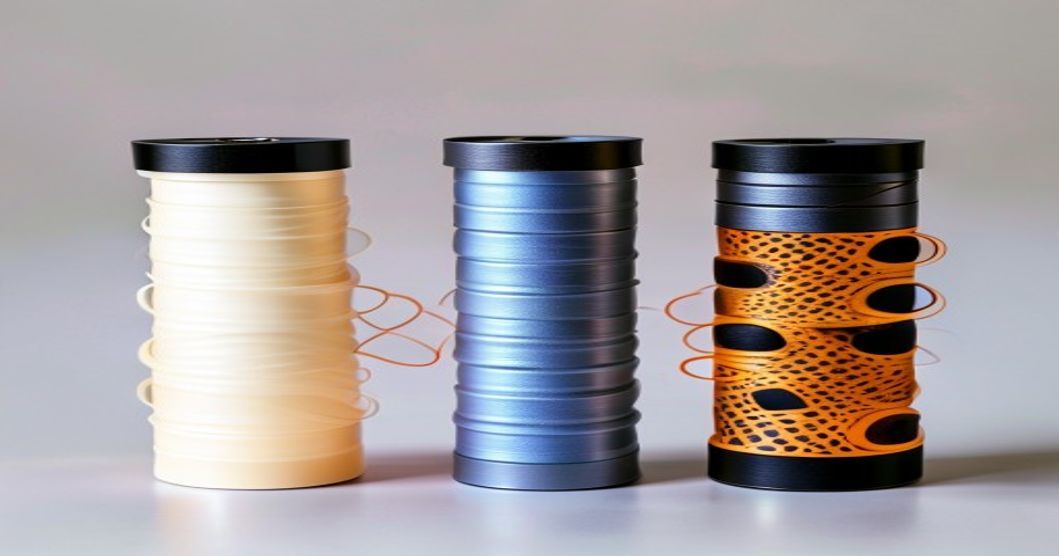
With dozens of filament types available, selecting the right material is the most consequential decision in any 3D printing project. PLA, PLA+, PETG, and nylon each occupy distinct positions in the performance spectrum — and understanding where they overlap and differ prevents costly material mismatches. This comparison covers the mechanical, thermal, and practical differences to help you make confident filament choices.
PLA vs PLA+ vs PETG vs Nylon: Quick Reference
| Eigendom | PLA | PLA+ | PETG | Nylon (PA6/PA12) |
|---|---|---|---|---|
| Print Temperature | 190-220°C | 200-230°C | 230-250°C | 250-280°C |
| Bed Temperatuur | 50-60°C | 55-65°C | 70-85°C | 80-100°C |
| Ease of Printing | Uitstekend | Zeer goed | Matig | Challenging |
| Treksterkte | 48-55 MPa | 50-65 MPa | 45-55 MPa | 60-80 MPa |
| Schokbestendigheid | Laag | Medium | Middelhoog | Zeer hoog |
| Hittebestendigheid | Low (~55°C) | Low-Medium (~60°C) | Medium (~75°C) | High (~100°C+) |
| Vochtgevoeligheid | Laag-Gemiddeld | Medium | Hoog | Zeer hoog |
| Price per kg (USD) | $15-25 | $20-35 | $20-30 | $40-80 |
PLA: The Universal Starting Point
PLA is the best entry point into 3D printing for three reasons: it prints flawlessly on nearly any printer, it is affordable, and it produces parts with excellent surface finish. The material shines in visual prototypes, educational models, and decorative prints where appearance matters more than strength. PLA’s limitations — brittleness, low heat resistance, and poor creep resistance — are rarely relevant for display or learning applications.
PLA+: The Practical Upgrade
PLA+ occupies a “sweet spot” between beginner-friendly PLA and more demanding materials. Its improved impact resistance transforms PLA from a brittle display material into a viable solution for many functional applications. The extra 5-15°C on the nozzle is minor, and the printing experience remains nearly as forgiving as standard PLA.
Choose PLA+ when your parts will experience handling, assembly, or occasional impact. The 30-40% price premium pays for itself on the first critical part that does not shatter during testing or shipping.
PETG: The Workhorse Material
PETG offers a significant step up in heat resistance and durability compared to PLA and PLA+. It softens around 75°C — hot enough for automotive interiors, dishwasher-safe parts, and outdoor enclosures in most climates. PETG is considerably tougher than standard PLA and bridges the gap between easy-to-print and engineering-grade materials.
The trade-off is printability. PETG requires a higher bed temperature (70-85°C), is stringier, and is less forgiving with first-layer height. Once dialed in, it produces consistently strong, functional parts at a reasonable price point.
Nylon: The Engineering-Grade Option
Nylon (PA6/PA12) is the top-performing filament in mechanical and thermal capability. It offers up to 80 MPa tensile strength, survives temperatures above 100°C, and delivers exceptional layer adhesion when printed correctly. It is the only material in this comparison suitable for genuine end-use production parts.
Successful nylon printing requires specific hardware: an all-metal hot end, a heated bed capable of 80-100°C, an enclosure to prevent warping, and active filament drying (nylon absorbs moisture so aggressively that it can become unprintable within hours of exposure to ambient air).
For industrial B2B applications — such as production jigs, machine components, and durable prototypes — nylon is the material of choice. Nylon Plastic offers PA6 and PA12 filament with consistent diameter tolerance and batch-tested mechanical properties for professional applications.
Material Selection Decision Guide
| Toepassing | Recommended Material | Reason |
|---|---|---|
| Visual prototypes | PLA | Cost-effective, excellent surface finish |
| Snap-fit enclosures | PLA+ | Impact resistance prevents cracking |
| Outdoor brackets | PETG | UV and heat resistance for exterior use |
| Production jigs | Nylon (PA6/PA12) | Maximum durability for repeated use |
| Gears and bearings | Nylon | Self-lubricating, wear-resistant |
| Automotive interior | PETG or Nylon | Must survive 60-80°C interior temps |
Waarom zou u nylon kiezen voor uw 3D-print- en technische kunststofbehoeften?
Met meer dan 10 jaar ervaring op het gebied van technische kunststoffen levert Nylon Plastic hoogwaardige materialen aan B2B-klanten over de hele wereld. Ons productassortiment omvat nylon (PA6, PA66, PA12), POM, PEEK en filamenten voor 3D-printen, waaronder PLA, PLA+ en PETG. Elke partij wordt vóór verzending getest op diametertolerantie (±0,03 mm), vochtgehalte en mechanische eigenschappen.
- ISO 9001-gecertificeerde productiefaciliteiten
- Groothandelslevering tegen concurrerende B2B-prijzen
- Technische ondersteuning bij materiaalkeuze en afdrukparameters
- Snelle wereldwijde verzending vanuit meerdere magazijnen
- Op maat gemaakte materiaalformuleringen beschikbaar voor OEM-projecten
FAQ
When is 3D Printing Materials: PLA, PLA+, PETG and Nylon Compared a good option?
3D Printing Materials: PLA, PLA+, PETG and Nylon Compared is a good option when fast iteration, complex geometry, low tooling cost, or low-volume production is more important than molded-part unit cost.
What should be checked before choosing 3D Printing Materials: PLA, PLA+, PETG and Nylon Compared?
Controleer de onderdeelgrootte, materiaaleigenschappen, oppervlakteafwerking, maattolerantie, blootstelling aan hitte, belastingsrichting en of nabewerking nodig is.
How does 3D Printing Materials: PLA, PLA+, PETG and Nylon Compared compare with CNC machining?
Met 3D-printen kunnen complexe vormen snel worden gemaakt, terwijl CNC-bewerking vaak sterker is voor precieze oppervlakken, nauwere toleranties en productiematerialen.
What affects the cost of 3D Printing Materials: PLA, PLA+, PETG and Nylon Compared?
De kosten zijn afhankelijk van het materiaal, het bouwvolume, de printtijd, de laaghoogte, het verwijderen van de ondersteuning, de afwerking, de inspectie en het aantal onderdelen in de bouw.
Gerelateerde lezen
- PETG versus PLA — Een technische vergelijking voor functioneel 3D-printen
- PLA+ vs PLA: Sterkte, hittebestendigheid en printkwaliteit vergeleken
- TPU versus TPE — Vergelijking van flexibele 3D-printmaterialen
Buyer Selection Matrix
| Materiaal | Best Use | Afweging |
|---|---|---|
| PLA | Fast prototypes and visual samples | Lowest heat resistance |
| PLA+ | Improved hobby parts and simple fixtures | Still limited for hot or load-bearing use |
| PETG | General-purpose functional parts | Can string and soften under heat |
| Nylon | Functional parts with wear and fatigue load | Needs drying and tighter process control |
Waarom kiezen voor nylon?
Nylon Plastic supports material selection when teams need to compare printability, heat resistance and functional strength before moving a part into production.

